.webp&w=384&q=75)

Loading, please wait...
Loading, please wait...

Dermatomyositis early detection significantly alters the clinical trajectory of this rare autoimmune condition. Distinctive skin rashes and symmetric proximal muscle weakness characterize the disease. Consequently, clinicians must maintain a high index of suspicion to ensure prompt intervention. Moreover, understanding the underlying pathophysiology helps in recognizing the first signs of vascular damage.
Research indicates that inappropriate complement protein activation targets the perimysium. This biological process triggers blood vessel inflammation specifically around muscle fascicles. As a result, ischemia and infarction lead to significant muscle atrophy. Therefore, identifying these mechanisms early can prevent permanent tissue damage. However, diagnostic delays remain common because initial symptoms often appear non-specific to the untrained eye.
Current evidence demonstrates that early treatment results in much higher remission rates. Specifically, patients who receive prompt immunosuppressive therapy show significantly reduced disease activity. Furthermore, early intervention helps clinicians identify potential underlying malignancies, which often accompany this condition. For instance, screening for myositis-specific autoantibodies can guide long-term prognosis. Additionally, combining clinical findings with muscle biopsy remains the gold standard for an accurate diagnosis.
The most common early signs include the heliotrope rash, which is a violaceous eruption on the eyelids, and Gottron’s papules on the knuckles. Patients also frequently report difficulty with daily tasks, such as rising from a seated position, due to proximal muscle weakness.
Yes, starting aggressive treatments like corticosteroids or steroid-sparing agents early can minimize muscle infarction. This proactive approach significantly reduces the risk of chronic disability and improves the likelihood of achieving sustained, drug-free remission.
Disclaimer: This content is for informational and educational purposes only. It is not a substitute for professional medical advice, diagnosis, or treatment. Always seek the advice of your physician or other qualified health provider with any questions you may have regarding a medical condition. Refer to the latest local and national guidelines for clinical practice.
References
1. Treasure K et al. Early detection and intervention in dermatomyositis: current evidence and clinical implications. Clin Rheumatol. 2026 Feb 10. doi: 10.1007/s10067-026-07971-w. PMID: 41665775.
2. Wanberg LJ et al. Social, disease and diagnostic factors associated with diagnostic delays in dermatomyositis: a retrospective cohort study. Br J Dermatol. 2024 Oct 17;191(5):837-839. doi: 10.1093/bjd/ljae247.
3. Lundberg IE et al. 2017 European League Against Rheumatism/American College of Rheumatology classification criteria for adult and juvenile idiopathic inflammatory myopathies. Ann Rheum Dis. 2017;76(12):1955-1964.

Read summarized clinical updates, watch expert medical content, and earn CME certifications right from your smartphone.
Open your smartphone camera to scan and install.





Early detection of dermatomyositis is essential to improve remission rates and minimize muscle atrophy through timely immunosuppressive intervention....
8 months ago
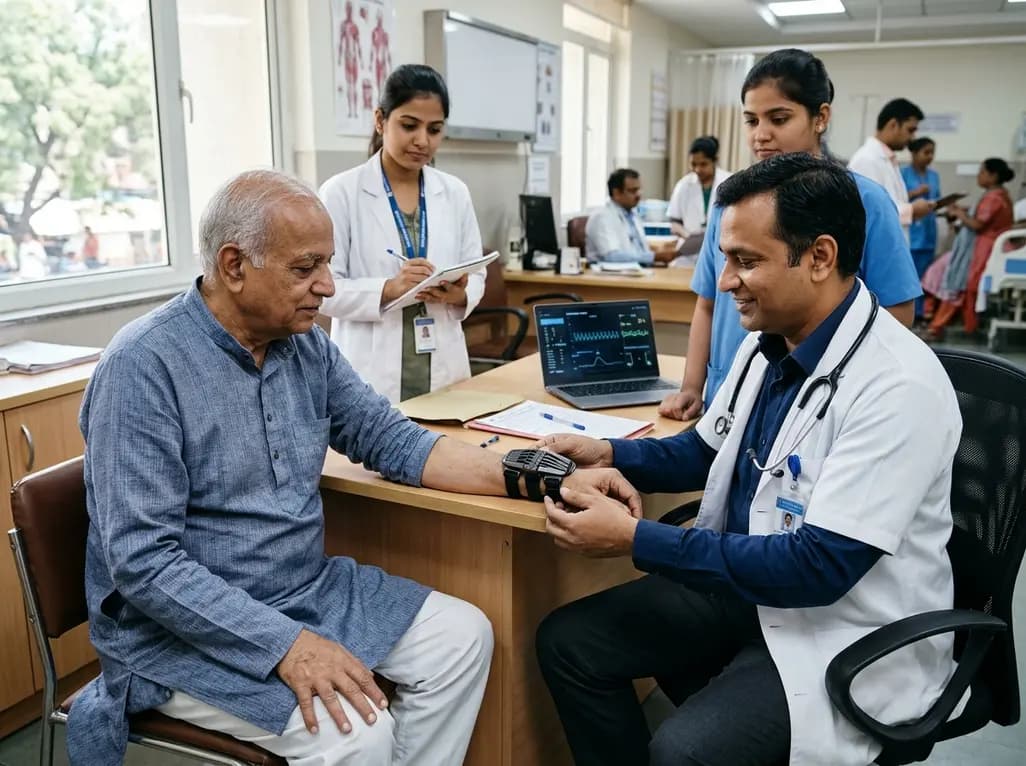
The TREM-AB open-label pilot study evaluated a wearable passive nonlinear vibration absorber for essential tremor. The Nonlinear Energy Sink bracelet reduced clinical Fahn-Tolosa-Marin tremor scores by 32.1% and electrophysiological tremor power by 49.2% with no adverse effects reported.
Today

A study in JAMIA Open shows lightweight open-source reasoning LLMs achieve up to 95% sensitivity and accelerate evidence synthesis screening by nearly twentyfold, presenting a cost-effective, scalable AI solution for biomedical research and systematic reviews.
Today
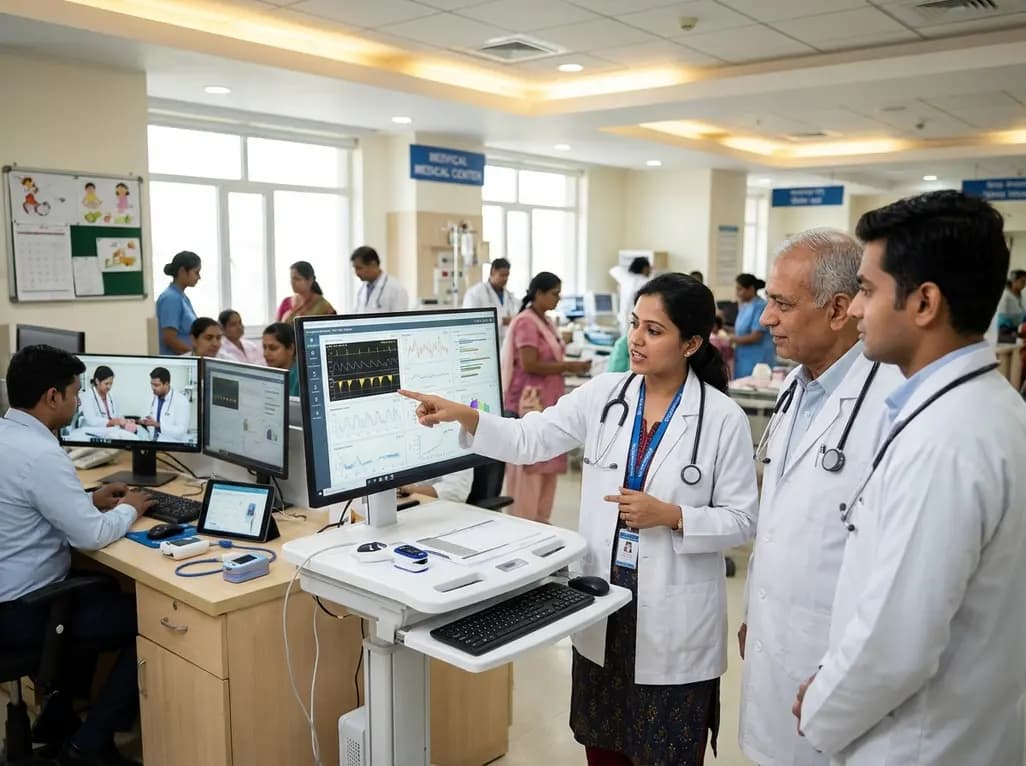
A landmark study details how an enterprise pediatric remote patient management model expanded from a single cardiology pilot to 16 diverse specialty programs by combining centralized digital operations with specialty clinical leadership.
Today

A comparative review of tension band wiring and intramedullary screw fixation in thumb metacarpophalangeal arthrodesis, evaluating union rates, hardware complications, and clinical outcomes.
Today
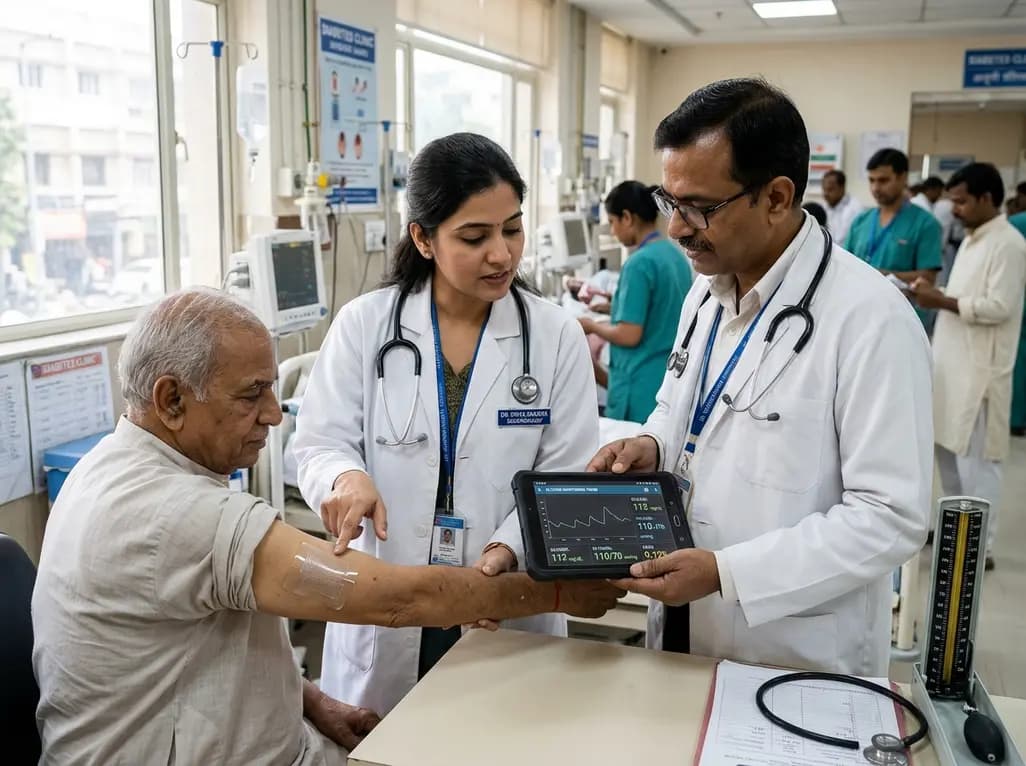
A breakthrough ultrathin multimodal sensor decouples physical hemodynamic monitoring from disposable electrochemical calibration, achieving long-term wearable glucose prediction with 81.36% accuracy and a 9.12% MARD. This offers a robust, drift-free solution for outpatient metabolic surveillance.
Today
