.webp&w=384&q=75)

Loading, please wait...
Loading, please wait...
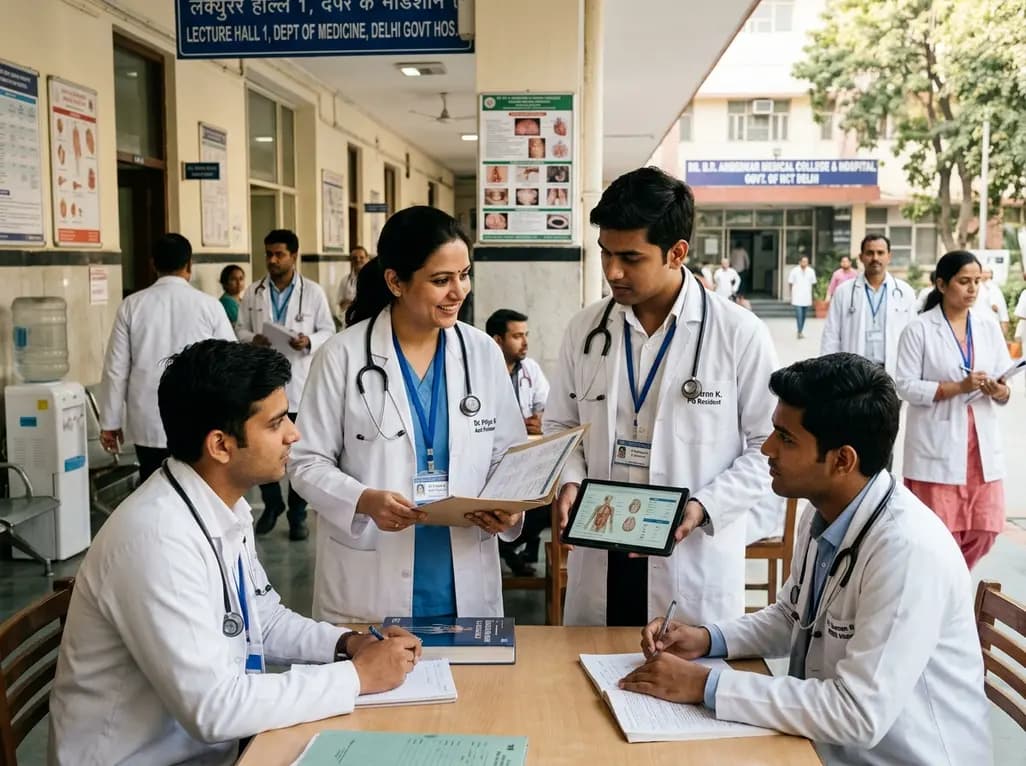
The healthcare infrastructure in the capital is preparing for a major academic transformation. The Delhi government has officially proposed a comprehensive Delhi medical education expansion to add 408 medical training positions across state-run healthcare facilities. This strategic policy initiative aims to address chronic shortages of medical specialists and dental doctors in public hospitals. Furthermore, the administration plans to build a resilient healthcare pipeline capable of managing escalating urban patient loads. The ambitious proposal includes 300 undergraduate MBBS seats, 103 postgraduate MD, MS, and DNB positions, and five advanced fellowship seats.
The greenfield component of the development roadmap focuses on establishing brand new medical teaching institutions. Consequently, authorities have planned 150 MBBS seats at the college attached to Indira Gandhi Hospital in Dwarka. This newly constructed facility will provide modern tertiary healthcare infrastructure to southwestern residential corridors. Similarly, the government has earmarked another 150 MBBS seats for the medical college linked to Guru Gobind Singh Hospital in West Delhi.
These twin greenfield projects will collectively introduce 300 fresh undergraduate positions into Delhi's medical admissions quota. Moreover, both hospital complexes possess extensive patient intake capacities that can support robust bedside clinical instruction. The administration has invested significant capital into hospital infrastructure, diagnostic equipment, and inpatient bed strength at these centres. Therefore, local clinical trainees will gain substantial real-world exposure to complex acute and chronic conditions. In addition, these new institutions will drastically alleviate patient crowding at established central hospitals. Ultimately, establishing these greenfield colleges represents a decisive step toward decentralizing premier clinical education across Delhi.
In addition to building new colleges, the roadmap prioritizes the brownfield expansion of well-established medical and dental centers. Dr. B.R. Ambedkar Medical College and Hospital will significantly raise its undergraduate intake capacity. Specifically, the institution plans to augment its annual MBBS intake from 125 to 200 seats. This expansion will immediately enhance the training capacity of North Delhi's premier municipal healthcare provider.
Dental education will also receive substantial developmental assistance under this comprehensive initiative. Consequently, the Maulana Azad Institute of Dental Sciences plans to increase its Bachelor of Dental Surgery intake from 50 to 70 seats. The institute will also double its postgraduate dental intake from 22 to 42 positions. Furthermore, Dr. B.R. Ambedkar Medical College will initiate dedicated postgraduate training programs with an initial allocation of 24 seats. Therefore, existing academic facilities will optimize their available hospital faculty and patient material to mentor larger cohorts. These targeted brownfield upgrades maximize existing physical resources without requiring prolonged construction schedules. Thus, the capital can rapidly expand its clinician workforce within existing operational frameworks.
Postgraduate medical training forms the backbone of specialized hospital care and clinical research. Accordingly, the state proposal introduces 103 postgraduate medical seats across multiple tertiary and secondary care institutions. This total consists of 67 MD and MS seats alongside 36 Diplomate of National Board positions. Maulana Azad Medical College will receive 35 additional MD and MS seats, expanding its postgraduate strength from 260 to 295 scholars.
Simultaneously, the under-construction Indira Gandhi Medical College in Dwarka will launch 18 accredited DNB training positions. Other peripheral and specialized hospitals will also integrate structured residency programs into their daily clinical operations. Specifically, Deep Chand Bandhu Hospital will gain eight DNB positions, while Sanjay Gandhi Memorial Hospital will receive four DNB seats. Additionally, Guru Gobind Singh Government Hospital and Bhagwan Mahavir Hospital will each add two DNB candidates. University College of Medical Sciences and GTB Hospital will introduce four MD and MS positions, while GTB Hospital adds two DNB seats. Finally, Delhi State Cancer Institute will create four MD training slots in specialized oncology disciplines.
Advanced subspecialty healthcare requires highly trained clinical personnel with structured fellowship and postdoctoral experience. Therefore, the Delhi medical education expansion roadmap incorporates dedicated advanced training opportunities for aspiring specialists. The Delhi government has sanctioned five new post-doctoral fellowship seats across high-volume specialized centres. Specifically, Guru Teg Bahadur Hospital will host three fellowship positions to advance critical clinical care domains.
Meanwhile, the Delhi State Cancer Institute will provide two advanced oncology fellowships to train cancer specialists. Furthermore, state health officials are actively formulating plans to expand super-specialty DM and MCh programs across major referral hospitals. These advanced curriculums will address critical regional shortages in cardiology, medical oncology, surgical oncology, and critical care medicine. Health Minister Pankaj Singh noted that increasing seat capacity remains fundamentally intertwined with sustainable workforce planning. Consequently, these programs will prevent brain drain by offering comprehensive academic progression within the municipal public health system. Thus, Delhi aims to cultivate a self-sustaining hierarchy of resident doctors, attending specialists, and distinguished academic professors.
Public healthcare facilities in the national capital regularly treat millions of patients from Delhi and neighbouring northern states. However, severe manpower constraints frequently create prolonged waiting periods and doctor burnout in government hospitals. This systematic academic expansion directly tackles structural staffing deficits by continuously replenishing resident doctor cadres. Junior and senior residents form the frontline of emergency triaging, intensive care management, and inpatient monitoring.
Therefore, expanding postgraduate seats immediately injects competent clinicians into hospital wards, operative suites, and diagnostic laboratories. Moreover, the simultaneous increase in dental seats strengthens oral healthcare services, which remain severely understaffed across public dispensaries. Experienced medical faculty members will oversee junior doctors, ensuring adherence to standardized clinical treatment protocols. Consequently, patients will experience reduced wait times, faster diagnostic turnaround, and improved surgical outcomes. Furthermore, establishing academic teaching wings inside peripheral secondary hospitals enhances overall institutional accountability and patient safety. Ultimately, integrating medical education with daily clinical care elevates the therapeutic baseline of municipal healthcare delivery.
Executing this ambitious developmental roadmap requires stringent regulatory clearances from national accreditation bodies. Accordingly, the Delhi Health Department has submitted the detailed infrastructure and human resource proposals to the National Medical Commission. The commission will conduct rigorous physical inspections to evaluate hospital bed occupancy, faculty ratios, and diagnostic capabilities. Similarly, the National Board of Examinations in Medical Sciences will inspect hospitals seeking new DNB accreditations.
Government authorities must ensure that all participating centres strictly comply with revised Minimum Standard Requirements. Therefore, the state government is currently expediting faculty recruitment drives to fill existing professor and associate professor vacancies. Furthermore, engineers are accelerating construction milestones at the Dwarka and West Delhi hospital campuses to meet regulatory deadlines. Once the statutory authorities issue formal Letters of Permission, seat allocations will join central and state NEET counselling rounds. Consequently, prospective undergraduate and postgraduate medical aspirants can expect expanded seat choices across upcoming academic admission cycles.
Q1: How many total undergraduate and postgraduate medical seats are proposed in Delhi?
The Delhi government has formally proposed adding 300 undergraduate MBBS seats, 103 postgraduate medical seats comprising 67 MD or MS and 36 DNB positions, and five advanced fellowship seats. Furthermore, the plan includes 20 additional undergraduate BDS seats and 20 postgraduate MDS seats at the Maulana Azad Institute of Dental Sciences, bringing the combined advanced medical training expansion to 108 seats.
Q2: Which new medical colleges will offer fresh MBBS admissions under this plan?
Two brand new medical colleges will offer 150 MBBS seats each under the greenfield expansion model. Specifically, these institutions are attached to the Indira Gandhi Hospital in Dwarka and the Guru Gobind Singh Hospital in West Delhi. Additionally, Dr. B.R. Ambedkar Medical College will increase its existing intake from 125 to 200 MBBS seats, providing substantial regional educational expansion.
Q3: What regulatory steps remain before these medical seats become available to students?
The proposal has been submitted to the National Medical Commission and the National Board of Examinations in Medical Sciences for statutory approval. These regulatory bodies will inspect clinical infrastructure, bed capacity, faculty strength, and laboratory equipment. Once formal approvals and Letters of Permission are granted, authorities will incorporate the seats into NEET undergraduate and postgraduate counselling across upcoming academic admissions.
Disclaimer: This content is for informational and educational purposes only. It does not constitute medical advice or replace professional judgment. Refer to the latest local and national guidelines for clinical practice.
References

Read summarized clinical updates, watch expert medical content, and earn CME certifications right from your smartphone.
Open your smartphone camera to scan and install.





The Delhi government has unveiled a phased roadmap to expand healthcare training capacity across state-run institutions. The strategic initiative proposes 300 new undergraduate MBBS positions, 103 postgraduate MD, MS, and DNB seats, alongside dedicated fellowship slots to strengthen public clinical infrastructure.
last month
A systematic review of 41 preclinical studies reveals that baicalin dampens systemic inflammation, inhibits NF-κB and NLRP3 pathways, and improves organ preservation in sepsis models. However, substantial study heterogeneity and a complete lack of human clinical trials highlight the need for further translational research.
Today

Discover the crucial distinctions between mesonephric and mesonephric-like proliferations of the female genital tract. Learn the key histomorphologic, immunohistochemical, and molecular differences essential for accurate diagnosis and clinical management.
Today
A large UK Biobank study reveals that plasma proteomic signatures capture preclinical organ damage and improve multiorgan risk prediction across early CKM syndrome stages 0 to 2 beyond traditional PREVENT clinical models.
Today
A narrative review investigates whether the articularis genus muscle functions as an independent anatomical entity or blends with the vastus intermedius. We evaluate its morphology, role in retracting the suprapatellar bursa, and direct clinical significance in anterior knee pain and arthroplasty.
Today

A Bayesian multilevel meta-analysis reveals that aerobic training combined with moderate carbohydrate restriction modestly lowers HbA1c in type 2 diabetes. However, sparse data and very low certainty leave incremental benefits over exercise or diet alone unproven, highlighting the need for individualized care.
Today
