.webp&w=384&q=75)

Loading, please wait...
Loading, please wait...

Managing the disabling symptoms of multiple sclerosis (MS) remains a significant challenge for neurologists. Among these symptoms, tremor is particularly debilitating, affecting a significant portion of patients and frequently resisting traditional medical interventions. When standard medications fail to provide relief, the impact on a patient's independence and mental health can be profound. Consequently, advanced surgical interventions have become a focal point of modern neurological research. One of the most promising avenues for these refractory cases is Deep Brain Stimulation MS Tremor management. This technique utilizes precisely delivered electrical impulses to modulate dysfunctional neural circuits, offering hope where pharmacological therapy has reached its limits. By targeting specific nuclei within the thalamus, clinicians can effectively dampen the rhythmic oscillations that disrupt fine motor control. As our understanding of MS-related neurodegeneration evolves, so does the precision of our neuromodulatory tools. This article explores the critical role of patient selection and the long-term clinical efficacy of thalamic stimulation in restoring function for those living with MS.
Tremor is reported in up to 70% of individuals with multiple sclerosis, with roughly 10% to 30% of these cases classified as severe. Unlike the rhythmic shaking seen in Parkinson's disease, MS-related tremors are often complex, manifesting as kinetic or intention tremors that worsen during goal-directed movements. This makes daily activities—such as drinking from a cup, writing, or using a smartphone—nearly impossible for many. The prevalence of these symptoms highlights a significant gap in current treatment algorithms. While disease-modifying therapies (DMTs) are excellent at managing relapses, they often have a limited impact on established symptomatic tremors. Furthermore, the functional limitations associated with severe shaking often lead to social isolation. In India, where MS is being diagnosed with increasing frequency due to better MRI accessibility, addressing these symptomatic burdens is vital. Neurologists must look beyond just slowing the disease and actively seek ways to restore the motor autonomy that patients value most. This shift toward quality-of-life interventions is essential for comprehensive MS care.
Deep brain stimulation functions as a neural pacemaker, delivering high-frequency electrical pulses to deep-seated brain structures. In the management of MS tremor, the primary surgical target is the ventral-intermediate-nucleus (VIM) of the thalamus. This nucleus serves as a critical relay station in the cerebellothalamocortical pathway, which is often disrupted by demyelinating lesions. By inhibiting abnormal oscillatory activity within this circuit, DBS can significantly reduce the amplitude of postural and kinetic tremors. However, the mechanism of Deep Brain Stimulation MS Tremor relief is not merely a blockade of signals. Instead, it involves the entrainment of neural firing patterns into a more stable, non-pathological rhythm. This modulation allows for smoother coordination of voluntary movements. It is important to note that while VIM stimulation is highly effective for rhythmic shaking, its impact on other MS symptoms, such as ataxia, is minimal. Therefore, understanding the precise neurophysiology of the patient's tremor is a prerequisite for surgical success. Modern neurosurgical techniques allow for real-time verification of optimal lead placement, ensuring maximum therapeutic benefit.
The key to achieving successful outcomes lies in a rigorous and multidisciplinary patient selection process. Not all patients with MS-associated tremor will benefit from surgical intervention. Research highlights the importance of excluding individuals with prominent cerebellar signs, such as significant ataxia or dysmetria. This is a critical distinction because DBS targets the tremor circuit, not the coordination pathways; applying stimulation where the primary disability is incoordination rather than shaking often results in poor outcomes. Additionally, the structural integrity of the brain must be assessed. Candidates with significant ventriculomegaly or extensive cerebellar plaques are generally excluded, as these changes can complicate lead placement. Furthermore, patients must be screened for comorbid psychiatric symptoms to ensure they can handle the demands of surgery and post-operative programming. In the Indian clinical context, where patient expectations are high, this selective approach ensures that surgical risks are only undertaken when there is a high probability of significant benefit. By focusing on the tremor-dominant phenotype, clinicians can maximize the transformative power of neuromodulation.
To quantify the impact of Deep Brain Stimulation MS Tremor protocols, researchers utilize standardized assessment tools that provide objective data. The Fahn-Tolosa-Marin (FTM) tremor rating scale is the standard for evaluating motor outcomes. It measures tremor amplitude and assesses the patient's ability to perform functional tasks like pouring liquids or writing. In clinical settings, a reduction in FTM scores post-operatively serves as the primary indicator of surgical success. However, motor scores alone do not tell the full story. The EQ5D quality-of-life measure is equally important, as it captures the patient's perspective on self-care and daily activities. In clinical cohorts, patients are assessed pre-operatively to establish a baseline and then followed at regular intervals. This tracking has allowed clinicians to observe improvements of up to 61% in tremor scores and massive gains in quality-of-life measures at six months. Such dramatic shifts highlight why objective quantification is necessary for validating advanced interventions. For neurologists, implementing these standardized scales in routine practice can help in identifying the best time to refer a patient for surgery.
One of the most significant concerns regarding DBS in a progressive disease like MS is the durability of the response. There is often apprehension that benefits might be temporary as the disease progresses. However, recent evidence provides a more optimistic outlook. Clinical data shows that the tremor-suppressing effects of VIM stimulation are remarkably stable over time. In studied cohorts, the mean follow-up period exceeded 26 months, with the longest success recorded at 72 months. This suggests that the benefits are sustained even if the patient's overall disability might increase due to other MS-related factors. The stability of tremor control over several years provides a strong argument for considering DBS earlier for appropriate candidates. Sustained relief allows patients to maintain independence for a longer portion of their lives, potentially delaying the need for intensive caregiver support. These findings are particularly relevant for younger patients in India who face decades of living with the disease and require interventions that offer more than just a short-term solution.
The safety of neurosurgical interventions in patients with chronic inflammatory conditions is a paramount consideration. Reassuringly, many studies report no postoperative surgical complications, indicating that the procedure is well-tolerated. This is likely due to careful pre-operative assessment of anesthesia suitability and the use of precise surgical techniques. For the medical community in India, integrating DBS into the standard MS care pathway represents a significant advancement. As clinicians increasingly adopt comprehensive symptom-management strategies, the collaboration between movement disorder specialists and neurologists becomes essential. The timing of the intervention is key; while currently viewed as a later-stage option, the safety data might encourage earlier consideration. Ultimately, Deep Brain Stimulation MS Tremor management should be viewed as a safe and life-changing intervention. By adhering to strict selection criteria and utilizing standardized outcome measures, clinicians can ensure that this technology provides the maximum benefit to those struggling with the most disabling tremors of multiple sclerosis.
Successful outcomes in MS tremor management depend heavily on excluding patients with dominant cerebellar ataxia or structural brain damage. By focusing on the rhythmic tremor component rather than incoordination, clinicians can ensure that VIM stimulation effectively restores motor function, leading to higher patient satisfaction and long-term stability of results.
Patients often experience a dramatic reduction in tremor amplitude, with some achieving over 60% improvement in standardized scores. These motor gains translate into significant quality-of-life enhancements, with improvements in daily living activities ranging from 30% to 175%. Such benefits allow patients to regain independence in tasks like eating and writing.
Yes, research indicates that the tremor-suppressing effects of VIM DBS are remarkably durable, with benefits sustained for over five years in many patients. While the underlying multiple sclerosis may progress, the electrical modulation of the tremor circuit remains stable, providing long-term symptomatic relief and functional stability for well-selected individuals.
Disclaimer: This content is for informational and educational purposes only. It does not constitute medical advice or establish a doctor-patient relationship. Refer to the latest local and national guidelines for clinical practice.
References
Paranathala MP et al. Patient selection and outcome of deep brain stimulation for multiple sclerosis-associated tremor. Br J Neurosurg. 2025 Aug. doi: 10.1080/02688697.2023.2277284. PMID: 37937771.
Nimmons GL, et al. Deep brain stimulation for tremor in multiple sclerosis. Expert Rev Neurother. 2015;15(11):1283-93. doi: 10.1586/14737175.2015.1095094.
Mandat T, et al. Thalamic deep brain stimulation for tremor among multiple sclerosis patients. Acta Neurochir (Wien). 2010;152(8):1309-16. doi: 10.1007/s00701-010-0663-6.

Read summarized clinical updates, watch expert medical content, and earn CME certifications right from your smartphone.
Open your smartphone camera to scan and install.





A study evaluates the efficacy of VIM Deep Brain Stimulation for MS-associated tremor. Results show up to 61% tremor improvement and significant quality-of-life gains over a 72-month follow-up, emphasizing the importance of careful patient selection to exclude cerebellar symptoms and imaging abnormalities.
Last week
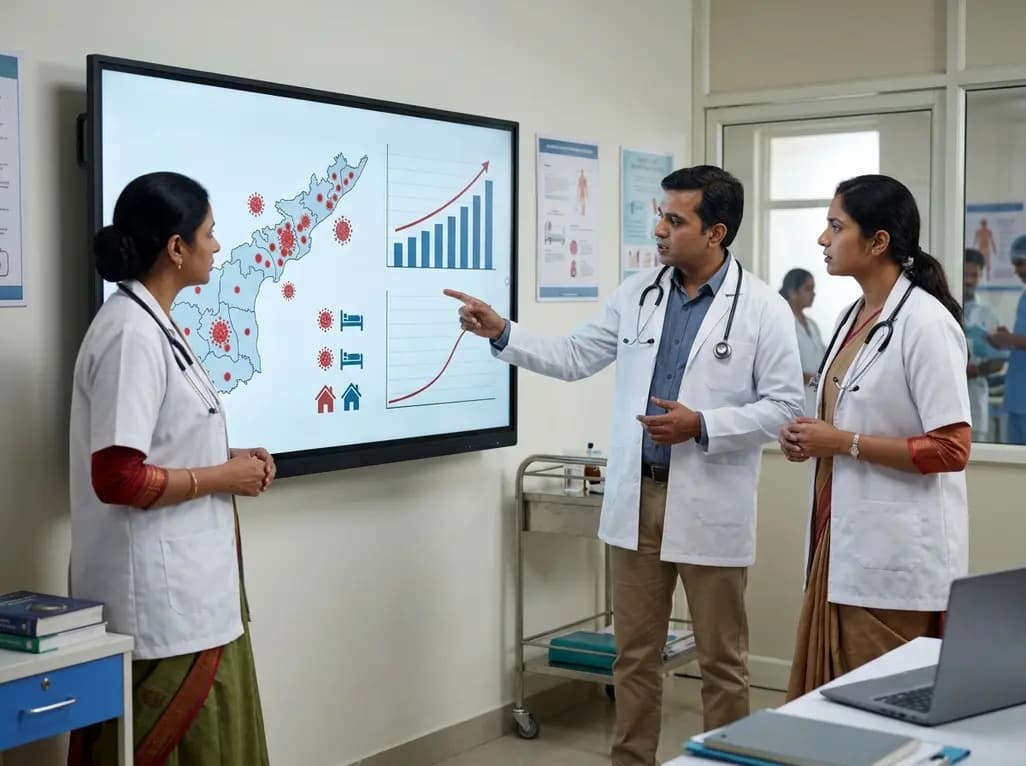
Andhra Pradesh reported 10 new Covid-19 cases, taking the state tally to 49 while deaths remain at four. With 24 patients hospitalized and 16 under home isolation, the Health Department has intensified monitoring. Medical professionals should review regional distribution, diagnostic protocols, and management plans.
Today

An 11-year Swedish registry study of 618 uterine sarcoma patients found that minimally invasive surgery yielded survival comparable to open surgery in early stages. However, adjuvant chemotherapy conferred no survival benefit in localized or advanced disease, highlighting stage and histology as key outcomes.
3 days back

A cross-sectional study evaluates post-intensive care syndrome in cardiac patients 2-4 weeks post-ICU discharge, highlighting cognitive, psychological, and functional impairments and the need for structured multidisciplinary rehabilitation.
3 days back
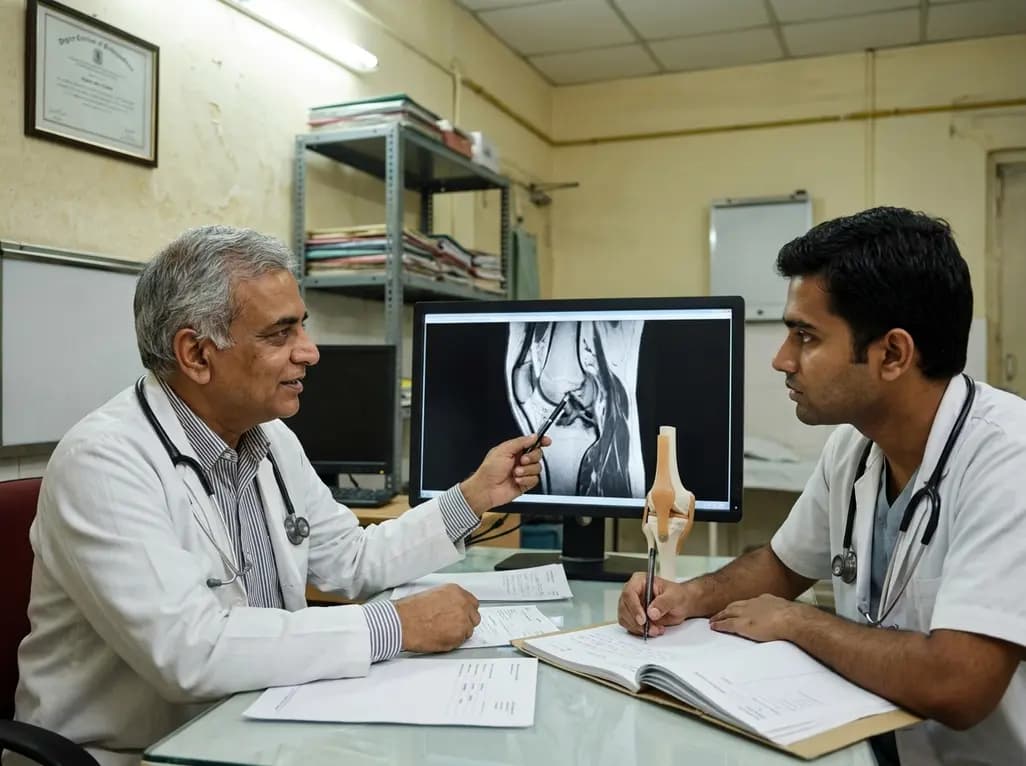
Anterior cruciate ligament reconstruction failure lacks uniform definition. A narrative review proposes an integrative framework incorporating objective and subjective instability, persistent pain, restricted motion, graft rupture, and secondary meniscal injury to standardize clinical reporting.
3 days back

With World Obesity Atlas data warning that over 41 million Indian children are overweight or obese, ICMR and NIN have unveiled a 10-point policy roadmap. The initiative calls for mandatory front-of-pack labeling, HFSS taxes, strict marketing bans, and healthier school environments to curb non-communicable diseases.
Today
