.webp&w=384&q=75)

Loading, please wait...
Loading, please wait...
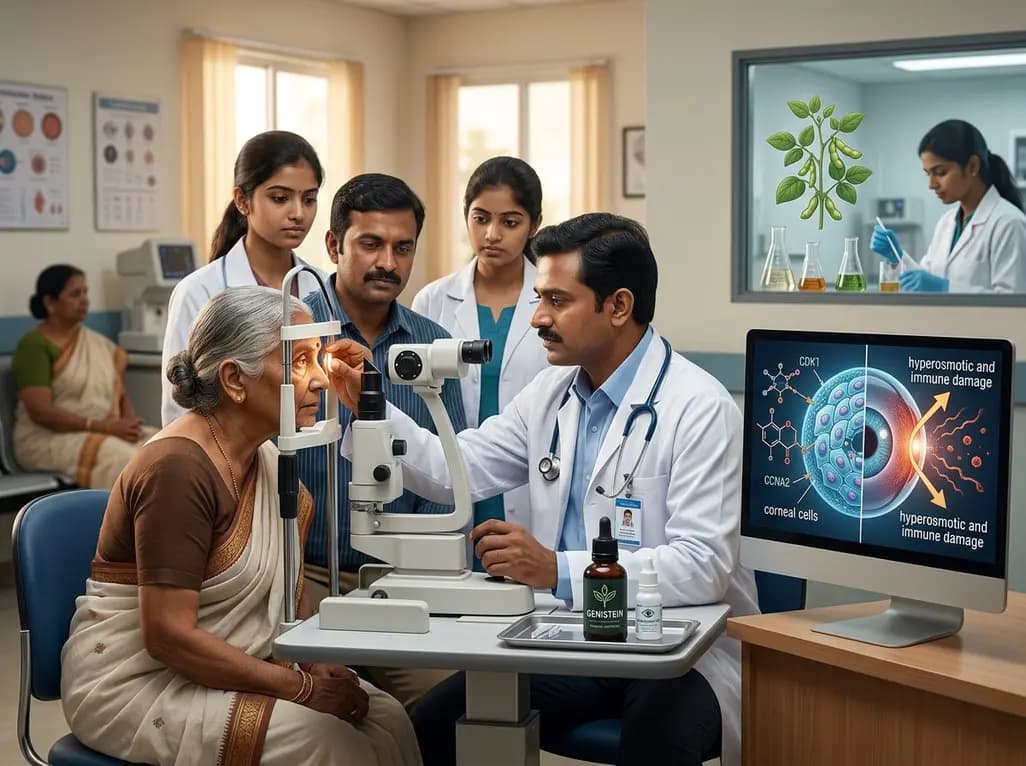
Dry eye disease (DED) has transformed from a minor irritation into a pervasive chronic condition, particularly in fast-paced urban environments like those found across India. With prevalence rates estimated between 25% and 32%, the burden of DED is substantial, affecting productivity and long-term quality of life. While traditional therapies such as artificial tears and anti-inflammatory drops remain the mainstay of treatment, there is an urgent clinical need for interventions that address the deep-seated molecular mechanisms of the disease. This is where the exploration of Genistein for dry eye begins to show immense promise. Recent advancements in bioinformatics have allowed researchers to peel back the layers of ocular surface dysfunction, revealing a complex web of immune dysregulation and inflammation. By utilizing vast public repositories like the GEO database, scientists can identify the specific genes and pathways that become aberrant during the onset of DED. This shift toward a data-driven approach marks a significant evolution in how we view ocular health. For the clinician, these findings suggest that the future of DED management lies in precision medicine—targeting specific cellular pathways rather than just applying superficial moisture. This research highlights the integration of herbal medicine and modern genetics to create a robust therapeutic framework for ocular surface disorders.
A recent study titled "Decoding dry eye disease based on bioinformatics and in vitro experimental" utilized a sophisticated pipeline to isolate the core drivers of DED. After analyzing thousands of differential genes, researchers narrowed the field to 235 overlapping genes directly associated with the disease. Through protein-protein interaction (PPI) networks and machine learning algorithms like LASSO and SVM-RFE, ten characteristic genes were identified: CDK1, CCNA2, CXCL13, CCR1, FEN1, CCR7, SELL, RAD51, CXCL1, and KIF11. These genes are not merely numerical data points; they represent critical players in cell cycle regulation, immune cell recruitment, and DNA repair within the corneal epithelium. For instance, the involvement of signaling pathways like JAK-STAT and PI3K-Akt underscores the systemic nature of the inflammatory response in DED. The analysis of immune cell infiltration further revealed that specific cells, such as macrophages and T-cells, play a pivotal role in the microenvironment of the eye. Single-cell RNA sequencing confirmed that many of these hub genes are localized in key corneal cell types, with IL-1β—a notorious pro-inflammatory cytokine—being predominantly expressed in macrophages. This granular understanding of the ocular immune landscape provides a roadmap for developing more effective, targeted treatments that can successfully halt the chronic cycle of inflammation.
One of the most exciting breakthroughs from this bioinformatic analysis was the identification of Genistein as a key natural product for clinical intervention. Derived primarily from soy, Genistein is a well-known isoflavone with recognized anti-inflammatory and antioxidant properties. The researchers used reverse prediction techniques from Traditional Chinese Medicine (TCM) to link characteristic genes with potential natural compounds. Molecular docking studies were then conducted to evaluate the binding affinity between Genistein for dry eye and the hub genes identified earlier in the research. The results were striking: Genistein exhibited highly stable interactions with CDK1, IL-1β, CCNA2, and CDC20. Notably, the interaction with CDC20 showed the highest stability, suggesting a strong potential for modulating cell cycle progression and preventing apoptosis. This molecular synergy is crucial because it implies that Genistein does not just act on one front; it offers a multi-target approach to stabilizing the ocular surface. For practitioners, the prospect of using this compound is particularly appealing because it bridges the gap between natural supplements and rigorous pharmaceutical validation. By targeting the underlying signaling pathways that lead to cytokine release and cell death, Genistein offers a holistic yet scientifically grounded alternative to monotherapy, which often falls short in severe DED cases.
To validate these computational findings, researchers moved from the digital space to the laboratory, employing an in vitro cellular model of DED. Human corneal epithelial cells were subjected to NaCl-induced hyperosmotic stress and TNF-α-induced immune injury—two conditions that closely mimic the physiological environment of a dry eye. The application of Genistein at a concentration of 12.5 μmol/L demonstrated significant protective effects. It effectively reduced the rate of cell detachment and decreased the overall area of cell death, indicating a robust anti-apoptotic influence. Mechanistically, the study found that Genistein downregulated the expression of CDK1, CCNA2, and IL-1β at both the RNA and protein levels. Conversely, it upregulated the expression of CDC20, further supporting its role in stabilizing the corneal cell cycle. These results are vital because hyperosmolarity is considered the "core" of DED pathogenesis; it triggers the release of inflammatory mediators that damage the ocular surface. By mitigating this damage, Genistein directly intervenes in the vicious cycle of dry eye. Furthermore, its ability to counter TNF-α-induced injury suggests that it could be particularly effective in inflammatory subtypes of the disease, providing a shield for the corneal epithelium against the constant barrage of systemic and local immune factors.
The implications of this research for the Indian medical landscape are profound and immediate. India faces unique challenges regarding ocular health, including high levels of ultraviolet radiation, ambient dust, and a rapidly growing population of digital workers suffering from computer vision syndrome. Current treatment protocols often involve long-term use of lubricants or steroids, which can have significant side effects such as increased intraocular pressure. The discovery of Genistein for dry eye provides a potential alternative that is both natural and scientifically validated. Integrating such natural products into clinical practice could improve patient adherence and reduce the long-term cost of care. Moreover, the study’s focus on bioinformatics and single-cell sequencing reflects the modern direction of Indian ophthalmology, where research institutes are increasingly adopting advanced genomic tools. Clinicians should remain informed about these developments, as they may lead to the formulation of new topical drops or oral supplements specifically designed to target the hub genes mentioned. As we look toward the future, the synergy between traditional knowledge—as represented by natural products—and modern bioinformatics will likely yield the most effective strategies for managing the rising tide of dry eye disease in our diverse patient population.
Genistein is a natural isoflavone that targets the molecular roots of dry eye rather than just providing temporary lubrication. Research indicates that it interacts with specific genes like CDK1 and IL-1β to reduce inflammation and oxidative stress. By stabilizing the cell cycle and preventing corneal cell death under hyperosmotic conditions, it offers a more comprehensive therapeutic approach compared to standard artificial tears, potentially providing long-term relief for chronic DED sufferers.
Bioinformatics allows researchers to analyze vast datasets from thousands of patients to find common genetic patterns. In the context of dry eye, it helps identify hub genes that are most active during the disease. By understanding these genetic drivers, scientists can use computer modeling to predict which natural products or drugs will best fit into these receptors. This reverse prediction speeds up the discovery of effective treatments like Genistein for dry eye.
While the study focused on cellular models, the findings suggest that Genistein protects corneal cells from hyperosmotic stress and immune injury, which are common results of digital strain and environmental pollutants. By downregulating inflammatory cytokines and protecting the corneal epithelium from damage, Genistein could potentially mitigate the ocular surface destruction caused by prolonged screen use and poor air quality, making it a valuable candidate for future preventative ocular therapies.
Disclaimer: This content is for informational and educational purposes only and does not constitute medical advice or a professional relationship. Always seek the advice of your physician or other qualified health provider with any questions you may have regarding a medical condition. Refer to the latest local and national guidelines for clinical practice.
References
Long X et al. Decoding dry eye disease based on bioinformatics and in vitro experimental: the role of immune responses and natural product intervention. Hum Genomics. 2026 Jul 18. doi: 10.1186/s40246-026-00992-1. PMID: 42471730.
Tsubota K, et al. Dry Eye Disease. Nature Reviews Disease Primers. 2020.
Sabarwal S, et al. Prevalence, Pattern and Associated Risk Factors of Dry Eye Disease From a Prospective Database of a Tertiary Eye Care Centre in Central India. PubMed. 2025.

Read summarized clinical updates, watch expert medical content, and earn CME certifications right from your smartphone.
Open your smartphone camera to scan and install.





A groundbreaking study identifies Genistein as a key natural product for treating dry eye disease. By targeting hub genes like CDK1 and CCNA2, Genistein protects corneal cells from hyperosmotic and immune damage, offering a promising new direction for ophthalmological care and natural interventions.
3 months ago

A landmark 12-year longitudinal study highlights significant reductions in opioid prescribing for nonspecific low back pain following clinical guidelines and prescription monitoring systems, emphasizing non-opioid multimodal pain care.
Today

A study in Ultrasound in Obstetrics & Gynecology shows that quantitative vascularization of the anterior fornix/cervix with transvaginal ultrasound reliably identifies placenta accreta spectrum and predicts severe intraoperative hemorrhage, offering vital objective risk stratification.
Today
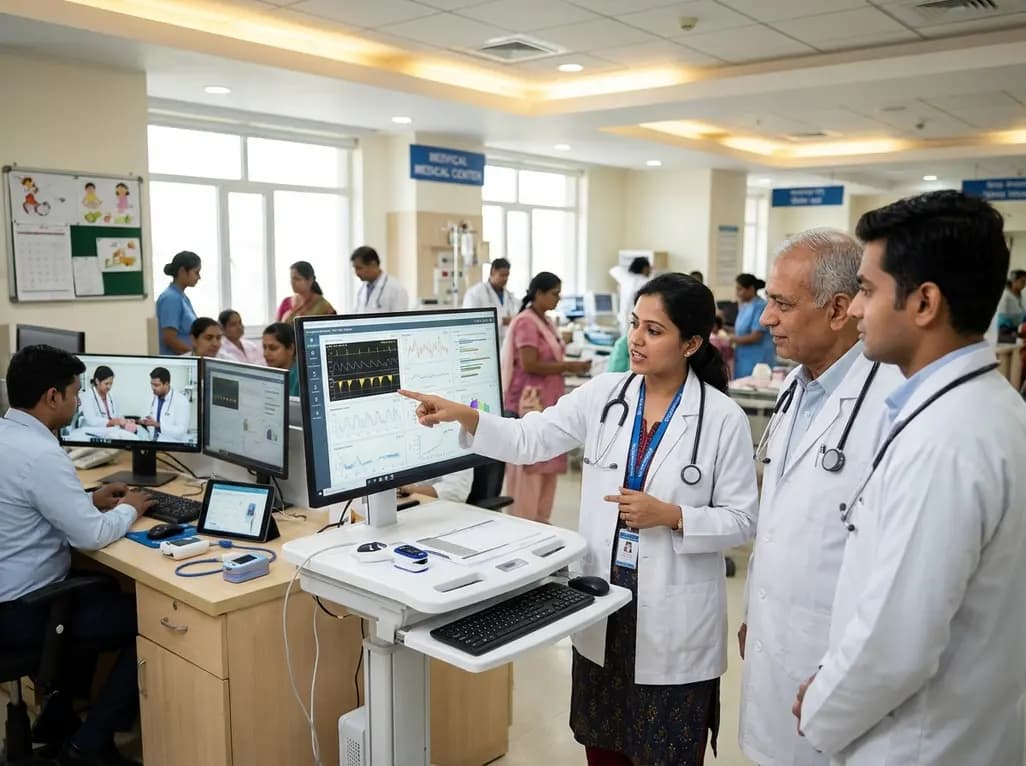
A landmark study details how an enterprise pediatric remote patient management model expanded from a single cardiology pilot to 16 diverse specialty programs by combining centralized digital operations with specialty clinical leadership.
Yesterday
A breakthrough study shows that 3D-planned corrective osteotomy successfully resolves distal radioulnar joint instability in pediatric diaphyseal forearm malunions. The precise osseous realignment eliminates chronic wrist pain and restores joint function without requiring secondary soft-tissue reconstruction.
Today
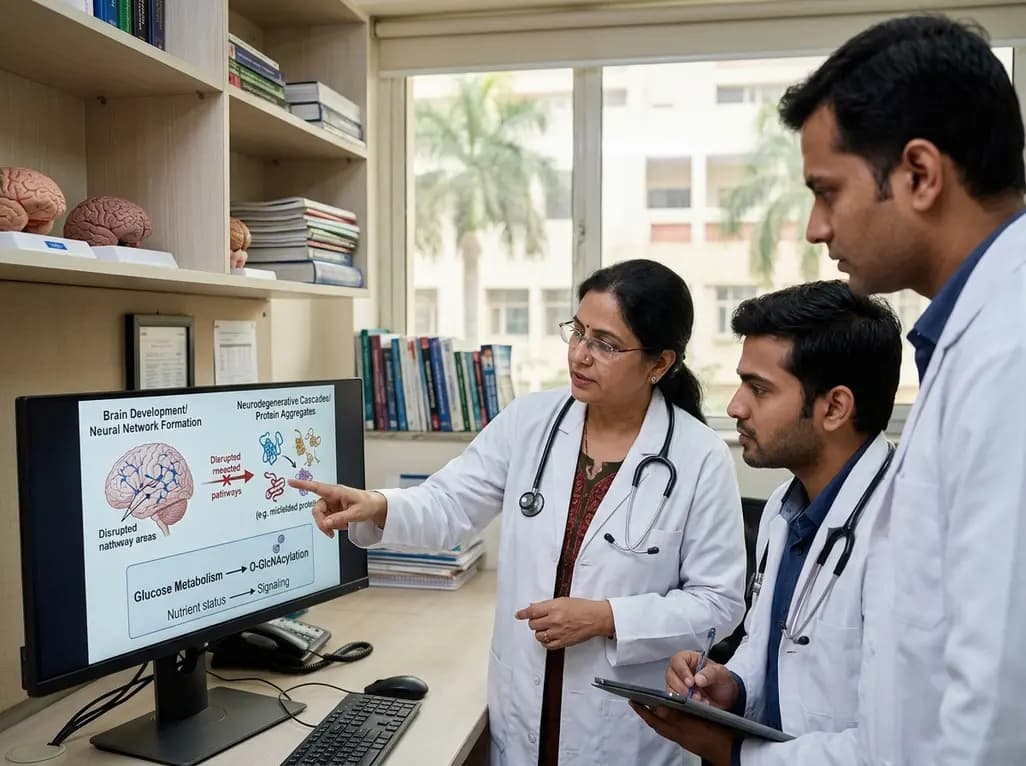
Protein O-GlcNAcylation couples cellular nutrient status to vital neuronal functions. This review explores how disrupted O-GlcNAc cycling drives both neurodevelopmental delays and neurodegenerative cascades, positioning metabolic post-translational modifications as therapeutic targets in clinical neurology.
Today
