.webp&w=384&q=75)

Loading, please wait...
Loading, please wait...
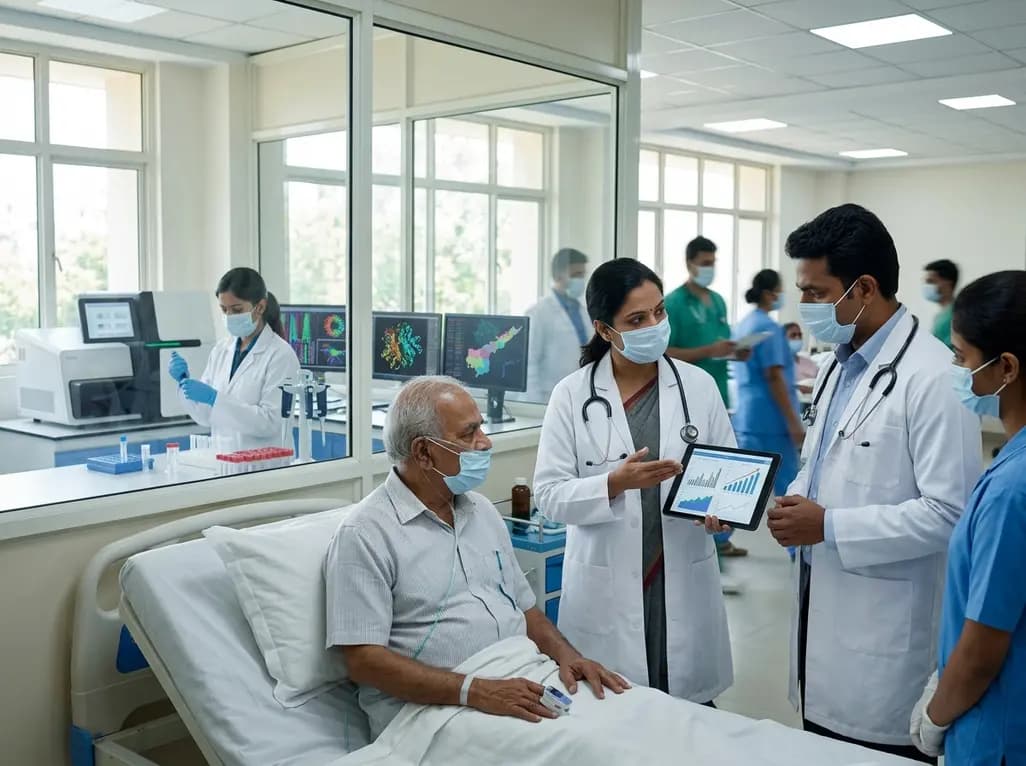
The recent reports of new coronavirus infections have drawn clinical attention back to the southern states of India. Specifically, the latest update on the Andhra Pradesh COVID-19 situation highlights a sudden emergence of cases. This development urges healthcare providers to maintain heightened vigilance. While the numbers are small, they serve as a critical reminder of the endemic nature of SARS-CoV-2. Consequently, physicians must remain updated on local epidemiological shifts to ensure early detection.
Initially, the state logged its first coronavirus infection of the year in YSR Kadapa district on June 26, 2026. Subsequently, eleven more cases emerged across various districts between July 1 and July 16, bringing the total to twelve. During this short period, four individuals tragically succumbed, showcasing a high case-fatality rate in this small cohort. However, health officials emphasized that this sudden rise should not trigger panic among the general public. Additionally, authorities undertook sixty-seven diagnostic tests between June 26 and July 15, yielding eleven positive results inside the state. Meanwhile, clinicians identified the twelfth positive case at the Christian Medical College in Vellore, Tamil Nadu. Most of these patients are currently stable, with three under home isolation and two receiving care in hospitals. Furthermore, three individuals have already recovered and returned home after successful hospital discharge. These numbers indicate that while the virus continues to circulate, transmission remains slow and highly scattered. Therefore, clinicians must focus on early identification through timely testing rather than expecting a massive outbreak. As a result, proactive surveillance represents our best defense against further spreading.
Importantly, clinical evaluations revealed that all four deceased patients suffered from severe, pre-existing medical conditions. For instance, the individuals had advanced comorbidities such as uncontrolled diabetes, chronic renal disease, and severe hypertension. Consequently, these underlying illnesses compromised their immune defenses, making them highly susceptible to advanced respiratory complications. Medical records indicate that one of the deceased, a forty-six-year-old male, developed severe bilateral lung damage and pneumonia. Despite receiving high-dose antibiotic therapy, his respiratory system failed due to chronic liver and lung vulnerabilities. Similarly, another sixty-year-old patient with renal issues died during specialized treatment following a transfer to a tertiary care facility. Therefore, these clinical outcomes highlight that the current viral strains remain highly dangerous for immunocompromised populations. For this reason, primary care physicians must aggressively monitor patients with metabolic and cardiovascular disorders. Moreover, early referral to critical care is essential when these high-risk individuals present with persistent cough or breathing difficulties. By focusing protective measures on these specific patient groups, we can significantly reduce mortality rates. Additionally, counseling families on the early warning signs of respiratory failure remains a key clinical responsibility.
According to the official reports, the twelve infections spread across several districts in the state. Specifically, YSR Kadapa district logged the highest number of cases with eight recorded infections. Additionally, Guntur reported two cases, while Visakhapatnam and Kakinada recorded one case each. Nevertheless, health officials confirmed that these cases emerged from different mandals and municipalities. As a result, there is absolutely no evidence of cluster outbreaks or localized community transmission in any region. Instead, the cases represent sporadic infections that occur naturally as the virus continues its endemic circulation. Furthermore, epidemiological investigations revealed that only two individuals contracted the disease through close contact with known patients. This indicates that widespread public exposure remains low, and the general population is not facing an immediate threat. However, the concentration of cases in Kadapa prompted the health department to set up a round-the-clock command control room. Consequently, local teams are actively monitoring the situation and tracking close contacts to prevent further spread. Moreover, this proactive approach helps maintain public confidence and prevents unnecessary panic in the region. Ultimately, swift monitoring remains our primary tool.
Beyond the borders of Andhra Pradesh, a broader national perspective reveals a mild increase in respiratory infections. For instance, across India, health systems logged a total of 339 active cases starting from July 1, 2026. Kerala led the national caseload with 115 infections, while Karnataka followed closely with 64 reported cases. Additionally, Maharashtra recorded 43 cases, Tamil Nadu registered 39, and both Delhi and Andaman and Nicobar Islands reported 18 cases each. Because of these rising numbers, neighboring states like Odisha have stepped up surveillance and expanded testing in bordering districts. Meanwhile, Tamil Nadu authorities have urged the public to remain calm, noting that the circulating strains are not highly virulent. These coordinated efforts highlight the importance of maintaining robust disease monitoring systems even during periods of low activity. Indeed, consistent surveillance allows public health departments to detect emerging variations before they can cause widespread disruption. Therefore, Indian physicians should view these developments as a standard pattern of endemic viral behavior. By keeping track of these regional patterns, clinicians can better advise patients who travel frequently across state borders. Furthermore, this awareness enables hospitals to optimize resource allocation.
To identify the exact viral lineage, health officials sent five samples to the National Institute of Virology for genome sequencing. Infectious disease experts believe that mild descendants of the Omicron lineage drive these sporadic infections. Fortunately, the vast majority of the population possesses strong protective immune memory from past vaccinations and previous infections. Consequently, healthy individuals who contract the virus generally experience mild, self-limiting symptoms that do not require hospitalization. However, the primary clinical focus must remain on early diagnostic testing and symptom management for high-risk patients. Clinicians should advise these vulnerable groups to wear masks in crowded places and practice excellent hand hygiene. Furthermore, the state health department instructed hospitals to keep isolation beds, oxygen supplies, and drugs fully prepared. While there is no need for panic, maintaining institutional readiness ensures that teams manage any localized increase efficiently. Additionally, timely reporting of severe cases to local health authorities remains crucial for accurate epidemiological tracking. Ultimately, the integration of clinical alertness with public cooperation will keep the situation well under control. For this reason, continuous public education about basic hygiene remains vital.
Q1: Why is YSR Kadapa district showing a higher number of infections compared to other districts in Andhra Pradesh?
Currently, YSR Kadapa district has recorded eight out of the twelve cases reported in the state. Health officials clarify that these infections occurred across different mandals, meaning they do not represent a localized cluster. Instead, the higher numbers reflect increased surveillance, active contact tracing, and timely testing by local health teams. Consequently, these efforts have successfully identified sporadic cases that might have otherwise gone unnoticed.
Q2: What specific comorbidities were associated with the recent deaths reported in the state?
The four patients who succumbed to the virus suffered from severe pre-existing health conditions. Specifically, these included uncontrolled diabetes, chronic renal disease, and hypertension. These conditions severely compromised their immune systems, leading to severe bilateral lung damage and pneumonia. Therefore, clinicians must closely monitor high-risk patients presenting with respiratory symptoms, as they remain highly vulnerable to severe complications even from milder viral strains.
Q3: Is there a threat of a new major wave of infections across India?
Currently, there is no evidence suggesting a new nationwide outbreak. Experts describe these cases as sporadic infections, which are expected as the virus circulates endemically. Furthermore, the widespread protective immune memory from vaccination and prior infections protects the majority of the population. However, health departments continue to monitor regional caseloads to maintain preparedness and ensure that they protect vulnerable groups from any sudden localized increases.
Disclaimer: This content is for informational and educational purposes only. It does not constitute medical advice or replace professional judgment. Refer to the latest local and national guidelines for clinical practice.
References

Read summarized clinical updates, watch expert medical content, and earn CME certifications right from your smartphone.
Open your smartphone camera to scan and install.





A clinical breakdown of the 12 COVID-19 cases and 4 deaths reported in Andhra Pradesh. Understand the impact of severe comorbidities like diabetes and hypertension, national caseload trends, and the critical importance of active disease surveillance and genomic sequencing for high-risk populations.
3 months ago

Novel diimide and hydrazone scaffolds, particularly compound #C4, synergistically reactivate latent HIV-1 when combined with JQ1 or PKC activators. Demonstrating donor-matched proviral transcription ex vivo and non-canonical signaling, these findings advance shock and kill strategies toward reservoir eradication.
Today

A cross-sectional study reveals that maternal RSV vaccination coverage reached only 43.7% in Argentina, with maternal vaccine knowledge being the sole independent predictor of uptake. Clinicians play a crucial role in eliminating informational and structural barriers to optimize infant health.
Today

Review how tailored exercise programs benefit frail older patients with heart failure. Explore pathophysiological mechanisms, individualized training prescriptions, and strategies to overcome adherence barriers in clinical practice.
Yesterday

This comparative study evaluates posterior labral tears with and without glenohumeral instability, highlighting distinct demographic patterns, MRI underestimation in stable shoulders, and successful arthroscopic repair outcomes.
Yesterday

A clinical study demonstrates that early intervention with tocilizumab, either as monotherapy or bridged with corticosteroids, achieves significant proptosis reduction and resolves active inflammation in treatment-naive thyroid eye disease.
Yesterday
