

Loading, please wait...
Loading, please wait...
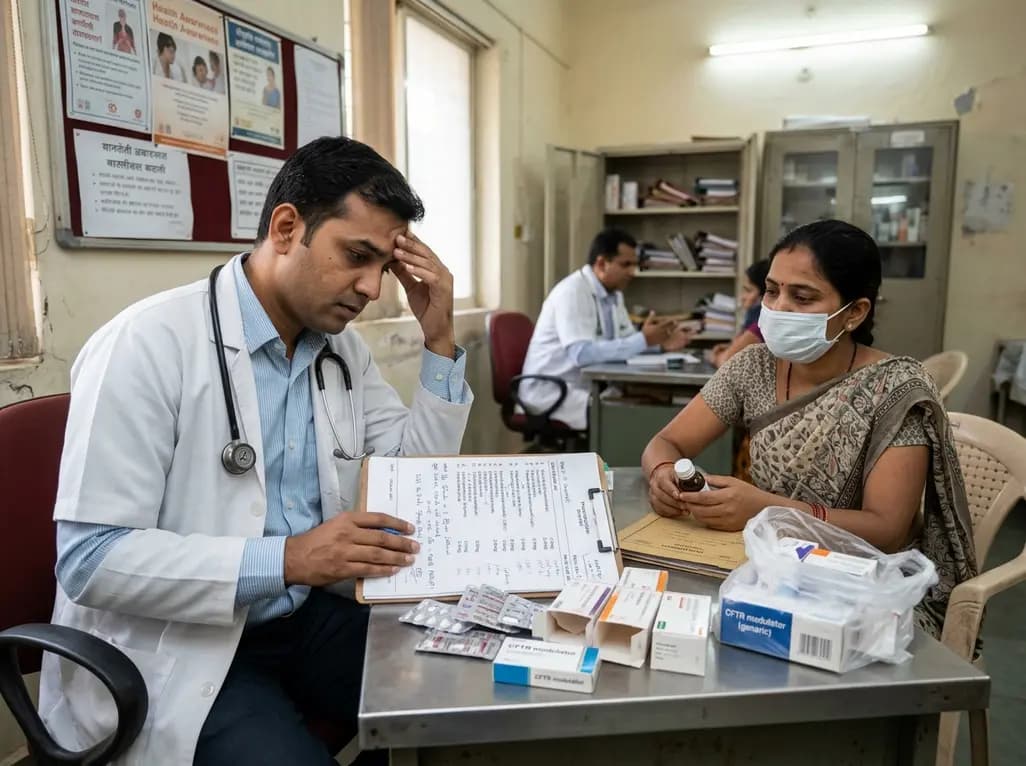
Highly effective cystic fibrosis transmembrane conductance regulator modulators have undeniably revolutionized clinical trajectories in chronic pulmonary disease. However, clinicians now recognize that persistent pharmacological complexity still imposes a substantial cystic fibrosis medication burden on adult patients. While therapeutic regimens improve baseline lung function and attenuate acute exacerbation rates, daily administration demands remain intense across clinical cohorts. Therefore, healthcare teams must evaluate patient-reported treatment experiences alongside standard objective physiological metrics to guide holistic care.
Historically, supportive pulmonary therapies required hours of demanding nebulized antibiotics, mucolytics, and bronchial clearance routines each day. Although targeted modulators modify underlying ion channel dysfunction, patients rarely stop their traditional maintenance drugs immediately. Consequently, treatment regimens often expand rather than contract, which inadvertently compounds daily administration complexity. Furthermore, many individuals must balance supplementary therapies, including pancreatic enzyme replacements, fat-soluble vitamins, and glycemic interventions. Because managing multiple pharmacotherapies demands substantial physical effort and emotional stamina, patients frequently experience profound chronic exhaustion. When clinicians evaluate disease control solely through spirometry, they often overlook these daily lifestyle intrusions. Recent clinical investigations confirm that perceived treatment complexity persists as a major challenge despite widespread modulator access. Thus, recognizing how cumulative pharmacotherapy disrupts vocational, academic, and domestic routines remains critical for pulmonologists and primary care teams alike.
A recent cross-sectional survey investigated treatment experiences across two adult regional centers in the North of England. Specifically, researchers enrolled patients aged sixteen years and older who were actively receiving prescribed modulator therapy across both inpatient and outpatient settings. Investigators gathered detailed clinical data, including self-reported forced expiratory volume in one second, daily medication counts, and pancreatic or diabetic status. In addition, the research team administered the validated Living with Medicines Questionnaire version three to quantify multidimensional medicines-related burden. Of five hundred seventy-seven eligible adults, three hundred forty-six individuals completed the comprehensive evaluation, representing a robust sixty percent response rate. The mean participant age was approximately thirty-four years, with a slight male predominance across the final sample. Furthermore, the survey successfully gathered authentic real-world data from individuals navigating contemporary modulator protocols alongside traditional supportive therapies.
Study findings revealed that medication-related challenges remain widespread among modern adult cohorts. Overall, participants reported a mean questionnaire score of eighty-three, demonstrating that therapeutic routines continue to extract a measurable daily toll. When researchers categorized overall burden, fifty-eight percent experienced minimal impact, whereas thirty-three percent reported moderate difficulty. Importantly, nearly nine percent of surveyed adults described severe, high-grade medication burden that compromised daily living. Consequently, more than four in ten patients in this cohort experienced clinically notable friction while managing their prescribed drug regimens. Furthermore, this distribution underscores that biological disease control does not automatically eliminate personal treatment strain. Although modulator therapy successfully stabilized lung physiology for many respondents, routine pharmacological maintenance still consumed substantial daily energy. Therefore, these quantitative findings challenge the assumption that gene-targeted therapies instantly eliminate chronic self-management difficulties.
Multivariate statistical analysis revealed specific variables that significantly correlate with heightened patient burden. Most notably, individuals managing a higher total number of daily medications reported dramatically worse overall burden scores. Similarly, patients who required daily assistance from family members or caregivers to organize treatments experienced significantly elevated distress. Lower educational attainment and unemployment also correlated strongly with severe treatment difficulties, highlighting the powerful influence of social determinants of health. Conversely, researchers observed no statistically significant associations between burden severity and chronological age, biological sex, or absolute spirometric lung function. In addition, diabetic status and pancreatic enzyme requirements did not independently predict higher self-reported struggle. Thus, physical disease severity alone fails to identify which patients struggle most with their daily regimen. Instead, social vulnerability, domestic dependence, and overt polypharmacy represent the most dependable indicators of patient-level distress.
These crucial insights provide actionable guidance for modern respiratory teams, clinical pharmacists, and primary care physicians. First, healthcare professionals must deliberately move beyond physiological surrogates when gauging therapeutic success. Because conventional spirometry correlates poorly with daily treatment stress, routine clinical encounters should integrate validated patient-reported screening tools. For example, deploying streamlined questionnaires in clinic waiting areas can rapidly identify vulnerable individuals needing deprescribing discussions. Furthermore, clinical pharmacists play an indispensable role in auditing daily drug counts to eliminate redundant or obsolete prescriptions. Multidisciplinary teams must also address socioeconomic disadvantages by providing tailored educational materials and subsidized medication synchronization programs. When clinicians actively streamline dosing schedules, they alleviate domestic conflict and reduce reliance on informal caregiver assistance. Consequently, structured interventions targeting medication burden can directly improve adherence, enhance mental well-being, and protect long-term clinical gains.
As modulator therapy continues to alter the natural progression of cystic fibrosis, prospective clinical trials must evaluate structured deprescribing protocols. Historically, preventive pulmonary care relied on aggressive treatment layering, where clinicians continuously added therapies to prevent organ deterioration. However, modern clinical practice requires rigorous investigation into safely withdrawing nebulized therapies or hypertonic saline once modulators establish mucosal stability. Moreover, digital health tools and automated smart pill dispensers may offer novel solutions to simplify complex daily schedules. Healthcare delivery systems should also prioritize funding for clinical pharmacists who specialize in cystic fibrosis pharmacotherapy optimization. Ultimately, modern therapeutic strategies must balance biological efficacy with daily lifestyle sustainability. By addressing the multifaceted challenges of long-term polypharmacy, respiratory teams can truly help patients thrive beyond their underlying genetic diagnosis.
The primary driver is ongoing polypharmacy rather than the modulator pills themselves. Although modulators effectively correct basic cellular defects, patients usually continue taking nebulized mucolytics, inhaled antibiotics, pancreatic enzymes, and specialized fat-soluble vitamins. Managing these extensive therapeutic combinations every day requires considerable organization, time, and physical effort. Consequently, complex cumulative schedules generate significant practical and psychological burden regardless of improved baseline pulmonary function.
No, clinical research demonstrates that objective lung function does not significantly correlate with perceived medication burden. Patients with relatively preserved pulmonary volumes can experience severe psychological strain from intricate regimens. Instead, total daily pill counts, socioeconomic factors, and reliance on caregiver assistance serve as much stronger predictors of treatment difficulty. Therefore, clinicians must utilize validated patient surveys rather than spirometry alone to detect therapeutic distress.
Clinicians can systematically deploy validated questionnaires, such as the Living with Medicines Questionnaire, during routine clinic consultations. When teams identify moderate or severe burden, specialized clinical pharmacists should conduct comprehensive medication reconciliation. Multidisciplinary teams can then eliminate non-essential supplements, align administration schedules, and consider safe deprescribing protocols. In addition, providing targeted social and educational support helps vulnerable individuals manage complex regimens more effectively.
Disclaimer: This content is for informational and educational purposes only. It is not intended to be a substitute for professional medical advice, diagnosis, or treatment. Refer to the latest local and national guidelines for clinical practice.
References
Shaw N et al. Medication burden among adults with cystic fibrosis prescribed CFTR Modulators: a cross-sectional survey. J Cyst Fibros. 2026 Nov 12. doi: undefined. PMID: 43020750.
Mayer-Hamblett N, et al. Evaluating the impact of CFTR modulators on chronic treatment burden in cystic fibrosis. Lancet Respir Med. 2023;11(4):329-340.
Katusiime B, et al. Measuring medicine-related burden using the Living with Medicines Questionnaire (LMQ-3). Res Social Adm Pharm. 2020;16(8):1064-1072.

Read summarized clinical updates, watch expert medical content, and earn CME certifications right from your smartphone.
Open your smartphone camera to scan and install.





A cross-sectional survey reveals that despite CFTR modulators, significant medication burden persists in adults with cystic fibrosis, driven by polypharmacy and socioeconomic factors.
Today

The VOCAL-AHF study reveals that most acute heart failure patients across reduced and non-reduced ejection fraction categories are eligible for in-hospital GDMT initiation. Notably, nearly two-thirds of HFrEF patients qualify for quadruple therapy, while non-reduced EF patients show high eligibility for dual therapy.
Today

Ascertainment bias in cancer case-control studies inflates odds ratios and penetrance estimates when cases are drawn from high-risk clinics. A landmark modeling study demonstrates substantial bias ranging up to 23.72, highlighting the critical need for ascertainment adjustment in genetic risk counseling.
Today

Researchers demonstrate that central induction of synthetic torpor in non-hibernating rats provides striking cardioprotection, reducing myocardial infarct size by ~40% during ischaemia-reperfusion injury through endogenous survival signaling, independent of hypothermia.
Today

A landmark network meta-analysis of 92 RCTs clarifies carpal tunnel syndrome management across severity levels. While endoscopic release ranks highest for short-term symptom relief, non-surgical approaches like shockwave therapy and PRP demonstrate exceptional clinical value in mild-to-moderate neuropathy.
Today

A novel fluorine-functionalized near-infrared copper fluorescent probe selectively illuminates lung tissue, revealing critical links between hyperglycemia, ER stress, and pulmonary malignancy for improved early diagnosis.
Today
