.webp&w=384&q=75)

Loading, please wait...
Loading, please wait...
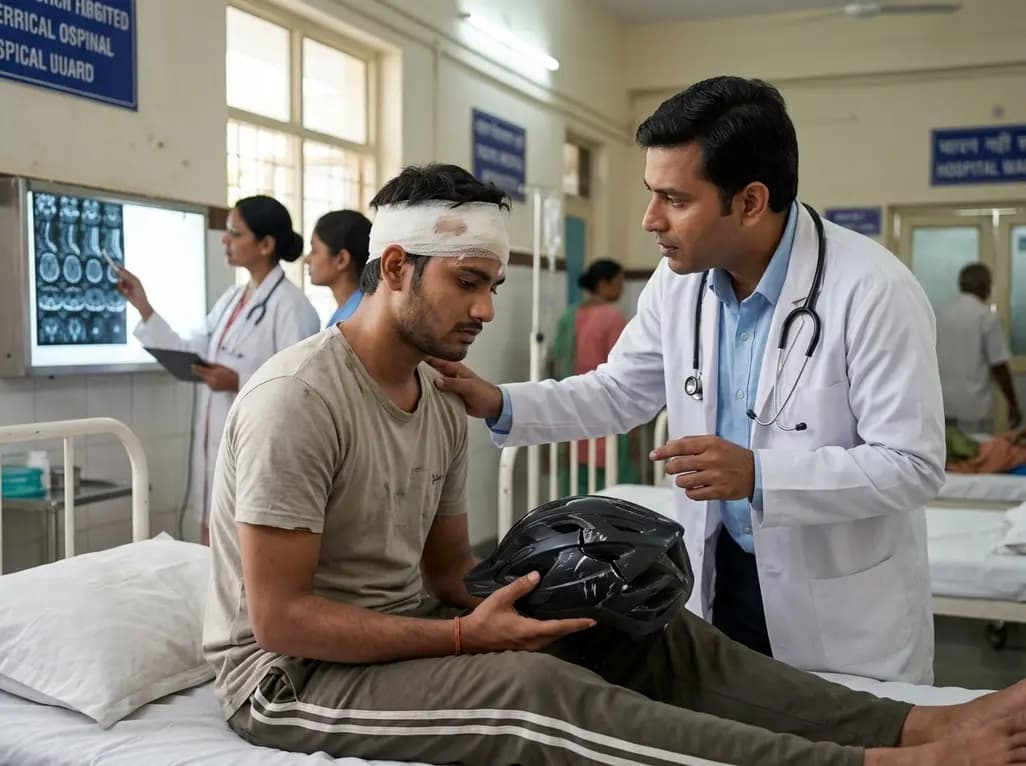
The global surge in the popularity of cycling as a mode of sustainable transportation and recreational fitness has brought numerous health benefits. However, this shift has also resulted in a marked increase in the frequency of hospital admissions for traumatic events. Among these, cycling-related cranio-spinal injuries represent a significant burden for major trauma centers worldwide. As more individuals navigate complex urban road environments, cyclists remain a particularly vulnerable group. The high-velocity nature of many road traffic accidents, combined with the relative lack of protection for the rider, often leads to complex neurological and orthopedic presentations. Clinicians working in emergency medicine and trauma surgery must understand the evolving epidemiology of these injuries to optimize triage and management protocols. Understanding the specific patterns of head and spine trauma is essential for improving patient outcomes and guiding public safety initiatives.
Recent retrospective data from major trauma hubs highlights that over half of all cycling-related admissions involve trauma to the head or spine. This clinical reality necessitates a multidisciplinary approach involving neurosurgeons, orthopedic surgeons, and emergency physicians. Furthermore, the rising incidence of these injuries serves as a call to action for healthcare providers to engage in broader safety advocacy. By analyzing the demographic and mechanistic factors associated with these collisions, medical professionals can better predict injury severity and resource requirements upon a patient's arrival. This article examines the patterns of cranio-spinal trauma in cyclists and the impact of external factors such as helmet use and vehicle collisions.
Identifying the primary population at risk for cycling-related cranio-spinal injuries is a vital step in trauma preparedness. Epidemiological studies consistently show a strong male predominance among victims of cycling accidents. Data indicates that approximately 80% of patients admitted to major trauma centers for these injuries are male. This disparity may be attributed to various factors, including a higher total number of male cyclists in urban areas and potentially higher engagement in high-risk cycling behaviors. The age distribution also reveals a distinct pattern; the majority of victims are in mid-adulthood, with a median age typically hovering around 46 years. This suggests that the impact of cycling trauma is not limited to younger, thrill-seeking riders but also significantly affects the working-age population.
In regions with high cycling rates, such as the UK’s cycling capitals, the volume of these injuries provides a clear picture of the clinical challenges faced by the National Health Service. Mid-aged adults often present with unique physiological considerations, including potential comorbidities that can complicate recovery from multi-system trauma. For instance, the presence of degenerative spinal changes in older adults within this demographic can exacerbate the severity of vertebral fractures. Consequently, trauma teams must maintain a high index of suspicion for complex injury patterns even in cases where the mechanism initially appears straightforward. Longitudinal studies suggest that as cycling participation grows among all age groups, the demographic profile may shift, requiring continuous updates to clinical databases and trauma care strategies.
Head injuries are the most common neurological complication encountered in cycling accidents, often determining the patient's long-term prognosis. Among those admitted with cycling-related cranio-spinal injuries, intracranial hemorrhages are the most frequent diagnosis, occurring in nearly 29% of cases. These hemorrhages include subdural, epidural, and subarachnoid bleeds, each requiring rapid assessment and potentially life-saving surgical intervention. Skull fractures also represent a significant portion of the trauma seen in this group, affecting roughly 12% of admitted patients. Cerebral contusions follow closely behind, contributing to the overall neurological morbidity. The clinical presentation of these injuries often varies, but many patients present with impaired consciousness at the scene, as reflected by lower Glasgow Coma Scale (GCS) scores.
The severity of traumatic brain injury (TBI) in cyclists is often a direct result of the energy transfer during impact. Unlike motor vehicle occupants who are protected by a steel frame and airbags, cyclists directly absorb the force of the collision or the secondary impact with the ground. This often leads to diffuse axonal injury or focal lesions that require intensive monitoring in a neuro-critical care setting. Clinicians must utilize advanced neuroimaging, such as non-contrast CT scans, as the gold standard for early detection. Moreover, the presence of accompanying facial fractures can complicate airway management and initial stabilization. The long-term impact of these head injuries can be devastating, leading to cognitive deficits and functional impairment, further emphasizing the need for robust preventive measures and early specialized care.
While head injuries often dominate the clinical focus, spinal trauma is an equally critical component of cycling-related cranio-spinal injuries. Research into fracture localization shows that the cervical spine is the most vulnerable segment during cycling accidents. Specifically, fractures of the C2, C6, and C7 vertebrae are the most common, accounting for a high percentage of spinal trauma cases. The C2 (axis) fracture is particularly concerning due to its proximity to the brainstem and the potential for life-threatening respiratory complications. Conversely, fractures of the lower cervical spine (C6 and C7) are frequently seen in high-impact falls where the rider is thrown over the handlebars, leading to axial loading or hyperflexion of the neck.
In addition to cervical injuries, the thoracic and lumbar segments are not immune to trauma, particularly in collisions involving motorized vehicles. Such collisions are associated with a much higher prevalence of multi-vertebral fractures, where several segments of the spine are compromised simultaneously. This often indicates a high-energy mechanism and a greater likelihood of spinal cord injury. Managing these patients requires careful immobilization and early surgical consultation to assess stability. The use of magnetic resonance imaging (MRI) is often necessary to evaluate ligamentous injury and potential spinal cord compression that may not be visible on a CT scan. Effective management of these spinal injuries is essential to prevent permanent paralysis and ensure the best possible functional recovery for the patient.
The mechanism of injury plays a decisive role in the severity and outcome of cycling-related cranio-spinal injuries. Collisions involving motorized vehicles, such as cars, vans, or trucks, represent the most dangerous scenarios for pedal cyclists. These incidents are statistically linked to more severe systemic trauma and poorer clinical indicators. Specifically, patients involved in motorized collisions tend to have significantly higher Injury Severity Scores (ISS) and lower GCS scores compared to those in solo falls or bicycle-only accidents. The presence of a larger, faster-moving vehicle increases the kinetic energy involved, leading to more extensive bone fractures and internal organ damage. Consequently, these patients often require longer hospital stays and more intensive rehabilitation.
Motorized vehicle accidents also correlate with a higher incidence of multi-vertebral spinal fractures and complex intracranial pathology. The systemic nature of these injuries often means that the patient must be managed for a combination of thoracic, abdominal, and pelvic trauma alongside their cranio-spinal injuries. From a public health perspective, these findings highlight the urgent need for dedicated cycling infrastructure that separates cyclists from heavy motor traffic. For the clinician, understanding that a patient was involved in a collision with a motorized vehicle should immediately trigger a "code red" trauma response. Early aggressive resuscitation and comprehensive whole-body imaging are mandatory in these cases to identify and treat life-threatening injuries that may be masked by the patient's neurological status.
One of the most debated yet critical factors in the management of cycling-related cranio-spinal injuries is the use of protective headwear. Clinical data overwhelmingly supports the efficacy of helmets in reducing the severity of traumatic brain injuries and skull fractures. Studies have shown that cyclists who do not wear helmets are significantly more likely to sustain severe head trauma and experience impaired consciousness at the scene. While a helmet cannot prevent a collision, it serves as a crucial energy-absorbing barrier that reduces the peak impact force delivered to the cranium. Interestingly, research indicates that while helmets are highly effective against focal head injuries, their impact on preventing spinal fractures is less pronounced, highlighting that the entire cranio-spinal axis remains at risk.
Furthermore, the lack of helmet use is associated with poorer overall clinical outcomes and a higher requirement for neurosurgical intervention. In the context of emergency medicine, the presence or absence of a helmet is a key piece of information that helps clinicians risk-stratify the patient. Despite the clear medical benefits, helmet uptake varies widely among different populations. Promoting universal helmet use through public education and legislation remains a cornerstone of injury prevention strategy. For healthcare providers, reinforcing the importance of head protection during patient encounters is a simple but effective way to contribute to long-term injury reduction. As cycling technology evolves, including the rise of electric bicycles which reach higher speeds, the necessity for robust head protection becomes even more paramount in the prevention of catastrophic neurological injury.
Intracranial hemorrhages are the most frequent head injuries, representing about 29% of cases in major trauma centers. These are often followed by skull fractures (12%) and cerebral contusions (10%). These injuries contribute significantly to the mortality and long-term morbidity associated with cycling-related trauma, necessitating rapid neurosurgical evaluation.
The cervical spine is the most commonly injured area in cyclists. Specifically, fractures are most frequently localized to the C6, C7, and C2 segments. Collisions involving motorized vehicles often result in more complex injury patterns, including multi-vertebral fractures across various segments of the spinal column, requiring careful stabilization.
Collisions with motorized vehicles are associated with significantly higher injury severity, lower GCS scores, and longer hospital stays compared to solo accidents. These high-energy mechanisms lead to a higher proportion of systemic injuries and complex cranio-spinal trauma, emphasizing the need for comprehensive trauma screening in multi-vehicle incidents.
Disclaimer: This content is for informational and educational purposes only and does not constitute professional medical advice, diagnosis, or treatment. Always seek the advice of your physician or other qualified healthcare provider with any questions you may have regarding a medical condition. Refer to the latest local and national guidelines for clinical practice.
References
Chabros J et al. Cycling-related cranio-spinal injuries admitted to a Major Trauma Centre in the cycling capital of the UK. Br J Neurosurg. 2025 Aug. doi: 10.1080/02688697.2023.2255280. PMID: 37698133.
Alfrey EJ, et al. Helmet Usage Reduces Serious Head Injury Without Decreasing Concussion After Bicycle Riders Crash. Journal of Surgical Research. 2020;249:10-14.
Dodds N, et al. Evaluating the impact of cycle helmet use on severe traumatic brain injury and death in a national cohort of over 11000 pedal cyclists: a retrospective study from the NHS England Trauma Audit and Research Network dataset. BMJ Open. 2019;9(9):e030531.

Read summarized clinical updates, watch expert medical content, and earn CME certifications right from your smartphone.
Open your smartphone camera to scan and install.





A comprehensive analysis of cycling-related head and spine trauma, highlighting injury patterns in motorized collisions and the critical role of helmet protection for reducing injury severity.
2 weeks back

Andhra Pradesh reported 10 new Covid-19 cases, taking the state tally to 49 while deaths remain at four. With 24 patients hospitalized and 16 under home isolation, the Health Department has intensified monitoring. Medical professionals should review regional distribution, diagnostic protocols, and management plans.
Today

An 11-year Swedish registry study of 618 uterine sarcoma patients found that minimally invasive surgery yielded survival comparable to open surgery in early stages. However, adjuvant chemotherapy conferred no survival benefit in localized or advanced disease, highlighting stage and histology as key outcomes.
3 days back

A cross-sectional study evaluates post-intensive care syndrome in cardiac patients 2-4 weeks post-ICU discharge, highlighting cognitive, psychological, and functional impairments and the need for structured multidisciplinary rehabilitation.
3 days back
Anterior cruciate ligament reconstruction failure lacks uniform definition. A narrative review proposes an integrative framework incorporating objective and subjective instability, persistent pain, restricted motion, graft rupture, and secondary meniscal injury to standardize clinical reporting.
3 days back

With World Obesity Atlas data warning that over 41 million Indian children are overweight or obese, ICMR and NIN have unveiled a 10-point policy roadmap. The initiative calls for mandatory front-of-pack labeling, HFSS taxes, strict marketing bans, and healthier school environments to curb non-communicable diseases.
Today
