.webp&w=384&q=75)

Loading, please wait...
Loading, please wait...
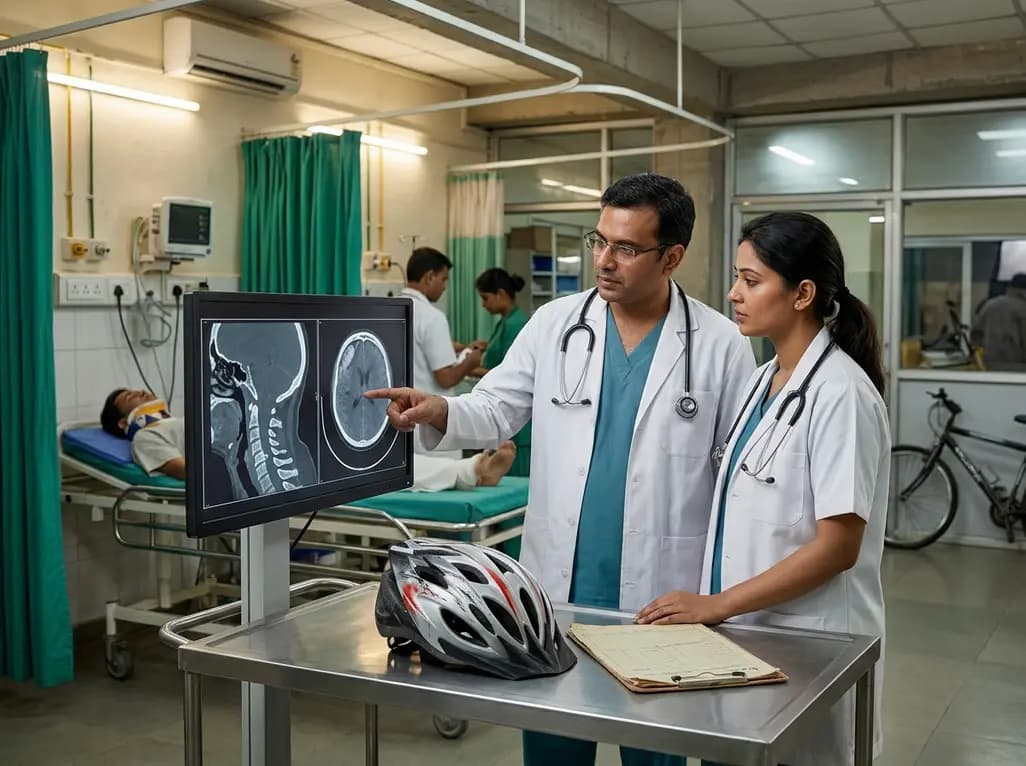
Cycling has witnessed a global surge in popularity as it serves as an eco-friendly mode of transport and a rigorous form of exercise. However, this growth has simultaneously increased the incidence of cycling-related cranio-spinal injuries across various urban landscapes. Vulnerable road users like cyclists often face significant risks during collisions because the lack of a protective shell makes them susceptible to high-energy impact forces. Recent data from major trauma centers highlights the urgent need for a better understanding of injury demographics and clinical outcomes. Most victims are males in their mid-forties, indicating a demographic shift toward adult commuters rather than just younger recreational riders. Consequently, healthcare providers must prepare for a diverse range of neurological and orthopedic emergencies in this group. Understanding these patterns allows for better resource allocation in emergency departments and specialized trauma units. Furthermore, public health initiatives can use this epidemiological data to design safer urban infrastructure and traffic flow. By identifying high-risk groups, clinicians can advocate for targeted safety measures and mandatory protective gear. Ultimately, the goal is to reduce the burden of long-term disability resulting from these traumatic accidents. As cycling rates continue to rise, the medical community must remain vigilant and proactive. Systematic investigation into injury mechanisms remains the cornerstone of effective trauma management for these patients. Therefore, clinicians must stay updated on the latest findings from high-volume cycling regions to optimize patient care.
Intracranial trauma represents one of the most critical outcomes of cycling accidents and often dictates the long-term prognosis. Among patients admitted for cycling-related cranio-spinal injuries, over half sustain significant trauma to the head or the cervical spine. Specifically, intracranial bleeds are the most prevalent finding, occurring in nearly one-third of all admitted cases. These hemorrhages often include subdural and epidural hematomas, which require rapid neurosurgical evaluation and intervention. Following bleeds, skull fractures and cerebral contusions are the most frequently observed pathologies in trauma centers. These injuries pose a significant threat to long-term cognitive function, motor skills, and overall survival rates. Notably, the severity of head trauma often correlates strongly with the specific mechanism of the crash. Direct impacts against hard surfaces or motorized vehicles transmit immense kinetic energy directly to the cranium. Resultantly, patients may present with depressed skull fractures or diffuse axonal injury that requires intensive monitoring. Clinicians must perform comprehensive neurological assessments using the Glasgow Coma Scale immediately upon patient arrival. Moreover, early radiological imaging is essential for detecting occult injuries that might worsen over time without intervention. Management protocols often involve stabilizing intracranial pressure and preventing secondary brain insults through pharmacological and surgical means. By recognizing these common patterns, emergency teams can streamline their diagnostic workflows for faster treatment. Consequently, the focus remains on rapid stabilization and neuroprotective strategies during the acute trauma phase.
Spinal injuries in cyclists present unique challenges for orthopedic and trauma surgeons due to the complex mechanics of falls. Recent studies emphasize that cervical segment fractures are particularly common among this population compared to lower spinal segments. Specifically, fractures at the C2, C6, and C7 levels appear with the highest frequency in clinical data. These segments are highly mobile and susceptible to extreme hyperextension or hyperflexion forces during a high-speed fall. Furthermore, collisions involving motorized vehicles often lead to a much higher proportion of multi-vertebral fractures. This indicates a much higher level of kinetic energy transfer compared to solo accidents or minor falls. Multi-level involvement complicates surgical planning and significantly increases the risk of permanent neurological deficit for the patient. Therefore, a thorough examination of the entire spinal column is mandatory for any cyclist involved in a high-speed road crash. Clinicians should maintain a high index of suspicion for spinal instability, even if the initial neurological exam appears unremarkable. Moreover, the presence of associated systemic injuries often masks spinal pain in the early stages of triage. Resultantly, standardized trauma protocols like the ATLS guidelines are vital for ensuring no spinal injury goes unnoticed. Modern imaging, including high-resolution CT and MRI, plays a pivotal role in characterizing these complex fractures accurately. Identifying the specific level and stability of the injury dictates the subsequent rehabilitation and management plan. Consequently, integrated care between neurosurgery and orthopedics is essential for optimizing long-term spinal health outcomes.
The mechanism of injury significantly influences the clinical trajectory and recovery of cycling trauma patients. Collisions involving motorized vehicles typically result in more severe cycling-related cranio-spinal injuries than non-motorized or solo incidents. Specifically, researchers have identified a strong correlation between motorized crashes and lower Glasgow Coma Scale scores at the scene. These patients often arrive at the trauma center with impaired consciousness and multiple systemic traumas requiring immediate attention. Furthermore, the Injury Severity Score is markedly higher in individuals hit by cars, trucks, or motorcycles. This score reflects the cumulative burden of trauma across different body systems, including the chest, pelvis, and abdomen. Consequently, these victims require longer hospital stays and more intensive care resources to manage their complex injuries. They also face a higher likelihood of undergoing complex surgical procedures across multiple specialties. In contrast, solo falls or collisions with stationary objects often result in more localized and less life-threatening injuries. However, even low-speed accidents can be devastating if the cyclist's head strikes a curb or a vehicle pillar. Therefore, clinicians must not underestimate the potential for serious internal damage based on the reported speed alone. High-energy mechanisms demand a more aggressive diagnostic approach and prolonged observation in the trauma unit. Moreover, the data suggests that motorized collisions are frequently associated with higher rates of multi-vertebral spine fractures. This underscores the need for stringent road safety regulations and dedicated, separated cycling lanes.
The protective role of helmets in preventing cycling-related cranio-spinal injuries cannot be overstated in modern medical practice. Clinical evidence consistently shows that lack of head protection correlates with more severe intracranial trauma and poorer outcomes. Specifically, non-helmeted cyclists are significantly more likely to suffer from skull fractures and severe intracranial hemorrhages. These injuries often lead to longer recovery times and much higher rates of long-term neurological disability. In addition, patients who do not wear helmets tend to present with lower initial consciousness levels at the accident scene. Therefore, clinicians should continue to advocate for consistent helmet use among all cycling demographics, regardless of age. While helmets do not eliminate the risk of concussion, they significantly reduce the likelihood of fatal or life-altering brain injuries. Moreover, the distribution of kinetic energy provided by a helmet can prevent the devastating effects of direct cranial impact. Some critics argue that helmet use might lead to risk-taking behavior, but the trauma data overwhelmingly supports their protective benefit. Consequently, public health campaigns must address the barriers to helmet adoption, such as perceived lack of comfort or high cost. Furthermore, educating cyclists about the correct fit and timely replacement of helmets is essential for maximum protection. In the event of a crash, a well-fitted helmet can be the difference between a minor injury and a permanent disability. Resultantly, healthcare providers play a key role in promoting these simple yet effective safety measures during routine consultations.
As cycling continues to grow in urban centers, healthcare systems must adapt to the evolving landscape of trauma. Future initiatives should focus on both primary prevention and the refinement of acute care protocols for accident victims. Specifically, increasing road safety through better infrastructure is paramount for reducing the overall incidence of cycling-related cranio-spinal injuries. Dedicated cycling lanes and improved traffic management can minimize the dangerous interactions between cyclists and motorized vehicles. Furthermore, trauma centers must ensure that their multi-disciplinary teams are proficient in managing the complex injuries common in these accidents. This involves regular training in advanced neuro-trauma management and spinal stabilization techniques. Additionally, the collection of high-quality epidemiological data is essential for informing local and national public safety policies. Researchers should continue to investigate the specific mechanics of injury to develop better protective gear and safer vehicle designs. Moreover, the integration of pre-hospital care and rapid transport to major trauma centers significantly improves the chances of survival. Paramedics play a critical role in the initial stabilization and triage of these high-risk patients. Therefore, improving the communication between field teams and hospital staff is vital for a seamless transition of care. Ultimately, a multi-disciplinary approach involving surgeons, public health officials, and urban planners is necessary to create a safer environment. Consequently, the focus remains on proactive prevention and the delivery of high-quality, evidence-based clinical care for every injured cyclist.
Intracranial bleeds are the most common head injuries, accounting for 29% of cases. These are followed by skull fractures (12%) and cerebral contusions (10%). Such injuries are particularly dangerous because they often cause increased intracranial pressure and require immediate neurosurgical evaluation to prevent long-term neurological damage or death.
Motorized collisions significantly increase the prevalence of spinal fractures at every vertebral segment. These accidents are also associated with a higher proportion of multi-vertebral fractures compared to non-motorized incidents. The high kinetic energy transferred during such collisions leads to greater spinal instability and more severe systemic injuries.
Helmet use is a critical factor in reducing the severity of head injuries and improving overall clinical outcomes. Cyclists who do not wear head protection suffer from more severe intracranial trauma and impaired consciousness. Consequently, they often face longer hospital stays and a higher risk of long-term cognitive disability.
Disclaimer: This content is for informational and educational purposes only and does not constitute professional medical advice, diagnosis, or treatment. Always seek the advice of your physician or other qualified health provider with any questions you may have regarding a medical condition. Refer to the latest local and national guidelines for clinical practice.
References
Chabros J et al. Cycling-related cranio-spinal injuries admitted to a Major Trauma Centre in the cycling capital of the UK. Br J Neurosurg. 2025 Aug. doi: 10.1080/02688697.2023.2255280. PMID: 37698133.
Alfrey EJ et al. Helmet Usage Reduces Serious Head Injury Without Decreasing Concussion After Bicycle Riders Crash. J Surg Res. 2020;252:131-136.
Joseph B et al. Bicycle injuries and helmet use: A systematic review and meta-analysis. Eur J Trauma Emerg Surg. 2017;43(2):181-187.
Gadey G et al. Trends in Cycling-Related Head and Spinal Cord Injuries in the United States. JAMA Netw Open. 2022;5(11):e2241634.

Read summarized clinical updates, watch expert medical content, and earn CME certifications right from your smartphone.
Open your smartphone camera to scan and install.





This study explores the demographics and patterns of cycling-related head and spine injuries, highlighting the increased risks associated with motorized collisions and the protective benefit of helmets.
2 weeks back

Andhra Pradesh reported 10 new Covid-19 cases, taking the state tally to 49 while deaths remain at four. With 24 patients hospitalized and 16 under home isolation, the Health Department has intensified monitoring. Medical professionals should review regional distribution, diagnostic protocols, and management plans.
Today

An 11-year Swedish registry study of 618 uterine sarcoma patients found that minimally invasive surgery yielded survival comparable to open surgery in early stages. However, adjuvant chemotherapy conferred no survival benefit in localized or advanced disease, highlighting stage and histology as key outcomes.
3 days back

A cross-sectional study evaluates post-intensive care syndrome in cardiac patients 2-4 weeks post-ICU discharge, highlighting cognitive, psychological, and functional impairments and the need for structured multidisciplinary rehabilitation.
3 days back
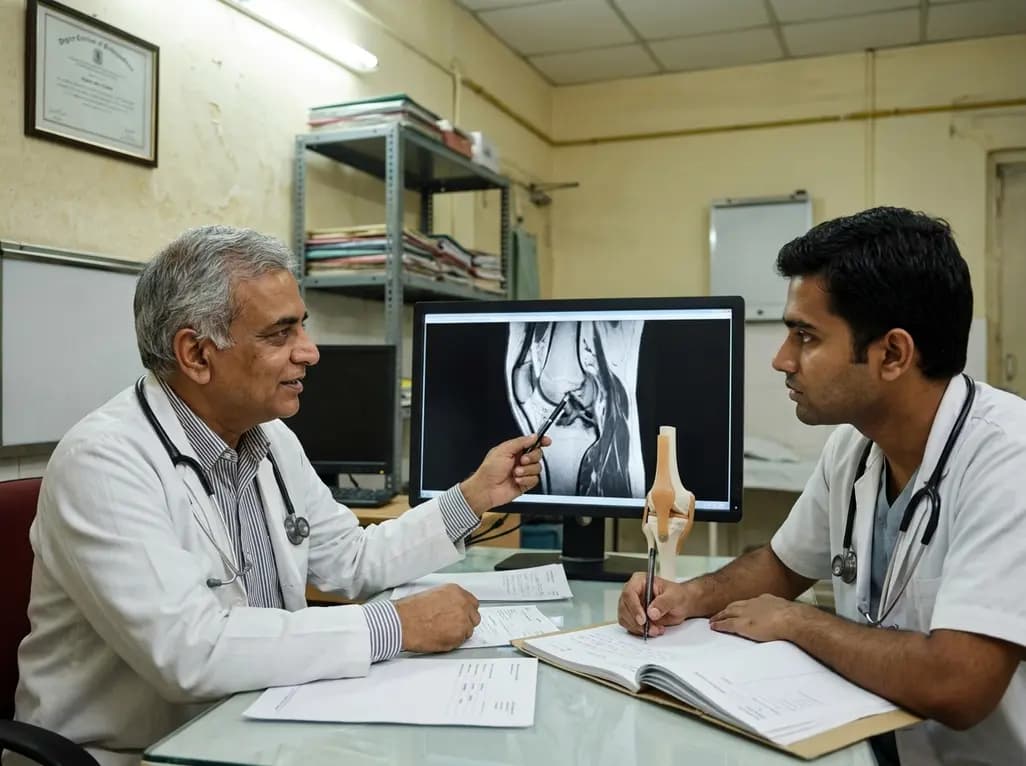
Anterior cruciate ligament reconstruction failure lacks uniform definition. A narrative review proposes an integrative framework incorporating objective and subjective instability, persistent pain, restricted motion, graft rupture, and secondary meniscal injury to standardize clinical reporting.
3 days back

With World Obesity Atlas data warning that over 41 million Indian children are overweight or obese, ICMR and NIN have unveiled a 10-point policy roadmap. The initiative calls for mandatory front-of-pack labeling, HFSS taxes, strict marketing bans, and healthier school environments to curb non-communicable diseases.
Today
