.webp&w=384&q=75)

Loading, please wait...
Loading, please wait...

Recent innovations in perioperative neurosurgical care challenge the long-standing belief that patients require prolonged inpatient hospitalisation after brain surgery. Today, adopting structured pathways for early discharge after craniotomy represents an essential paradigm shift in modern neuro-oncology. A landmark study published by Yogeswaran and colleagues provides robust real-world evidence demonstrating that post-operative day one discharge is feasible, safe, and resource-efficient for selected patients undergoing tumour resection.
Historically, neurosurgeons admitted craniotomy patients for several days to monitor for secondary haemorrhage, acute edema, and neurological decline. However, clinical evidence increasingly shows that most life-threatening intracranial complications manifest within the initial six to twelve hours following surgery. Consequently, modern enhanced recovery protocols can safely compress the post-operative observation window without compromising safety.
In this retrospective cohort investigation, investigators evaluated 263 consecutive adult patients undergoing elective craniotomy for cranial tumour resection between November 2022 and December 2023. Notably, the surgical unit achieved post-operative day one discharge in 146 individuals, which corresponds to 55.5% of the overall patient cohort. This accomplishment illustrates that routine extended hospitalisation is no longer necessary for uncomplicated patients.
Furthermore, the multidisciplinary team adhered to structured criteria prior to discharging each patient. Candidates required stable bedside neurological examinations, well-controlled post-operative pain on oral analgesics, spontaneous mobilization, unassisted oral intake, and clean post-operative computed tomography scans. Therefore, this study confirms that structured recovery pathways allow high-volume neurosurgical units to send over half of their cranial resection patients home on the very first day.
The primary barrier to adopting early discharge protocols has always been the fear of rebound hospitalisations and delayed surgical complications. Nevertheless, the study findings provide clear safety reassurance for clinical practitioners.
Overall, 8.0% of all cohort patients experienced an unplanned readmission within thirty days of surgical discharge. Specifically, patients discharged on post-operative day one experienced a 30-day unplanned readmission rate of only 7.5%. In contrast, patients who experienced prolonged initial hospital stays exhibited a comparable readmission rate of 8.5%. Statistical analysis confirmed that day one discharge did not increase readmission odds (odds ratio 0.87, 95% confidence interval 0.35 to 2.17, p = 0.760).
Moreover, cumulative hospital exposure differed dramatically between the two clinical groups. Patients discharged on post-operative day one utilized an average of only 1.0 total hospital days across the entire thirty-day post-operative period. Conversely, patients requiring extended initial inpatient care accumulated an average of 7.0 hospital days during the same follow-up period. Thus, early discharge significantly curtails unnecessary hospital exposure while preserving patient safety. These findings prove that rapid discharge does not merely shift inpatient complications into post-discharge readmission burdens.
Although early discharge offers major advantages, neurosurgeons must identify which patients require prolonged inpatient surveillance. Accordingly, the authors conducted thorough univariable logistic regression analyses to isolate variables associated with discharge delays.
The researchers identified several significant clinical barriers that prevented post-operative day one discharge. Most prominently, pre-existing diabetes mellitus significantly reduced the likelihood of early discharge (odds ratio 0.41, 95% confidence interval 0.17 to 0.96, p = 0.044). Diabetic individuals frequently encounter delayed wound healing, glycemic fluctuations, and systemic metabolic complications that demand close inpatient stabilization.
Additionally, perioperative adverse events severely hindered rapid recovery (odds ratio 0.18, 95% confidence interval 0.06 to 0.47, p = 0.001). These events included intraoperative blood loss, hemodynamic instability, severe nausea, and acute surgical wound complications. Most critically, post-operative neurological deficits almost entirely precluded next-day discharge (odds ratio 0.05, 95% confidence interval 0.01 to 0.17, p < 0.001). Patients who developed new focal deficits, cognitive changes, or speech impairments required extended inpatient physical therapy, occupational evaluation, and serial neuroimaging. Therefore, comprehensive risk stratification helps clinicians personalize recovery pathways while safeguarding fragile patients against premature departure.
Neurosurgical care commands enormous healthcare resources, including dedicated neuro-intensive care beds, specialized nursing, and advanced diagnostic monitoring. Consequently, standard multi-day admissions create severe bottlenecks in tertiary hospitals and delay time-sensitive oncological procedures.
Implementing a post-operative day one discharge pathway delivers substantial operational advantages for surgical institutions. By freeing up critical care beds within twenty-four hours, hospitals can schedule elective cranial procedures with minimal risk of last-minute cancellations. Furthermore, streamlined bed turnover substantially reduces direct hospital expenses and lowers overall institutional financial burdens.
In addition, minimizing inpatient stay directly benefits patients by reducing their exposure to nosocomial hazards. Extended hospitalisation exposes post-surgical patients to catheter-associated urinary tract infections, hospital-acquired pneumonia, and multidrug-resistant pathogens. Shorter stays also mitigate the incidence of deep venous thrombosis and pulmonary embolism by motivating earlier return to home-based physical activity. In contrast to hospital environments that disrupt sleep architecture, recuperating in a familiar domestic setting accelerates emotional well-being and psychological recovery. Hence, optimized patient throughput aligns institutional efficiency with patient-centred holistic recovery.
Successfully transitioning neurosurgical patients to home care on the first post-operative day demands a standardized, multidisciplinary protocol. Surgical teams cannot rely on arbitrary clinical impressions when making discharge determinations.
First, teams must perform routine baseline neuroimaging, typically non-contrast computed tomography, within several hours following craniotomy. This scan excludes acute surgical bed hematoma, pneumocephalus, cerebral edema, or mid-line shift before transferring the patient out of the recovery suite. Second, nursing specialists must confirm that the patient tolerates oral nutrition, achieves stable pain relief using oral analgesics, and ambulates safely without dizziness.
Furthermore, thorough caregiver education forms the cornerstone of safe outpatient transition. Clinicians must educate family members on recognizing red-flag signs, such as worsening cephalalgia, sudden focal weakness, fever, seizures, or wound drainage. Additionally, hospitals must establish rapid-access telephone triage pathways that connect discharged patients to on-call neurosurgical providers at any hour. Dedicated early follow-up appointments, scheduled within one week, allow timely wound inspection and staple removal. Consequently, robust outpatient safety nets build confidence among patients, families, and healthcare teams alike.
The paradigm of post-operative day one discharge carries profound implications for global healthcare delivery, particularly in developing regions like India. In many low- and middle-income countries, public tertiary neurosurgical centres face overwhelming patient volumes and severe shortages of intensive care capacity.
Under conventional practice, prolonged hospital admissions force neurosurgeons to defer complex tumour resections, creating protracted waiting lists for life-saving interventions. However, adopting standardized early recovery pathways enables high-volume centres to safely double surgical throughput using existing infrastructure. This efficiency significantly broadens patient access to specialized neuro-oncological care.
motivesNevertheless, implementation in diverse healthcare settings requires careful adaptation. Surgical units must establish reliable communication channels, especially for rural patients who reside far from specialized centres. Telemedicine platforms and mobile health follow-ups can effectively bridge geographic gaps, enabling remote monitoring of wound healing and functional recovery. Moreover, involving primary care physicians in local post-discharge surveillance strengthens regional continuity of care. Ultimately, integrating enhanced recovery protocols democratizes access to advanced neurosurgical interventions while preserving clinical standards and patient safety across global health systems.
Ideal candidates include clinically stable adult patients who undergo elective supratentorial craniotomy without major intraoperative complications. Patients must demonstrate baseline neurological stability, adequate oral pain control, independent ambulation, and unassisted oral intake. Furthermore, post-operative neuroimaging must confirm the absence of acute intracranial haemorrhage, severe edema, or significant mass effect.
No, clinical evidence demonstrates that day one discharge does not increase readmission risk. In the featured cohort, thirty-day unplanned readmissions occurred in 7.5% of early discharge patients compared with 8.5% of longer-stay patients. With careful patient selection and stable post-operative imaging, early discharge preserves patient safety without raising readmission odds.
The primary clinical factors delaying discharge include new post-operative neurological deficits, perioperative adverse events, and pre-existing diabetes mellitus. Patients experiencing new motor weakness, speech disturbances, severe nausea, or hemodynamic instability require prolonged inpatient observation. Additionally, inadequate domestic social support or persistent unmanaged surgical pain can impede safe next-day discharge.
Disclaimer: This content is for informational and educational purposes only... Refer to the latest local and national guidelines for clinical practice.
References

Read summarized clinical updates, watch expert medical content, and earn CME certifications right from your smartphone.
Open your smartphone camera to scan and install.





A landmark study reveals that post-operative day one discharge after craniotomy for brain tumour resection is safe and achievable in over 55% of patients without increasing 30-day readmissions, challenging conventional prolonged neurosurgical stays.
Today

Hantaviruses are emerging zoonotic pathogens causing hemorrhagic fever with renal syndrome and hantavirus pulmonary syndrome. Characterized by severe capillary leakage and thrombocytopenia, these infections require prompt diagnosis, vigilant hemodynamic monitoring, and specialized critical care support.
Today

The ClinGen Prenatal Gene Curation Expert Panel evaluated 63 disease relationships across 61 genes, establishing clinical validity for severe fetal phenotypes like hydrops and stillbirth to enhance prenatal genomic interpretation and clinical care.
Yesterday

Managing refractory hypoxemia after cardiothoracic surgery becomes perilous when prolonged air leak limits positive-pressure ventilation. This case-based review details how high-flow nasal cannula, paired with awake rehabilitation, enabled successful extubation and avoided invasive re-intubation.
Today

Idiopathic axillary web syndrome (IAWS) is a rare cause of shoulder pain and mobility restriction characterized by palpable axillary cording without prior surgery or trauma. Early diagnosis, nonsteroidal anti-inflammatory therapy, and physical rehabilitation lead to complete resolution of symptoms.
Today
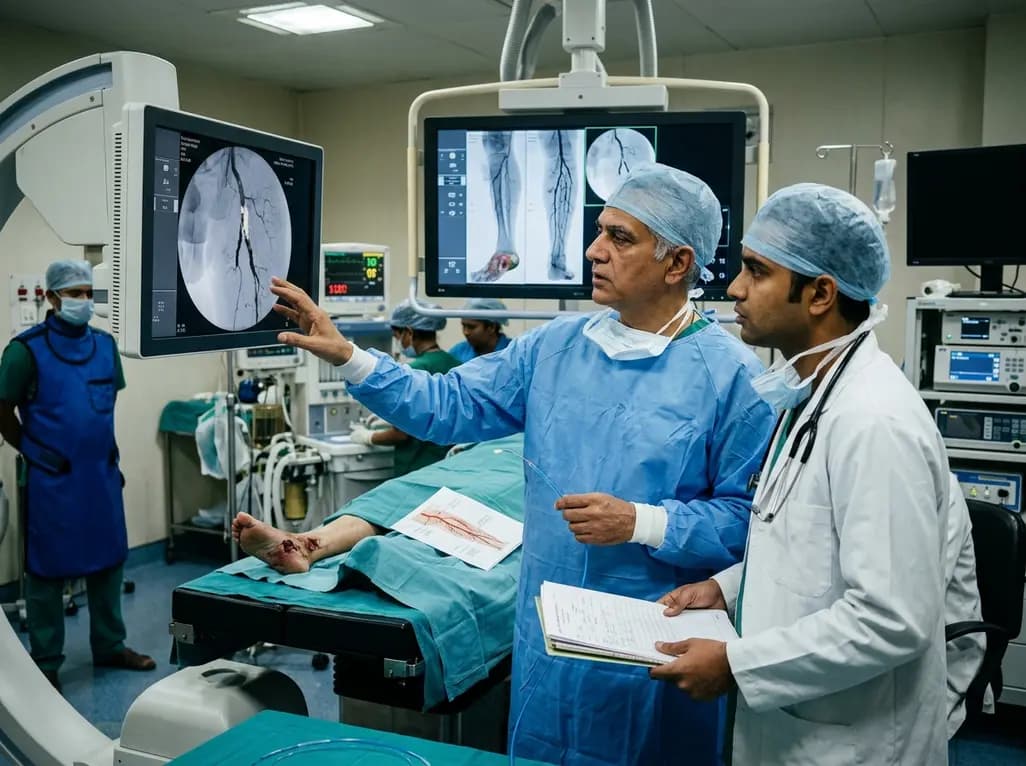
SWEDEPAD-1 trial insights show paclitaxel-coated devices do not improve long-term limb salvage in patients with chronic limb-threatening ischemia and tissue loss. While one-year reinterventions decreased, the devices were linked to a higher risk of major amputation at three months.
Today
