.webp&w=384&q=75)

Loading, please wait...
Loading, please wait...

Medical institutions worldwide now view continuous quality improvement (CQI) as a core competency for healthcare providers. However, many practitioners struggle to translate their routine CQI into scholarship. While quality data is often abundant, faculty members frequently lack the roadmap to align these clinical insights with academic standards. This guide bridges that gap using Glassick's renowned standards for scholarly work.
Building a scholarly framework requires intentional planning from the project's inception. You should begin by defining clear outcomes and organizing your data into a structured CQI portfolio. Consequently, this organization simplifies the transition from a local audit to a peer-reviewed publication. Additionally, clarifying ethical boundaries early ensures your project meets Institutional Review Board (IRB) requirements, which is essential for successful dissemination.
Collaboration remains a cornerstone of high-impact scholarship. Therefore, you should seek interdisciplinary partnerships within and across institutions to strengthen your findings. Leveraging existing clinical data can also save significant time and institutional resources. Furthermore, you must align your dissemination strategy with the project's maturity level. By iterating on your work over time, you create a robust body of evidence that supports both institutional growth and professional development.
Glassick’s standards include clear goals, adequate preparation, appropriate methods, significant results, effective presentation, and reflective critique. Applying these to CQI ensures the work is rigorous enough for academic publication.
To ensure publishability, you should follow the SQUIRE 2.0 guidelines. These provide a framework for reporting quality improvement work with the necessary depth and structure required by medical journals.
Disclaimer: This content is for informational and educational purposes only. It does not constitute professional medical advice, diagnosis, or treatment. Always seek the advice of your physician or other qualified health provider with any questions you may have regarding a medical condition. Refer to the latest local and national guidelines for clinical practice.
References
1. Qua K et al. Twelve tips for translating continuous quality improvement (CQI) into scholarship. Med Teach. 2026 May 31. doi: 10.1080/0142159X.2026.2681966. PMID: 42219529.
2. Glassick CE. Boyer's expanded definitions of scholarship, the standards for assessing scholarship, and the elusiveness of the scholarship of teaching. Acad Med. 2000;75(9):877-880.
3. Ogrinc G et al. SQUIRE 2.0 (Standards for QUality Improvement Reporting Excellence): revised publication guidelines from a detailed development process. BMJ Qual Saf. 2016;25(12):986-992.

Read summarized clinical updates, watch expert medical content, and earn CME certifications right from your smartphone.
Open your smartphone camera to scan and install.





Learn how to turn daily continuous quality improvement (CQI) data into peer-reviewed scholarship using Glassick’s standards and 12 practical strategies....
4 months ago

Recent epidemiological data reveals a dramatic surge in summer heat mortality driven by human-induced climate warming. This analysis explores the pathophysiological impacts on cardiac and renal systems, diagnostic dilemmas in death certification, and essential emergency cooling protocols for acute clinical care.
Today
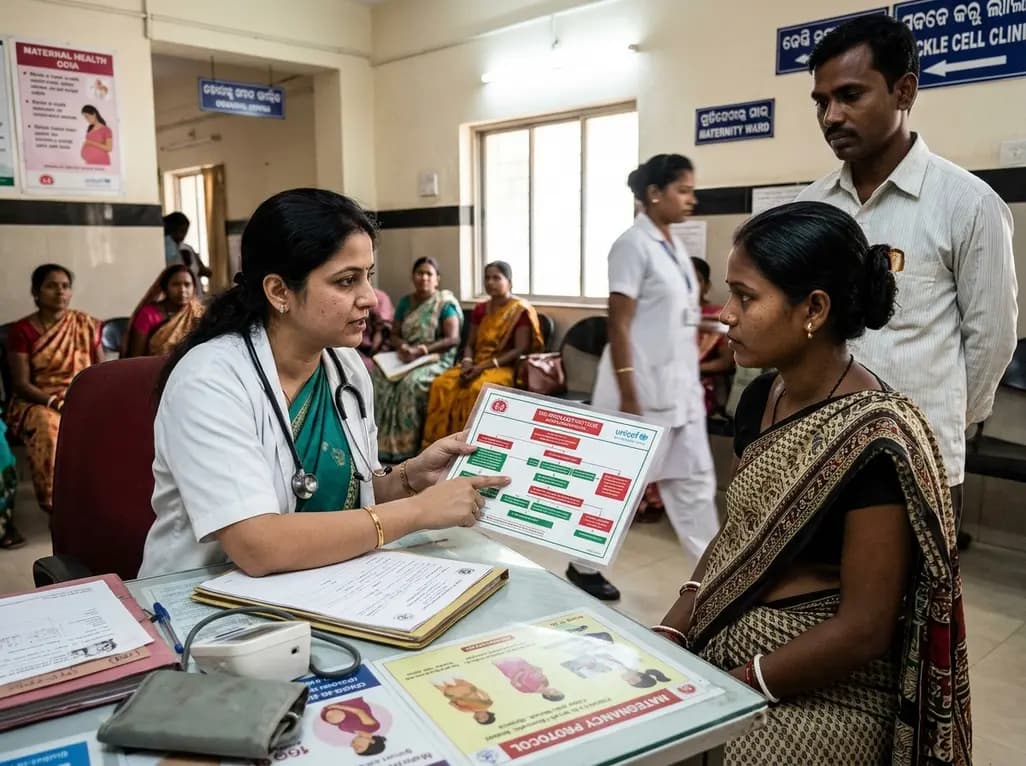
Odisha has established India's first state-level clinical protocol specifically tailored for pregnant women with sickle cell disease. Developed with NHM and UNICEF, the framework provides structured antenatal screening, crisis mitigation, standardized referral pathways, and specialized interdisciplinary care.
Today

India is advancing preventive healthcare by integrating genomics, artificial intelligence, and quantum technologies. With the SANGAM programme sequencing one million Indian genomes, clinicians can unlock personalized therapies, detect cardiometabolic risks early, and curb the burden of diabetes and heart disease.
Today

A randomized controlled trial demonstrates that an eight-week dual-task training intervention significantly improves static and dynamic postural control over standard balance exercises in individuals with chronic ankle instability, addressing critical neurocognitive deficits during athletic and daily activities.
Today

A retrospective cohort study of 7,716 ICU patients from the MIMIC-IV database demonstrates that Gradient Boosting Decision Trees significantly outperform traditional SOFA scores in predicting in-hospital mortality among patients with sepsis and diabetes, with SHAP analysis providing clinical interpretability.
Today
