.webp&w=384&q=75)

Loading, please wait...
Loading, please wait...
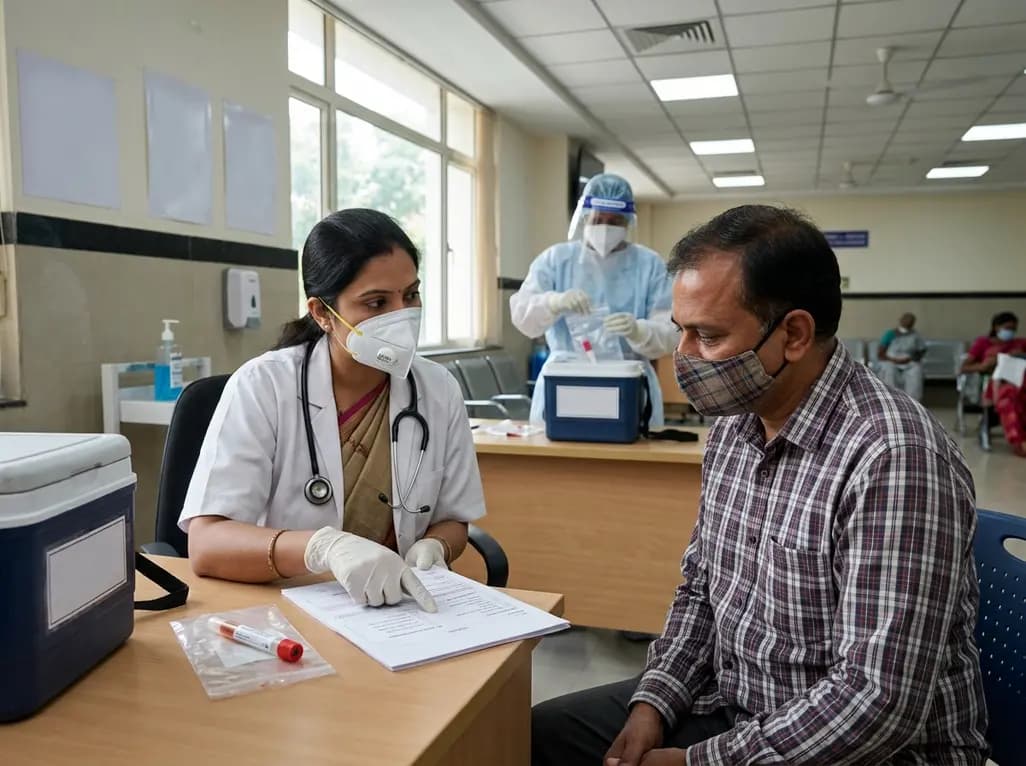
Recent reports from major tertiary healthcare institutions in Hyderabad indicate a noticeable increase in public enquiries regarding COVID-19 RT-PCR testing. Although Telangana state has recorded zero active localized transmissions, neighboring Andhra Pradesh recently documented nearly fifty confirmed cases. Consequently, anxious individuals, international travelers, and family members of vulnerable patients have begun seeking laboratory evaluation across government facilities. Clinicians at Osmania General Hospital and Niloufer Hospital report that while most presenting individuals demonstrate either mild upper respiratory symptoms or atypical presentations like transient ageusia, public apprehension remains elevated. Understanding the clinical context of these diagnostic requests is crucial for primary care physicians, general practitioners, and emergency room clinicians.
Healthcare authorities emphasize that unindicated diagnostic testing can overload molecular diagnostic laboratories and generate unnecessary public anxiety. State public health officials have clearly clarified that routine diagnostic evaluation is not warranted for asymptomatic individuals in community settings. Instead, testing protocols must focus strictly on targeted, symptom-based evaluations guided by rigorous clinical assessment. This article explores the current clinical landscape, diagnostic triage recommendations, public health advisories, and practical guidelines for medical practitioners managing respiratory clinical encounters.
Determining when to request molecular confirmation remains a pivotal clinical decision in outpatient and inpatient settings. Current state health advisories stipulate that COVID-19 RT-PCR testing should be selectively ordered rather than applied as a universal screening tool. Clinicians must prioritize diagnostic testing for individuals exhibiting influenza-like illness, including fever, cough, sore throat, or persistent myalgia. Additionally, patients presenting with severe acute respiratory infections require immediate molecular evaluation to rule out acute viral pathogens.
Furthermore, atypical clinical presentations warrant careful consideration, particularly among older adults and immunocompromised individuals. For example, acute onset of anosmia or ageusia following recent domestic or international travel should prompt clinical suspicion, even in the absence of high-grade fever. However, physicians should avoid advising diagnostic tests for asymptomatic individuals who lack documented close contact with confirmed cluster outbreaks. Adhering to these evidence-based clinical indications ensures appropriate laboratory resource utilization while maintaining high diagnostic sensitivity for high-risk patients. Tertiary institutions like Osmania General Hospital continue to conduct targeted testing based on clinical evaluation, reporting negative yields among recent routine clinical referrals. Therefore, maintaining objective clinical thresholds prevents unnecessary financial burden and psychological distress among patients.
Public health leaders, including the Director of Public Health, have emphasized that COVID-19 has transitioned into an endemic phase within the region. Consequently, epidemiological surveillance strategies have evolved from mass population screening to sentinel surveillance and cluster monitoring. Because SARS-CoV-2 circulates alongside other seasonal respiratory viruses, clinicians must differentiate between routine viral upper respiratory tract infections and potential outbreak clusters. Routine laboratory confirmation for mild, self-limiting respiratory symptoms in low-risk individuals is generally unnecessary unless linked to active epidemiological clusters.
Moreover, regional health departments actively monitor hospital admission trends and genomic sequencing data to identify potential emerging variants. Currently, surveillance data across Telangana confirm the absence of sustained community transmission or unexpected surges in severe disease. Neighboring state case spikes represent localized fluctuations typical of endemic respiratory illnesses. Therefore, medical practitioners should reassure anxious patients while promoting general preventive health practices. Physicians playing a frontline role in primary health centers and urban clinics should focus on identifying clinical warning signs rather than ordering exploratory diagnostic panels. Reassuring patients about the endemic nature of the virus helps maintain public calm while ensuring that diagnostic infrastructure remains focused on severe respiratory presentations.
Establishing clear referral pathways is vital for managing healthcare delivery across primary, secondary, and tertiary health facilities. Currently, primary health centers, basti dawakhanas, area hospitals, and pediatric specialty centers like Niloufer Hospital route suspected clinical cases requiring molecular testing to designated tertiary care hubs. Because pediatric and peripheral facilities may lack specialized molecular laboratory infrastructure, effective inter-hospital coordination ensures seamless sample collection and diagnostic processing.
When referring patients for laboratory evaluation, primary care physicians must provide comprehensive clinical documentation detailing symptom onset, comorbidities, and relevant travel history. Specialized tertiary centers such as Osmania General Hospital maintain dedicated sample collection workflows to accommodate referred cases efficiently. Furthermore, healthcare personnel must ensure that non-emergency transfers do not cause patient delay or compromise clinical care for acute non-COVID conditions. In emergency settings, crucial medical interventions, invasive surgical procedures, and obstetric deliveries must never be delayed pending diagnostic test results. By maintaining structured triage protocols, health systems can efficiently handle patient traffic, prevent hospital overcrowding, and optimize patient outcomes across all healthcare tiers.
In response to fluctuating regional case counts, health departments have reissued comprehensive advisories focusing on preventive health measures and vulnerable population protection. Medical practitioners should actively educate patients regarding non-pharmacological interventions, particularly during travel to regions reporting elevated respiratory infection rates. Maintaining hand hygiene, practicing respiratory etiquette, and wearing well-fitted face masks in crowded public settings or healthcare facilities remain highly effective preventive strategies.
Special attention must be directed toward vulnerable patient demographics, including elderly individuals, pregnant women, and patients with underlying chronic illnesses such as diabetes, hypertension, or chronic kidney disease. These high-risk groups should be counseled to seek prompt medical attention if they experience new or worsening respiratory symptoms. Additionally, healthcare facilities must enforce strict infection control practices, including routine sanitization, proper ventilation, and mask usage in clinical waiting areas. Primary care providers serve as vital conduits for disseminating accurate medical information, counteracting misinformation, and encouraging appropriate health-seeking behavior. Through proactive patient education and adherence to institutional advisory protocols, healthcare professionals can effectively mitigate transmission risks and protect vulnerable community members.
Q1: What are the primary clinical indications for ordering a COVID-19 RT-PCR test?
Physicians should recommend testing primarily for patients presenting with severe acute respiratory infections or influenza-like illness, including fever, cough, and sore throat. Additionally, testing is indicated for individuals exhibiting atypical symptoms such as sudden loss of taste or smell following travel, or those linked to suspected outbreak clusters. Routine screening of asymptomatic patients is generally not recommended unless clinically indicated for vulnerable or hospitalized individuals.
Q2: How should healthcare facilities manage patient referrals for RT-PCR testing?
Primary health centers, urban dawakhanas, and specialized pediatric facilities without molecular labs should refer suspected high-risk cases to designated tertiary hospitals. Referring clinicians must document clinical symptoms, travel history, and underlying comorbidities clearly. Diagnostic testing should never delay urgent medical care, emergency surgeries, or delivery procedures. Structured inter-hospital referral pathways help streamline diagnostic workflows and prevent hospital overcrowding.
Q3: What preventive measures should high-risk patients follow during seasonal respiratory spikes?
Vulnerable groups, including elderly individuals, pregnant women, and patients with chronic medical conditions, should maintain strict preventive precautions. These include wearing protective masks in crowded public places, practicing frequent hand hygiene, and avoiding poorly ventilated environments. High-risk individuals should seek early medical evaluation upon developing mild upper respiratory symptoms to allow timely clinical assessment, appropriate management, and risk stratification.
Disclaimer: This content is for informational and educational purposes only. It does not constitute medical advice or replace professional judgment. Refer to the latest local and national guidelines for clinical practice.
References

Read summarized clinical updates, watch expert medical content, and earn CME certifications right from your smartphone.
Open your smartphone camera to scan and install.





With rising COVID-19 test enquiries in Hyderabad following cases in neighboring regions, health authorities emphasize targeted, clinical-advice-driven testing over routine screening. This article outlines clinical indications, inter-hospital referral protocols, and public advisories for practicing physicians.
last month

Neurocognitive disorders, including mild cognitive impairment and dementia, frequently complicate heart failure, worsening patient outcomes and treatment adherence. This clinical review explores shared pathophysiology, early screening approaches, and integrated multidisciplinary interventions.
Today

A multicentre RCT in China shows that the PAICS AI system significantly boosts sonographer sensitivity in detecting fetal intracranial malformations by 8.7% without compromising specificity, offering promising diagnostic support for prenatal neurosonography.
Today
Transcatheter edge-to-edge repair offers a safe, minimally invasive alternative for older adults with severe mitral and tricuspid regurgitation. Integrating comprehensive geriatric assessment and delirium prevention aligns procedural success with functional longevity.
Today
A retrospective cohort study demonstrates that patients with anorexia nervosa and bulimia nervosa face significantly higher risks of lower extremity soft tissue injuries, including ACL tears and ligament sprains, along with heightened rates of orthopedic revision surgery, highlighting the need for systemic screening.
Today

A propensity-matched study shows ultrasound-guided pulsed radiofrequency of the lumbar sympathetic ganglion is non-inferior to fluoroscopy for painful diabetic neuropathy, reducing needle passes, procedure time, and radiation exposure while achieving equal pain relief.
Today
