.webp&w=384&q=75)

Loading, please wait...
Loading, please wait...

The global population of older adults is expanding rapidly. Consequently, clinicians encounter a growing number of geriatric patients with severe valvular heart disease. Mitral regurgitation and tricuspid regurgitation frequently cause debilitating heart failure in this population. However, advanced age, frailty, and multiple comorbidities often preclude conventional cardiac surgery. Fortunately, transcatheter edge-to-edge repair provides a minimally invasive and effective therapeutic alternative. This catheter-based intervention restores hemodynamic stability and improves daily function without requiring sternotomy.
Surgical valve intervention often carries prohibitive operative risks in octogenarians and nonagenarians. Therefore, transcatheter edge-to-edge repair has rapidly transformed therapeutic options for high-risk older individuals. Interventional cardiologists utilize specialized mechanical clips to approximate valve leaflets percutaneously via transvenous access. Consequently, this technique significantly reduces regurgitant volume across both mitral and tricuspid valves. Contemporary registries and randomized clinical trials confirm that this therapy delivers consistent leaflet coaptation across diverse anatomic variations. In addition, patients experience immediate reduction in left atrial and right atrial filling pressures. As a result, pulmonary vascular congestion decreases rapidly, which steadily improves baseline functional capacity. Furthermore, the minimally invasive catheter approach completely avoids cardiopulmonary bypass, hypothermia, and extensive chest wall trauma. This physiological protection substantially lowers periprocedural morbidity and bleeding risks compared to conventional open-heart surgery. Moreover, clinical teams observe rapid recovery timelines even in severely frail individuals. Shorter intensive care stays directly minimize exposure to hospital-acquired infections and immobilization hazards. Clinicians also report significant symptomatic relief within the first month after the procedure. Ultimately, this structural heart innovation bridges a vital clinical gap for vulnerable patients who lack conventional surgical options.
Severe atrioventricular valve regurgitation causes progressive ventricular remodeling and recurrent pulmonary edema. However, transcatheter repair effectively halts this adverse cycle in older patients. Randomized trials demonstrate durable reductions in regurgitant volume alongside meaningful drops in heart failure hospitalizations. For instance, mitral edge-to-edge intervention relieves left-sided hydrostatic pressure and preserves systemic forward flow. Similarly, tricuspid repair alleviates chronic systemic venous congestion, hepatic engorgement, and refractory peripheral edema. In addition, patients consistently report substantial gains in daily functional stamina and vitality. Standardized metric instruments, including the Kansas City Cardiomyopathy Questionnaire, document marked quality-of-life enhancements following successful repair. Furthermore, prompt valve stabilization attenuates secondary renal impairment by improving effective renal perfusion pressure. Clinicians also note a decreased need for escalating loop diuretic dosages during postprocedural maintenance. Consequently, patients experience fewer electrolyte disturbances and less frequent emergency department visits. In contrast to conservative medical therapy alone, mechanical leaflet grasping offers tangible structural restoration. Moreover, combining guideline-directed medical therapy with device therapy yields synergistic survival benefits. As a result, older adults achieve greater symptom control and maintain autonomous living. Therefore, timely transcatheter intervention improves functional independence while easing the pervasive chronic burden on caregivers and health systems alike.
Standard surgical risk calculators often fail to capture the physiological complexity of elderly cardiac patients. Consequently, cardiologists must integrate dedicated geriatric cardiology tools into preprocedural evaluations. The Comprehensive Geriatric Assessment provides an objective framework for evaluating multiple vulnerable domains. Specifically, clinicians evaluate frailty, baseline cognition, fall vulnerability, nutritional reserves, polypharmacy, and family support systems. For example, the Mini Nutritional Assessment-Short Form identifies latent protein-calorie malnutrition that impairs tissue healing. Similarly, the Katz Index of Independence in Activities of Daily Living determines baseline self-care capability. In addition, cognitive screening instruments detect subtle baseline deficits that predispose patients to post-intervention delirium. Furthermore, pharmacists should systematically review medication regimens to eliminate inappropriate anticholinergic or sedative drugs. Heart teams combine these geriatric scores with echocardiographic data to predict realistic therapeutic success. Thus, multidisciplinary assessment prevents futile interventions in patients with irreversible multisystem failure. Instead, this rigorous approach identifies modifiable risks prior to entering the catheterization laboratory. Moreover, clinicians use these detailed metrics to structure prehabilitation regimens for borderline candidates. Therefore, comprehensive screening ensures optimal candidate selection and promotes equitable resource utilization. Ultimately, personalized cardiogeriatric evaluation aligns procedural intervention with the patient's individual goals of care.
Optimizing outcomes in older adults extends well beyond technically flawless clip placement. Therefore, hospital teams must execute structured perioperative care pathways tailored to geriatric vulnerabilities. Hospital-acquired delirium represents a devastating complication that prolongs admission and increases long-term cognitive decline. To mitigate this hazard, clinicians maintain familiar day-night orientation routines and minimize central nervous system depressants. In addition, nursing staff promote early mobilization within hours after sheath removal. Physical therapists initiate supervised ambulation, which prevents rapid muscle wasting and deep venous thrombosis. Furthermore, teams prioritize early removal of urinary catheters and unnecessary intravenous lines. Hydration strategies require meticulous calibration, because older adults readily swing between fluid overload and prerenal azotemia. Similarly, active caregiver engagement provides vital psychological reassurance throughout the inpatient recovery period. Post-discharge protocols incorporate structured home-based or outpatient cardiac rehabilitation programs. Consequently, these multidisciplinary interventions reinforce physical endurance and build neuromuscular confidence. Moreover, close telemonitoring of daily weights and symptoms prevents early readmissions. Additionally, geriatric nurse navigators coordinate communication between heart teams and primary care providers. As a result, patients transition smoothly from the acute hospital setting back to their communities. Ultimately, proactive perioperative care transforms mechanical leaflet success into sustained clinical recovery and functional independence.
Despite remarkable advances in catheter interventions, significant evidence gaps persist in current cardiovascular literature. Most historical clinical trials excluded patients with severe physical frailty or moderate cognitive impairment. Consequently, published literature provides limited evidence to guide clinical decisions in the oldest-old demographic. Furthermore, existing cardiovascular risk scores lack valve-specific calibration for geriatric vulnerabilities. Therefore, researchers must develop validated scoring systems that predict functional longevity rather than mere thirty-day survival. In addition, future clinical trials must prioritize patient-reported outcome measures alongside traditional mortality end points. Older individuals frequently value independent mobility and cognitive preservation above absolute life prolongation. Similarly, investigators need robust long-term registry data tracking nursing home placement and activities of daily living. Moreover, healthcare systems should establish dedicated cardiogeriatric valve clinics to streamline outpatient surveillance. Such collaborative clinics align technological capabilities with holistic patient goals and preferences. Because population aging continues unabated, cardiologists face an unprecedented imperative to refine therapeutic precision. Consequently, bridging these empirical gaps will establish robust guidelines for managing complex polyvalvular disease in advancing age. Ultimately, expanding research into frailty-specific outcomes will empower clinicians to deliver compassionate, high-value structural heart interventions.
Transcatheter edge-to-edge repair primarily benefits older adults suffering from severe, symptomatic mitral or tricuspid regurgitation who face prohibitive surgical risk. Furthermore, candidates must retain reasonable functional reserve and meaningful life expectancy beyond one year. Consequently, heart teams carefully select patients who experience persistent symptoms despite optimal medical therapy. Ultimately, early identification and precise anatomic suitability allow clinicians to achieve durable hemodynamic improvement and prevent recurrent heart failure hospitalizations.
Frailty assessment provides vital objective data that traditional surgical calculators frequently miss. Specifically, clinicians evaluate functional independence, cognitive reserve, and nutritional status before scheduling catheter intervention. Therefore, identifying reversible deficits allows the multidisciplinary team to implement targeted nutritional support and physical prehabilitation. Moreover, detecting severe, end-stage frailty prevents non-beneficial procedures. Ultimately, this comprehensive evaluation ensures that procedural success translates into tangible functional recovery and improved daily quality of life.
Hospital teams prevent postprocedural delirium by implementing multi-component geriatric care bundles. For instance, staff promote early mobilization, remove indwelling catheters promptly, and maintain consistent day-night sleep cycles. In addition, clinicians avoid psychoactive sedatives and optimize sensory aids like glasses and hearing devices. Active family engagement also provides critical psychological grounding during recovery. Consequently, these systematic non-pharmacological interventions preserve cognitive clarity, shorten hospital stays, and enhance overall functional recovery after valve repair.
Disclaimer: This content is for informational and educational purposes only... Refer to the latest local and national guidelines for clinical practice.
References

Read summarized clinical updates, watch expert medical content, and earn CME certifications right from your smartphone.
Open your smartphone camera to scan and install.





Transcatheter edge-to-edge repair offers a safe, minimally invasive alternative for older adults with severe mitral and tricuspid regurgitation. Integrating comprehensive geriatric assessment and delirium prevention aligns procedural success with functional longevity.
last month

Explore vital recurrent stroke predictors in lacunar stroke patients managed with intensive blood pressure lowering. This analysis examines trial findings from SPS3 to uncover residual vascular risks, metabolic factors, and targeted secondary prevention strategies for high-risk neurological patients.
Today

Odisha has established India's first state-level clinical protocol specifically tailored for pregnant women with sickle cell disease. Developed with NHM and UNICEF, the framework provides structured antenatal screening, crisis mitigation, standardized referral pathways, and specialized interdisciplinary care.
Today

India is advancing preventive healthcare by integrating genomics, artificial intelligence, and quantum technologies. With the SANGAM programme sequencing one million Indian genomes, clinicians can unlock personalized therapies, detect cardiometabolic risks early, and curb the burden of diabetes and heart disease.
Today
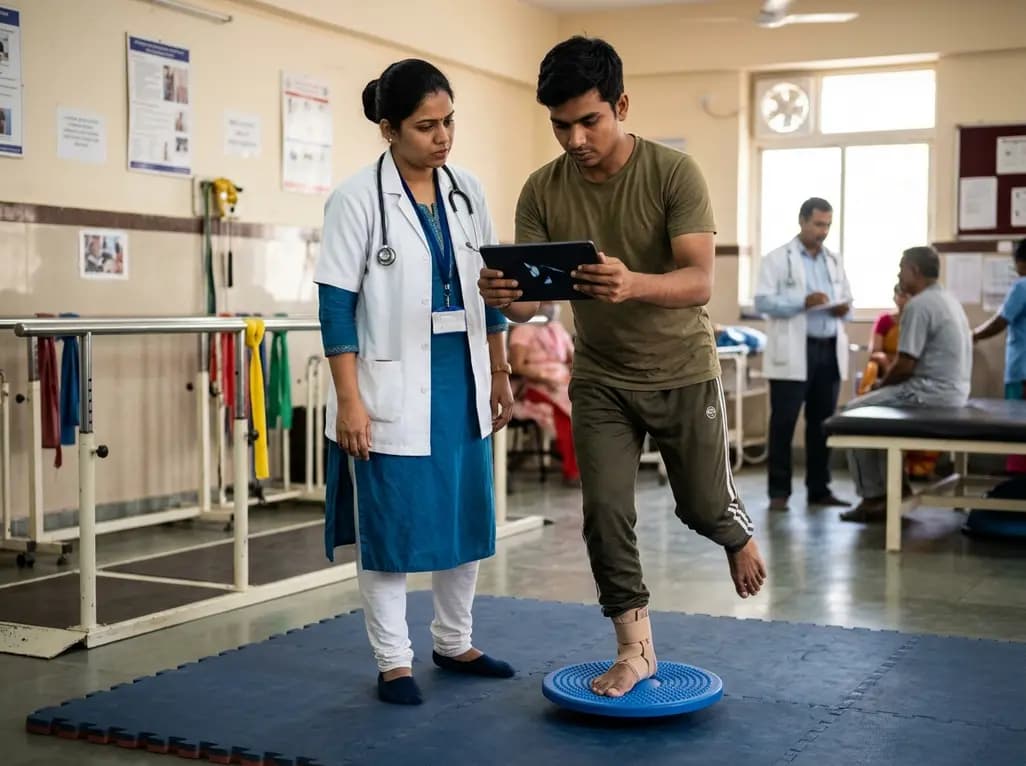
A randomized controlled trial demonstrates that an eight-week dual-task training intervention significantly improves static and dynamic postural control over standard balance exercises in individuals with chronic ankle instability, addressing critical neurocognitive deficits during athletic and daily activities.
Today

A retrospective cohort study of 7,716 ICU patients from the MIMIC-IV database demonstrates that Gradient Boosting Decision Trees significantly outperform traditional SOFA scores in predicting in-hospital mortality among patients with sepsis and diabetes, with SHAP analysis providing clinical interpretability.
Today
