.webp&w=384&q=75)

Loading, please wait...
Loading, please wait...
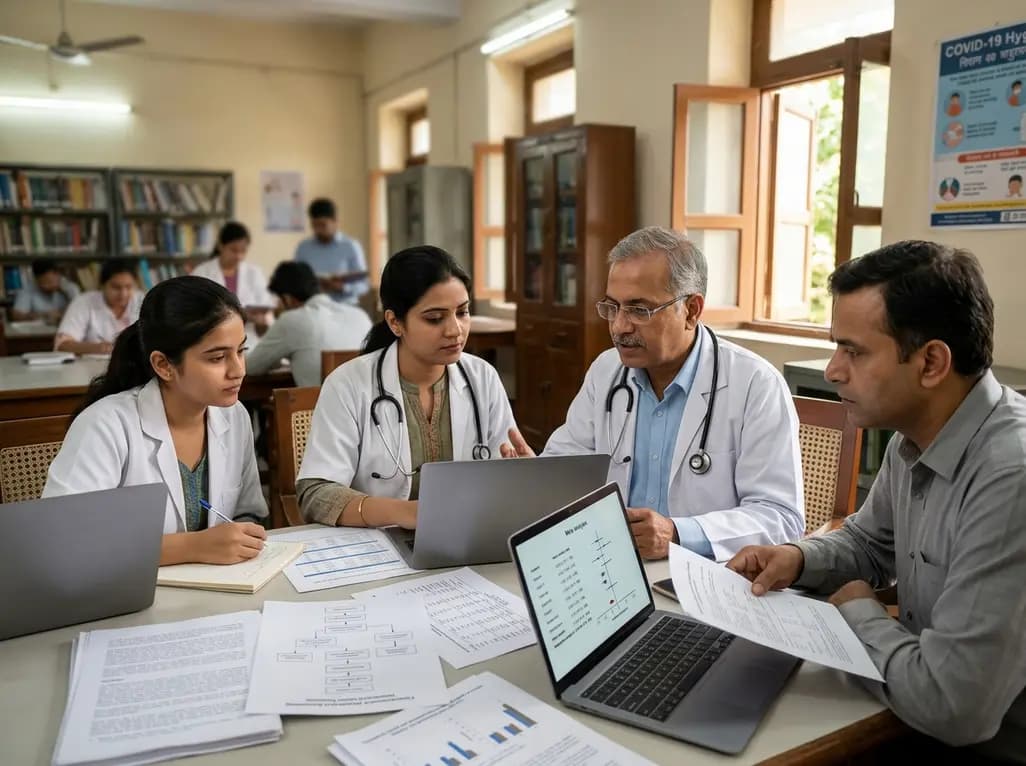
The global health landscape has changed drastically, placing immense pressure on frontline workers. Consequently, COVID-19 health literacy interventions have emerged as essential tools for empowering doctors and nurses. These professionals face unique risks while managing patient care and navigating a sea of information. Health literacy involves the ability to access, understand, appraise, and apply medical information effectively. In India, where misinformation can spread rapidly, ensuring that health professionals possess high health literacy is paramount for public safety. This systematic review investigates how various educational strategies influence the competencies of healthcare providers. It provides a critical analysis of current research to determine which methods truly enhance pandemic-related literacy. By evaluating these interventions, we can better understand how to support our medical workforce. Improving literacy not only protects individuals but also strengthens the overall healthcare delivery system during ongoing and future public health crises.
Health literacy is not a single skill but rather a multifaceted construct. Specifically, it encompasses four distinct domains: accessing, understanding, appraising, and applying health information. During the pandemic, healthcare workers had to navigate rapidly changing protocols and emerging scientific data. Therefore, the ability to critically appraise the quality of evidence became a survival skill in clinical settings. Many interventions focused heavily on the "access" and "understand" components, often neglecting the more complex "appraise" and "apply" facets. This gap is significant because health professionals must translate theoretical knowledge into practical bedside actions. For instance, understanding how a virus spreads is different from correctly applying that knowledge during a high-stakes emergency procedure. Furthermore, the systematic review highlights that while many studies aimed to improve general knowledge, few utilized comprehensive health literacy models. Without a solid theoretical framework, interventions may fail to address the behavioral nuances required for effective infection control. In India, where diverse languages and cultural contexts influence medical practice, these interventions must be even more robust. Consequently, future programs should aim to develop all four dimensions of health literacy to ensure professionals can handle complex health information environments efficiently.
The researchers conducted an exhaustive search to identify relevant studies, spanning databases like PubMed, Embase, and various clinical trial registries. The search process was rigorous, involving updates as recently as August 2025 to ensure the inclusion of the latest findings. They included a diverse array of study designs, ranging from randomized controlled trials (RCTs) to uncontrolled before-and-after studies. This broad inclusion criteria allowed for a comprehensive overview of the global landscape regarding educational strategies. Two independent reviewers meticulously screened thousands of titles and abstracts to minimize selection bias and ensure accuracy. Ultimately, the review included 15 RCTs and over 70 uncontrolled studies, representing hundreds of thousands of participants worldwide. This massive data set reflects the global priority placed on educating health professionals during the crisis. The review also examined various delivery modes, such as online modules, workshops, and simulation-based training. By synthesizing this information, the authors sought to provide a clear picture of what works in healthcare education. However, the diversity in intervention types also presented challenges for meta-analysis. Despite these hurdles, the systematic approach provides a valuable roadmap for identifying strengths and weaknesses in current educational efforts for clinicians.
One of the most promising findings from the review concerns the improvement of specific competencies. Specifically, interventions were found to potentially increase knowledge regarding COVID-19 vaccines among various occupational groups. This is crucial for healthcare providers who serve as the primary source of information for hesitant patient populations. Furthermore, the review noted significant improvements in infection prevention and control (IPC) skills. For example, training sessions focused on the correct donning and doffing of personal protective equipment (PPE) showed positive results. These practical skills are vital for reducing the risk of occupational exposure and preventing nosocomial transmission. However, while the standardized mean differences indicated improvement, the researchers noted that the evidence remains very uncertain. This uncertainty stems from the fact that many studies reported short-term gains without assessing long-term retention. In clinical practice, the ability to maintain high IPC standards consistently is more important than a one-time performance. Additionally, the focus on technical skills often overshadowed the communicative aspects of health literacy. To truly enhance pandemic resilience, health professionals need both the technical know-how and the literacy skills to communicate these practices effectively.
Despite the large number of studies, the overall quality of evidence is a major concern for the medical community. Most included studies were found to have a high risk of bias, which limits the reliability of their conclusions. Many of the non-randomized and uncontrolled studies failed to account for confounding variables, making it difficult to attribute improvements solely to the interventions. Furthermore, the lack of standardized outcome measures makes it hard to compare results across different international settings. Many programs used self-developed questionnaires that had not been validated, potentially leading to overestimations of effectiveness. This high risk of bias is a significant hurdle for policy makers who rely on high-quality evidence to fund and implement training programs. The GRADE approach used by the reviewers confirmed that the certainty of evidence for most outcomes is low or very low. Consequently, while the initial results are encouraging, they must be interpreted with extreme caution by practitioners. For Indian healthcare institutions, this highlights the need for more rigorous, well-designed research. Investing in high-quality trials will provide the clarity needed to develop effective, evidence-based programs that can withstand public health pressures.
The findings of this systematic review serve as a call to action for medical educators and institutional leaders. There is a clear and urgent need for interventions that are grounded in established health literacy theoretical principles. Rather than just focusing on the transmission of facts, future programs should aim to improve critical thinking and decision-making skills. For health professionals in India, this means moving beyond simple protocol checklists toward a deeper understanding of how to manage evolving medical information. Additionally, delivery modes should be optimized for busy clinical schedules. Digital platforms and mobile learning could offer flexible ways to enhance literacy without adding to the professional burden. Moreover, the review emphasizes the need for long-term follow-up to ensure that knowledge gains translate into sustained behavioral changes. We must also address the "appraisal" facet of literacy, enabling doctors to distinguish between high-quality evidence and misinformation. As the healthcare landscape continues to evolve, these skills will be indispensable for all clinicians. By fostering a culture of continuous learning and critical inquiry, we can better prepare our workforce for future challenges. Ultimately, high-quality, statistically powered research will be the foundation for future literacy programs.
These interventions typically use structured training modules, simulation exercises, and visual aids to reinforce correct protocols. By improving the "apply" facet of health literacy, staff members become more proficient in high-risk tasks such as PPE management. The systematic review indicates that targeted education can significantly boost short-term skills. However, the long-term sustainability of these improvements depends on regular reinforcement and a supportive institutional culture that prioritizes safety for everyone involved. (78 words)
The uncertainty primarily arises from methodological flaws in the available studies, such as small sample sizes and a high risk of bias. Many researchers used uncontrolled designs, which makes it difficult to prove that the intervention caused the observed improvements. Furthermore, the lack of standardized, validated tools to measure health literacy facets leads to inconsistent data. Therefore, while results look promising, more rigorous randomized controlled trials are necessary to confirm these findings for clinical implementation. (79 words)
The systematic review included a broad range of health occupational groups, including doctors, nurses, and allied health professionals. While the interventions were generally beneficial across the board, the delivery methods varied. For instance, nursing staff often showed significant improvements in practical IPC skills through hands-on simulations. Ultimately, any professional involved in patient care or public health communication benefits from improved literacy, as it enables them to provide safer, evidence-based care to their diverse communities. (79 words)
Disclaimer: This content is for informational and educational purposes only. It does not constitute medical advice or establish a doctor-patient relationship. Healthcare professionals should exercise their professional judgment and cross-reference information with primary sources. Refer to the latest local and national guidelines for clinical practice.
References
Hasenpusch C et al. Interventions to Enhance COVID-19 Pandemic Health Literacy in Health Professionals: Systematic Review. JMIR Med Educ. 2026 Jul 10. doi: 10.2196/70400. PMID: 42430764.
World Health Organization. Health Literacy. 2024.
Damian AJ, Gallo JJ. Promoting health literacy during the COVID-19 pandemic: A call to action for healthcare professionals. Harvard Kennedy School Misinformation Review. 2020;1(3).

Read summarized clinical updates, watch expert medical content, and earn CME certifications right from your smartphone.
Open your smartphone camera to scan and install.





This systematic review evaluates the effectiveness of COVID-19 health literacy interventions for health professionals. It highlights potential improvements in vaccine knowledge and PPE skills while emphasizing the urgent need for high-quality, theory-driven research to address significant study biases.
3 months ago

Discover the crucial role of glymphatic dysfunction in stroke, where perivascular clearance failure and neuroinflammation exacerbate cerebral edema and post-stroke brain injury.
Today

A prenatal case highlights severe glutaric acidemia type II presenting as bilateral hyperechoic cystic kidneys at 18 weeks. Whole-exome sequencing revealed a novel homozygous ETFDH frameshift variant, demonstrating the power of rapid genetic testing in fetal renal anomalies.
Today

Review how tailored exercise programs benefit frail older patients with heart failure. Explore pathophysiological mechanisms, individualized training prescriptions, and strategies to overcome adherence barriers in clinical practice.
Yesterday

This comparative study evaluates posterior labral tears with and without glenohumeral instability, highlighting distinct demographic patterns, MRI underestimation in stable shoulders, and successful arthroscopic repair outcomes.
Yesterday

A clinical study demonstrates that early intervention with tocilizumab, either as monotherapy or bridged with corticosteroids, achieves significant proptosis reduction and resolves active inflammation in treatment-naive thyroid eye disease.
Yesterday
