

Loading, please wait...
Loading, please wait...

Pelvic radiotherapy remains a vital treatment for cervical, prostate, and colorectal cancers. However, severe radiation-induced vascular damage often causes progressive periureteral fibrosis, resulting in refractory radiation-induced ureteral strictures. Managing these obstructions is challenging because ischemic tissues respond poorly to conventional reconstruction or balloon dilation. Consequently, patients frequently depend on repetitive double-J stent exchanges that impair quality of life. Metallic ureteral stents offer a durable alternative. A recent study compares covered self-expandable versus thermo-expandable metal stents for managing these refractory strictures.
Radiation therapy causes progressive obliterative endarteritis within the pelvic retroperitoneum. Consequently, microvascular insufficiency induces chronic tissue hypoxia, dense collagen deposition, and transmural ureteral ischemia. Unlike typical surgical strictures, irradiated tissues possess severely compromised healing capacity. Open or laparoscopic reconstructive surgeries carry high failure rates due to poor tissue vascularity and extensive scarring. Similarly, simple endoscopic balloon dilation or endoureterotomy rarely achieves durable luminal patency. As a result, patients often require indwelling double-J stents that necessitate frequent replacements every three to six months. However, frequent exchanges cause persistent bladder irritation, recurrent hematuria, and chronic urinary tract infections. These complications significantly deteriorate functional independence and patient quality of life. For these reasons, endourologists increasingly utilize metallic ureteral stents to counteract aggressive extrinsic fibrotic compression. These devices provide continuous urinary drainage while eliminating the morbidity of repetitive surgical exchanges. Nevertheless, clinicians must carefully select appropriate stent designs to match the ischemic pathology of irradiated ureters.
Modern endourological practice utilizes two primary metallic stent configurations for chronic ureteral obstruction. The Allium device is a covered self-expandable metal stent composed of a nickel-titanium alloy skeleton coated with an impermeable polymer sheath. This synthetic barrier prevents hyperplastic urothelial ingrowth through the metallic mesh, which historically caused stent occlusion in uncovered designs. Furthermore, the elastic properties of the self-expanding framework provide durable radial resistive force against dense extrinsic compression. In contrast, the Memokath stent represents a thermo-expandable nickel-titanium alloy coil without a protective covering sheath. Clinicians deploy Memokath devices using warm saline to expand the anchoring segments within the ureteral lumen. Although both devices deliver robust mechanical support, their biological interactions with irradiated tissue differ markedly. The uncovered spaces between Memokath coils allow reactive tissue proliferation and encrustation over prolonged indwelling times. Conversely, the impermeable covering of the Allium stent protects the lumen from mucosal hyperplasia. Therefore, mechanical design directly impacts long-term stent patency.
A recent retrospective cohort study by Bian and colleagues provides valuable comparative evidence regarding both stent types. The authors analyzed 149 patients encompassing 205 ureteral units treated for refractory radiation-induced strictures over a six-year period. Baseline characteristics were well balanced between the Allium and Memokath cohorts. Notably, both devices achieved significant radiological decompression, demonstrated by substantial reductions in renal pelvic width. However, significant serum creatinine reduction occurred exclusively in the Allium cohort, whereas the Memokath group failed to show significant improvement. Furthermore, Kaplan-Meier analyses demonstrated superior patency outcomes with covered self-expandable stents. At 12 months, the primary success rate was 75.9% for Allium compared to 49.3% for Memokath. At 36 months, patency rates were 33.2% and 23.2%, respectively. Most significantly, the median duration of primary success was 30 months for Allium versus only 12 months for Memokath. These clinical findings demonstrate that covered self-expandable stents provide significantly better long-term functional durability.
Despite favorable clinical performance, metallic ureteral stents require careful monitoring for potential adverse events. Stent migration represents the most common cause of technical failure in both cohorts. Because irradiated ureters lack normal peristalsis and exhibit fibrosis, segmental stents can dislodge distally into the bladder or migrate proximally. In addition, stent encrustation poses a continuous risk, particularly in patients with recurrent bacteriuria or alkaline urine. Hyperplastic tissue proliferation can also occur at the exposed margins of covered stents, leading to secondary obstruction. Fortunately, endoscopic retrieval remains feasible when failure occurs. Covered self-expandable stents incorporate distal retrieval threads, allowing transurethral extraction with standard grasping forceps. In contrast, thermo-expandable Memokath stents require cold saline irrigation below ten degrees Celsius to soften the nitinol coil before extraction. Therefore, clinicians must maintain regular radiological follow-up to detect silent migration or recurrent obstruction early, thereby preventing irreversible loss of renal function.
Managing refractory radiation-induced strictures requires a standardized multidisciplinary approach. Urologists should consider covered self-expandable stents for patients with preserved performance status and life expectancies exceeding one year. Because Allium stents demonstrate superior 36-month patency and facilitate creatinine reduction, they provide dependable protection for renal function. However, careful patient selection remains essential. Segmental metallic stents achieve the best results in focal strictures measuring less than five centimeters while avoiding the ureterovesical junction. Additionally, clinicians should treat active urinary tract infections and evaluate metabolic parameters prior to stent insertion to prevent premature encrustation. Following deployment, patients require routine ultrasonography and serum creatinine monitoring every three to six months. Regular follow-up ensures prompt detection of device displacement or asymptomatic hydronephrosis. Ultimately, utilizing covered self-expandable stents provides a minimally invasive solution that avoids permanent nephrostomy drainage and preserves renal function in complex pelvic oncology survivors.
Covered self-expandable stents feature an impermeable polymer sheath surrounding the metallic mesh framework. This protective barrier directly prevents hyperplastic tissue ingrowth and reactive urothelial proliferation within the strictured ureteral segment. In contrast, thermo-expandable coil stents lack a covering membrane, allowing fibrotic tissue and encrustation to prolapse between open coils over time. Consequently, the covered architecture provides superior physical isolation, preserving luminal diameter and sustaining superior drainage throughout extended indwelling periods.
Clinicians should evaluate patients every three to six months using renal ultrasound or non-contrast computed tomography alongside serum renal function tests. Regular monitoring detects silent stent migration, progressive encrustation, and recurrent hydronephrosis before irreversible nephron loss occurs. In addition, routine urinalysis helps identify asymptomatic bacteriuria that could accelerate stone formation. If patients develop new flank discomfort, macroscopic hematuria, or worsening azotemia, immediate endourological assessment becomes essential to ensure device integrity and patency.
Yes, experienced urologists can safely retrieve both stent varieties endoscopically under fluoroscopic and ureteroscopic guidance. Covered self-expandable stents possess dedicated retrieval threads and can collapse smoothly into endourological sheaths using standard grasping forceps. Conversely, thermo-expandable stents require cold saline irrigation below ten degrees Celsius, which softens the nitinol coil and permits atraumatic uncoiling during extraction. Therefore, when secondary stricture progression or device migration occurs, clinicians can safely extract and replace these prostheses.
Disclaimer: This content is for informational and educational purposes only... Refer to the latest local and national guidelines for clinical practice.
References

Read summarized clinical updates, watch expert medical content, and earn CME certifications right from your smartphone.
Open your smartphone camera to scan and install.





A retrospective cohort study compares covered self-expandable and thermo-expandable metal stents for radiation-induced ureteral strictures, demonstrating superior long-term primary patency and renal preservation with covered Allium stents over Memokath devices.
Today

A nationwide real-world cohort study reveals that sequential antiresorptive therapy following teriparatide reduces hip fracture risk by over 50%. Immediate initiation within 90 days and high treatment adherence are critical to preserve skeletal gains in severe osteoporosis.
Today

A 21-year-old postpartum female presenting with right heart failure was initially suspected of peripartum cardiomyopathy, but comprehensive imaging and serology confirmed MCTD-associated pulmonary hypertension. Early diuretic and immunosuppressive therapy led to successful clinical stabilization.
Today

A comprehensive review of the 2025 European Resuscitation Council guidelines on resuscitation education, highlighting blended learning, deliberate simulation, non-technical team skills, and practical implementation across diverse resource environments.
Today
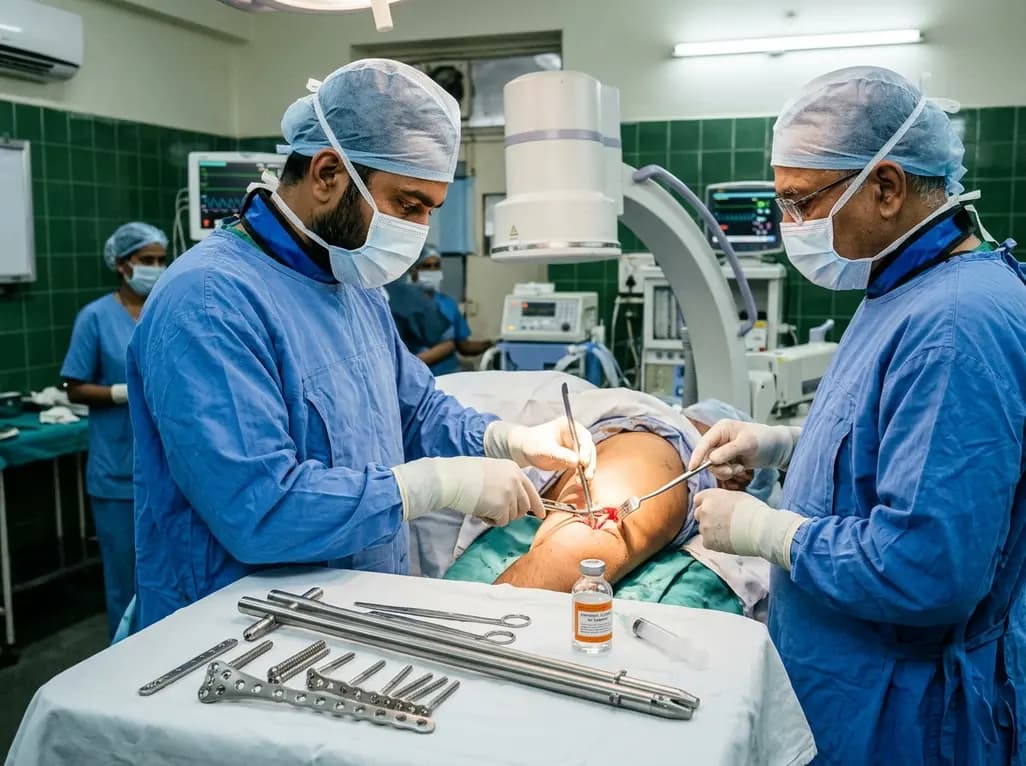
Septic humeral shaft nonunion in patients with obesity presents extreme mechanical and biological challenges. Discover how hybrid nail-plate osteosynthesis paired with targeted antibiotic therapy provides rigid stability, eradicates infection, and restores maximal upper extremity function.
Today

A case report details how reusing single-use insulin cartridges caused device failure and diabetic ketoacidosis in a type 1 diabetes patient using an advanced hybrid closed-loop system. The report highlights technological blindspots, mechanical degradation, and safety protocols during supply shortages.
Today
