

Loading, please wait...
Loading, please wait...

Clinical research teams require well-prepared personnel to conduct rigorous scientific studies. Establishing structured clinical trial competencies during undergraduate education ensures that life sciences graduates readily support research sites. Consequently, academic institutions are aligning degree curricula with international standards to prepare students for rapid, compliant workforce entry.
Modern drug development relies on standardized investigator training, regulatory adherence, and meticulous trial operations. Historically, however, undergraduate life sciences programs provided minimal structured preparation for entry-level clinical trial roles. To address this educational gap, academic researchers in Spain completed a comprehensive RAND-modified Delphi consensus study. The study engaged eighteen clinical research experts from six prominent biomedical research organizations. The expert panel included principal investigators, seasoned study coordinators, and data managers.
Initially, the steering committee drafted forty-eight distinct competencies. The expert panel subsequently evaluated each item across two iterative rounds of online surveys and a dedicated virtual consensus conference. Panelists scored the relevance of every competency using a nine-point Likert scale. A competency achieved formal acceptance only if it obtained a mean rating of seven points or higher alongside seventy percent of scores in the top tertile. Remarkably, the panel achieved unanimous agreement across all forty-eight proposed competencies. This high level of consensus highlights an urgent need for standardized research training. Furthermore, the resulting framework provides universities with an actionable blueprint for undergraduate curriculum reform.
The Delphi panel organized twenty-three competencies under the fundamental concepts category, constituting nearly half of the final framework. Students must understand essential pharmacological principles, study designs, and ethical mandates before entering active research units. Therefore, academic programs must emphasize trial phases, randomization schemes, double-blind controls, and endpoints. Understanding these concepts allows young researchers to interpret trial documentation accurately.
Additionally, undergraduate students must master the historical origins of human research protections. Courses must cover the Declaration of Helsinki and the Belmont Report to instill respect for patient autonomy. Mastering institutional review board procedures and informed consent safeguards vulnerable participants against ethical breaches. Furthermore, foundational modules must teach protocol compliance, source document validation, and research integrity. When entry-level staff grasp these scientific tenets early, they avoid common protocol deviations during live studies. Consequently, investigator sites spend less time correcting fundamental mistakes and more time executing compliant clinical science. Ultimately, this foundational knowledge equips life sciences graduates to collaborate effectively with principal investigators and institutional ethics committees.
The Delphi consensus dedicated another twenty-three competencies strictly to clinical trial development and daily operational management. Hands-on trial operations demand rigorous attention to timelines, regulatory filings, and patient safety documentation. Therefore, life sciences students must gain practical experience managing trial master files, handling investigational products, and completing case report forms. These responsibilities represent the primary daily activities of entry-level study coordinators.
Moreover, the operational curriculum emphasizes adverse event tracking, safety surveillance, and expedited safety reporting pathways. Novice staff frequently manage participant appointment schedules, biological specimen logistics, and electronic data capture databases. Consequently, structured training with electronic health records and trial software prevents costly clinical data errors. Students must also develop professional communication skills to interact seamlessly with research participants, clinical monitors, and laboratory personnel. Because trial execution demands zero tolerance for protocol violations, entry-level staff must resolve monitor queries promptly. Furthermore, familiarity with site closeout activities ensures complete compliance with global regulatory inspections. By mastering these operational mechanics during undergraduate study, young graduates transition smoothly into dependable clinical trial coordinators.
In addition to theoretical knowledge and operational skills, the expert panel identified two mandatory formal certifications. Specifically, every life sciences graduate must complete certified Good Clinical Practice training and demonstrate proficiency in regional biomedical regulations. Good Clinical Practice represents the universally accepted ethical and scientific standard for designing, conducting, and reporting human clinical studies.
Therefore, universities must incorporate accredited Good Clinical Practice certification directly into the undergraduate degree curriculum. Achieving this certification guarantees that students comprehend investigator obligations, adverse event definitions, and essential trial documentation. Furthermore, knowledge of regional statutory frameworks, including local drug regulatory authorities, prepares students for site inspections and quality audits. In India, for instance, clinical researchers must adhere strictly to the New Drugs and Clinical Trials Rules. Additionally, certified training in biosafety handling and human subject protection ensures workplace safety and patient dignity. Consequently, institutional sponsors can deploy certified graduates immediately without investing months into remedial programs. By completing formal certifications before graduation, life sciences candidates enter the workforce with verified credentials, making them highly attractive to research organizations.
Establishing standardized competency criteria provides tangible operational benefits for clinical trial sites and principal investigators. Busy investigators frequently encounter newly hired study coordinators who lack practical research training. Therefore, integrating consensus-based competencies into university programs substantially shortens onboarding timelines and reduces supervision burdens for senior clinical faculty.
Furthermore, research teams maintain significantly higher data integrity when coordinators and assistants understand trial methodology. When entry-level staff identify protocol deviations and document adverse events accurately, trial monitoring proceeds smoothly. Consequently, clinical research sites experience fewer audit observations, reduced data queries, and improved protocol timelines. Additionally, medical centers can utilize these forty-eight competencies to structure formal clinical research internships. This alignment bridges the longstanding gap between university biology departments and clinical trial units. Moreover, standardized proficiencies foster collaborative trust among site investigators, contract research organizations, and pharmaceutical sponsors. Ultimately, investing in competency-based education establishes a resilient clinical trial workforce capable of meeting evolving global scientific challenges while safeguarding patient welfare.
The consensus framework categorizes forty-eight competencies into three distinct sections. Fundamental concepts represent twenty-three competencies covering study methodology, trial phases, and research ethics. Clinical trial development encompasses another twenty-three competencies addressing daily operational tasks, electronic data capture, and safety documentation. Finally, certifications comprise two essential requirements: verified Good Clinical Practice training and regulatory compliance. Together, these domains prepare undergraduate students for entry-level clinical trial roles.
Good Clinical Practice certification guarantees that entry-level personnel understand international ethical and scientific quality standards. Clinical trials involve human volunteers, requiring strict adherence to protocol design, patient safety, and data integrity. By obtaining formal certification, young researchers demonstrate competence in managing informed consent, identifying adverse events, and maintaining accurate trial documentation. This standardized training minimizes regulatory deviations and ensures trial sites comply with governing health authorities and institutional ethics committees.
Standardized competency training substantially reduces the onboarding time and institutional resources required to train new site staff. Principal investigators frequently face administrative delays when supervising entry-level assistants who lack research familiarity. When life sciences graduates already possess validated operational skills, investigator sites experience fewer protocol deviations, prompt query resolutions, and enhanced data accuracy. Consequently, research teams maintain audit readiness and can focus on patient care and scientific inquiry.
Disclaimer: This content is for informational and educational purposes only... Refer to the latest local and national guidelines for clinical practice.
References

Read summarized clinical updates, watch expert medical content, and earn CME certifications right from your smartphone.
Open your smartphone camera to scan and install.





A RAND-modified Delphi study establishes 48 essential clinical trial competencies across fundamental concepts, trial development, and certification for undergraduate life sciences students joining research teams.
Today

Overexpression of glycoprotein nonmetastatic melanoma protein B (GPNMB) mediates resistance to CDK4/6 inhibitors like abemaciclib and palbociclib in ER+ breast cancer through integrin-driven AKT/ERK signaling. Targeting GPNMB with antibody-drug conjugates like glembatumumab vedotin may overcome this resistance.
Today

A secondary analysis of the MOMS clinical trial reveals that infant sex does not influence neonatal opioid withdrawal syndrome severity in buprenorphine-exposed newborns. Maternal co-exposures and clinical factors drive outcomes, highlighting the need for objective assessment and supportive breastfeeding.
Today
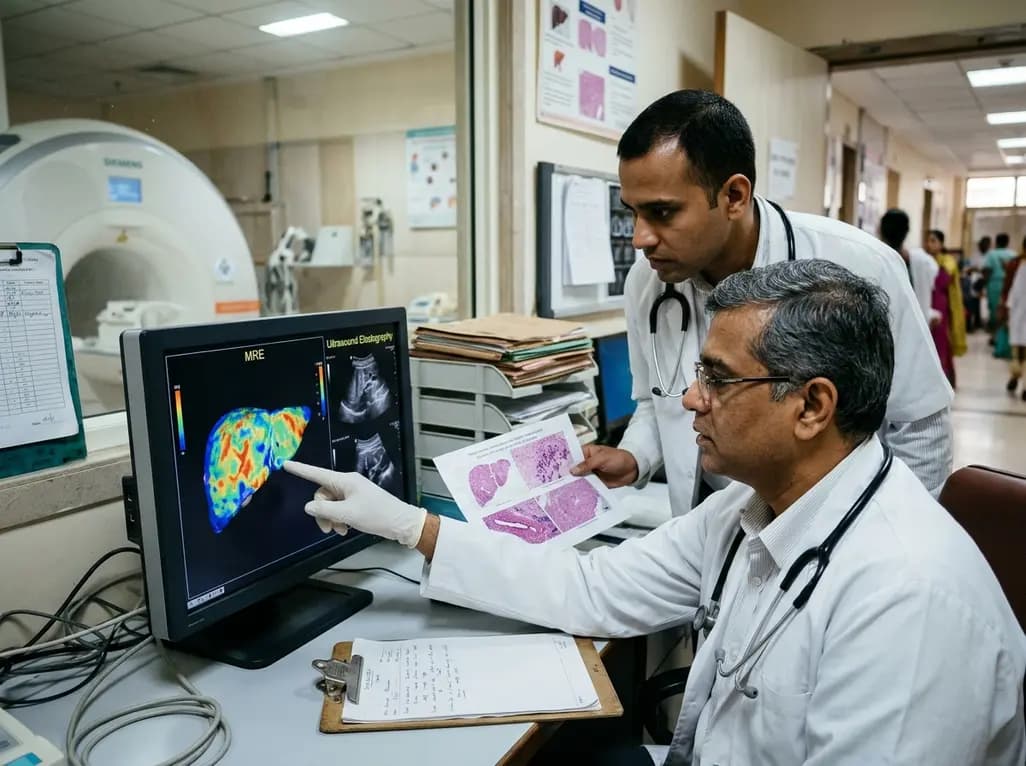
A comparative study reveals magnetic resonance elastography outperforms ultrasound elastography in assessing liver fibrosis in Fontan-associated liver disease, demonstrating stronger histological agreement and superior discrimination.
Today

A systematic review and meta-analysis highlights the substantial impact of plyometric jump training on jump performance, reactive strength, and landing kinematics in female team-sport athletes, providing evidence-based programming guidelines for sports medicine and orthopedics.
Today

A comprehensive review of the role of growth hormone in diabetic kidney disease and podocytopathy. Learn how elevated GH activates ZEB2, Notch, and TGF-beta1, driving podocyte loss and glomerulosclerosis, and explore novel targeted therapeutic approaches.
Today
