.webp&w=384&q=75)

Loading, please wait...
Loading, please wait...

Successful conus AVM surgical management requires a nuanced understanding of spinal vascular architecture. Traditionally, surgeons aimed for complete nidus excision to prevent recurrence. However, the proximity to eloquent neural structures often makes total resection extremely risky. Consequently, medical experts have recently advocated for in situ disconnection as a safer alternative for high-risk spinal regions.
A recent case involving a 35-year-old female illustrates this innovative approach. Initially, the patient presented with progressive thoracic myelopathy alongside multiple sclerosis. Preoperative imaging identified a complex conus arteriovenous malformation (AVM). Therefore, the surgical team implemented a structured, cyclic workflow to disconnect the vascular lesion without damaging the conus branches.
The core of this strategy involves four distinct steps. First, surgeons identify arterial feeders using indocyanine green (ICG) and Doppler ultrasound. Second, they perform trial occlusions while monitoring neurophysiological signals. Furthermore, if the patient's signals remain stable, they proceed with the disconnection. Finally, the team reassesses the entire AVM perfusion to ensure no residual shunting remains. This repetitive process provides an extra layer of protection for the patient.
Moreover, the integration of multiple intraoperative adjuncts significantly reduces surgical morbidity. For instance, sharp and blunt dissection techniques allow for precise exposure of the vascular basket. Additionally, using ultrasound helps distinguish between local feeders and functional conus vessels. As a result, the patient achieved complete AVM disconnection and maintained clinical improvement at her six-month follow-up. This workflow serves as a reliable model for managing similar complex cases.
In situ disconnection reduces the need for extensive dissection around eloquent spinal tissue. Consequently, it minimizes the risk of postoperative neurological deficits compared to traditional resection.
ICG provides real-time visualization of blood flow within the AVM feeders and draining veins. Therefore, it allows surgeons to confirm the success of vascular occlusion during the procedure.
Neuromonitoring tracks the functional integrity of the spinal cord during trial occlusions. If a feeder is essential for neural function, the monitoring will alert the surgeon, preventing permanent damage.
Disclaimer: This content is for informational and educational purposes only. It does not constitute medical advice or a professional recommendation. Always consult with a qualified healthcare professional for personal medical concerns. Refer to the latest local and national guidelines for clinical practice.
References
Zador Z et al. In situ disconnection of conus arteriovenous malformation: illustrative case. J Neurosurg Case Lessons. 2026 Feb 16. doi: undefined. PMID: 41698197.
Takai K. Spinal Arteriovenous Shunts: Angioarchitecture and Microsurgical Treatment. Neurologia medico-chirurgica. 2017;57(7):307-317. doi: 10.2176/nmc.ra.2017-0004.
Spetzler RF, Detwiler PW, Riina HA, Porter RW. Modified classification of spinal cord vascular lesions. J Neurosurg Spine. 2002;96(2):145-156. doi: 10.3171/spi.2002.96.2.0145.

Read summarized clinical updates, watch expert medical content, and earn CME certifications right from your smartphone.
Open your smartphone camera to scan and install.





This illustrative case highlights a cyclic microsurgical workflow for safely managing complex conus AVMs through in situ disconnection and advanced monitori...
8 months ago

A retrospective cohort study of 7,716 ICU patients from the MIMIC-IV database demonstrates that Gradient Boosting Decision Trees significantly outperform traditional SOFA scores in predicting in-hospital mortality among patients with sepsis and diabetes, with SHAP analysis providing clinical interpretability.
Today
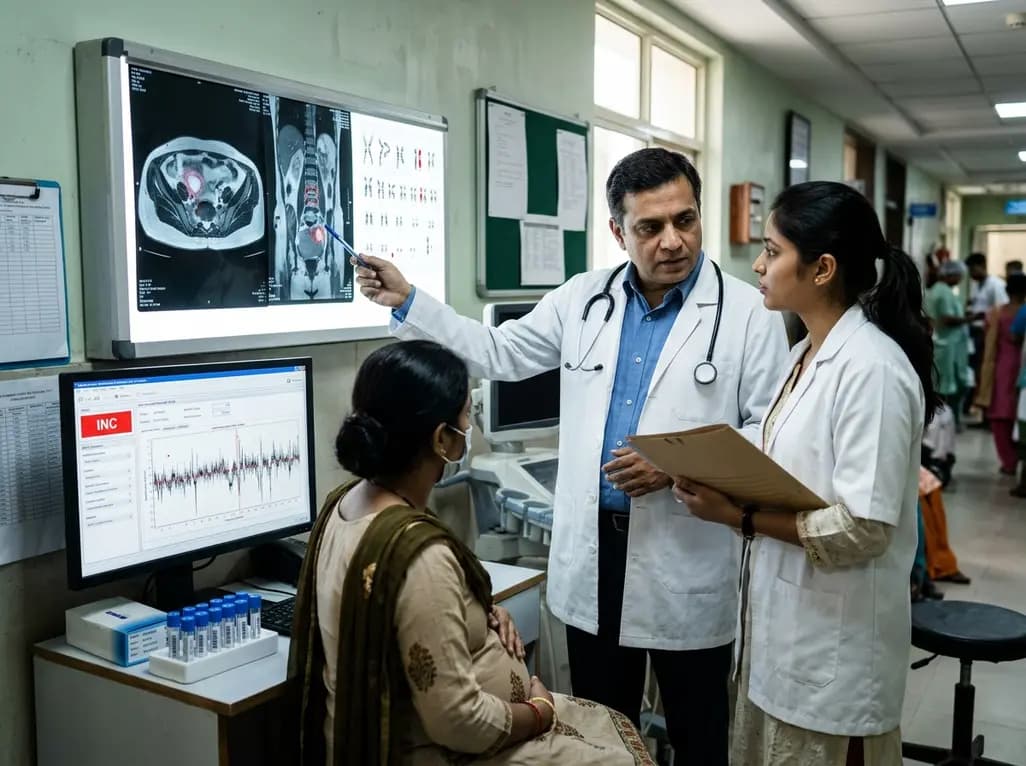
Occult maternal malignancy accounts for 3.82% of persistent unreportable NIPT results with genomic noise. Multiple chromosomal aberrations, notably on chromosome 18, warrant thorough oncological evaluation and whole-body MRI to ensure timely maternal diagnosis while preserving fetal care.
Today

This article reviews the forensic and clinical complexities of acute myocarditis arising on left ventricular hypertrophy in children, highlighting early diagnostic red flags and multidisciplinary postmortem autopsy protocols.
Today

This comparative study evaluates posterior labral tears with and without glenohumeral instability, highlighting distinct demographic patterns, MRI underestimation in stable shoulders, and successful arthroscopic repair outcomes.
Yesterday

A clinical study demonstrates that early intervention with tocilizumab, either as monotherapy or bridged with corticosteroids, achieves significant proptosis reduction and resolves active inflammation in treatment-naive thyroid eye disease.
Yesterday
