.webp&w=384&q=75)

Loading, please wait...
Loading, please wait...
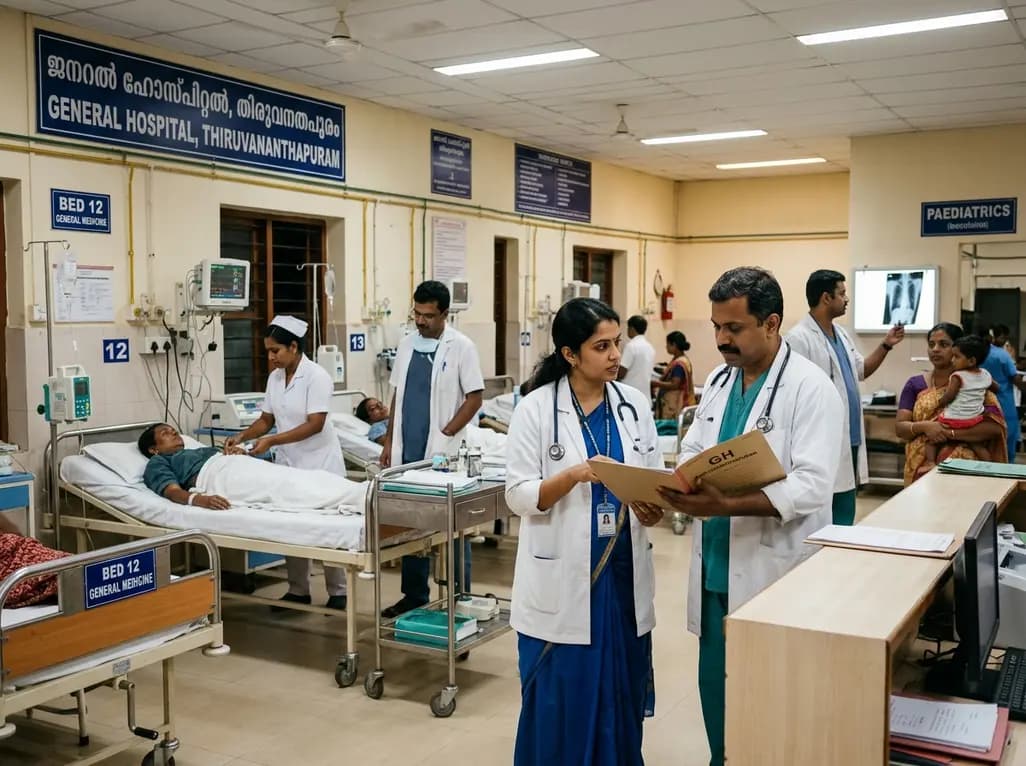
The Government of Kerala has announced a significant healthcare reform to introduce continuous specialty services across district and general hospitals within six months. Health Minister K. Muraleedharan affirmed that this initiative will ensure round-the-clock access to expert clinical care near patients' homes. By implementing continuous specialty services in secondary healthcare centers, the state aims to bridge the gap between primary health units and apex medical colleges. Furthermore, this systemic reform officially establishes medical treatment, essential drugs, and hospital beds as fundamental patient rights.
Public healthcare in India often suffers from geographic disparities, forcing rural families to travel long distances for basic specialist consultations. Therefore, Kerala's decision to decentralise secondary healthcare represents an essential step toward comprehensive regional health security. In the initial rollout, the state will establish round-the-clock specialty care in at least one hospital per district. Subsequently, the health department will expand this model to other secondary hospitals in a structured, phased manner.
Consequently, patients living outside urban centers will no longer need to travel to medical colleges during nighttime emergencies. This localized availability ensures that acute medical emergencies receive immediate clinical evaluation and treatment without transit delays. Moreover, strengthening secondary hospitals creates a resilient intermediate barrier against disease progression within local communities. As regional public hospitals gain higher diagnostic capabilities and round-the-clock clinical reliability, citizen confidence in government healthcare grows significantly. Thus, this structural upgrade enhances healthcare equity while optimizing clinical resources across all fourteen districts. Additionally, continuous secondary care allows peripheral clinical teams to stabilize urgent cases locally rather than arranging hurried ambulance transfers. In effect, this comprehensive decentralization strengthens Kerala's entire public health infrastructure.
The phased rollout encompasses five fundamental medical departments to guarantee uninterrupted clinical coverage around the clock. Specifically, the mandated disciplines include general medicine, general surgery, orthopaedics, obstetrics and gynaecology, and paediatrics. These core departments address the vast majority of nighttime emergency presentations and acute inpatient admissions in secondary settings. Consequently, duty specialists will manage acute medical crises, respiratory distress in children, complicated labor, and severe trauma without delay.
In addition, hospitals will maintain fully operational surgical suites and dedicated anaesthesia teams throughout nighttime hours. This continuous surgical readiness enables on-call surgeons to perform emergency appendectomies, manage acute abdominal trauma, and treat orthopaedic fractures immediately. Similarly, round-the-clock obstetric coverage ensures that pregnant women experiencing unexpected intrapartum complications receive emergency caesarean sections locally. Therefore, by standardizing continuous specialty services across these crucial clinical streams, secondary hospitals can independently deliver life-saving interventions at all hours. Furthermore, this sustained readiness prevents critical treatment delays during acute obstetric and pediatric emergencies. Ultimately, ensuring immediate access to these core specialties elevates the overall standard of emergency care delivered in district hospitals.
Government medical colleges in Kerala consistently manage overwhelming patient volumes, which strains tertiary infrastructure and overburdens clinical faculty. In many instances, peripheral centers routinely refer manageable medical conditions and standard surgical emergencies to tertiary centers during night hours. Consequently, emergency departments at medical colleges encounter severe overcrowding, leading to extended triage delays and compromised patient attention.
However, establishing round-the-clock specialty care at district and general hospitals will directly alleviate this chronic referral bottleneck. When secondary care facilities handle acute cases and routine nighttime surgeries effectively, medical colleges experience substantial relief. Furthermore, tertiary care institutions can redirect their specialized expertise, advanced diagnostic tools, and intensive care beds toward complex super-specialty cases. Academic clinicians can also dedicate greater attention to high-level clinical research, specialized surgical interventions, and postgraduate medical education. Hence, optimizing patient distribution across hospital tiers restores balance throughout the entire public healthcare hierarchy. In the long run, this systematic decompression improves clinical outcomes for both emergency and super-specialty patients. Moreover, medical colleges can maintain higher standards of critical care when secondary hospitals effectively manage routine emergency presentations.
To ensure seamless execution, the health department has designated Dr. Shinu K. S., Additional Director of Administration and Training, as the Special Officer. Under this dedicated leadership, administrative teams are actively conducting comprehensive situational assessments across all prospective district and general hospitals. The assessment meticulously evaluates current physical infrastructure, modular operation theatre availability, intensive care bed capacities, and diagnostic laboratory capabilities.
Moreover, the special officer will coordinate closely with institutional heads and district medical officers to address logistical bottlenecks rapidly. The state government plans to upgrade physical infrastructure and establish uninterrupted supply chains for emergency pharmaceuticals and surgical consumables. Additionally, the administrative framework mandates rigorous timeline monitoring, structured performance benchmarks, and regular progress reports submitted directly to the health minister. By enforcing systematic accountability and institutional coordination, the government intends to complete the first phase within six months. Consequently, this organized operational approach provides a concrete roadmap for converting policy commitments into reliable clinical realities across Kerala. Through regular progress reviews and infrastructure upgrades, the health department aims to establish a seamless, patient-friendly hospital environment.
While this healthcare policy offers immense public benefits, implementing continuous specialty coverage presents significant workforce challenges for administrators. Medical associations, including the Kerala Government Medical Officers' Association, have emphasized the necessity of addressing existing physician shortages before full implementation. Without adequate medical personnel, expanding continuous night duties could overburden clinicians and compromise workplace safety.
Therefore, the state health department is actively auditing medical, nursing, and paramedical personnel across the state health network. Strategic personnel deployment and targeted recruitments will ensure balanced duty rosters across all participating district hospitals. Furthermore, hospital administrations must establish robust support systems, including secure duty rooms, active 24-hour diagnostic laboratories, and trained nursing staff. For duty clinicians, this structured reform provides vital on-site specialty backup, enhancing diagnostic precision and clinical decision-making during late-night emergencies. Simultaneously, patients gain tangible protections through the formal recognition of medical treatment, medicines, and beds as basic healthcare rights. In conclusion, sustainable workforce planning will ensure the long-term success of this secondary healthcare transformation. Ultimately, supporting healthcare workers with fair duty schedules and adequate resources will guarantee high-quality patient care statewide.
Q1: What is the primary objective of introducing continuous specialty services in Kerala hospitals?
The primary objective of this initiative is to ensure uninterrupted, 24-hour access to essential specialty care at district and general hospitals across Kerala. By providing expert medical services closer to patients' residences, the state aims to decentralise secondary healthcare, reduce unnecessary travel, and uphold patients' rights to timely treatment, essential medicines, and inpatient beds during acute medical emergencies.
Q2: Which core clinical departments are included in the initial 24-hour specialty rollout?
The initial rollout covers five essential clinical specialties: general medicine, general surgery, orthopaedics, obstetrics and gynaecology, and paediatrics. These core departments address the majority of emergency presentations and inpatient admissions. Consequently, secondary hospitals will provide round-the-clock emergency medical triage, acute trauma care, pediatric management, nighttime surgical procedures, and comprehensive maternal-foetal services without requiring transfers to tertiary medical centers.
Q3: How does strengthening secondary hospitals help tertiary medical colleges in Kerala?
Strengthening secondary hospitals helps tertiary medical colleges by reducing routine referrals and alleviating chronic casualty overcrowding. When district and general hospitals manage standard medical emergencies and nighttime surgical cases locally, medical colleges can focus their valuable resources on complex super-specialty cases, critical care, advanced academic research, and postgraduate clinical training, creating a balanced and efficient state healthcare system.
Disclaimer: This content is for informational and educational purposes only. It does not constitute medical advice or replace professional judgment. Refer to the latest local and national guidelines for clinical practice.
References

Read summarized clinical updates, watch expert medical content, and earn CME certifications right from your smartphone.
Open your smartphone camera to scan and install.





The Kerala government has launched an initiative to provide 24-hour specialty medical services across district and general hospitals. Covering medicine, surgery, orthopaedics, obstetrics, and paediatrics, the decentralised healthcare model aims to upgrade infrastructure and reduce tertiary hospital congestion.
last month

A systematic review of 41 preclinical studies reveals that baicalin dampens systemic inflammation, inhibits NF-κB and NLRP3 pathways, and improves organ preservation in sepsis models. However, substantial study heterogeneity and a complete lack of human clinical trials highlight the need for further translational research.
Today
Discover the crucial distinctions between mesonephric and mesonephric-like proliferations of the female genital tract. Learn the key histomorphologic, immunohistochemical, and molecular differences essential for accurate diagnosis and clinical management.
Today
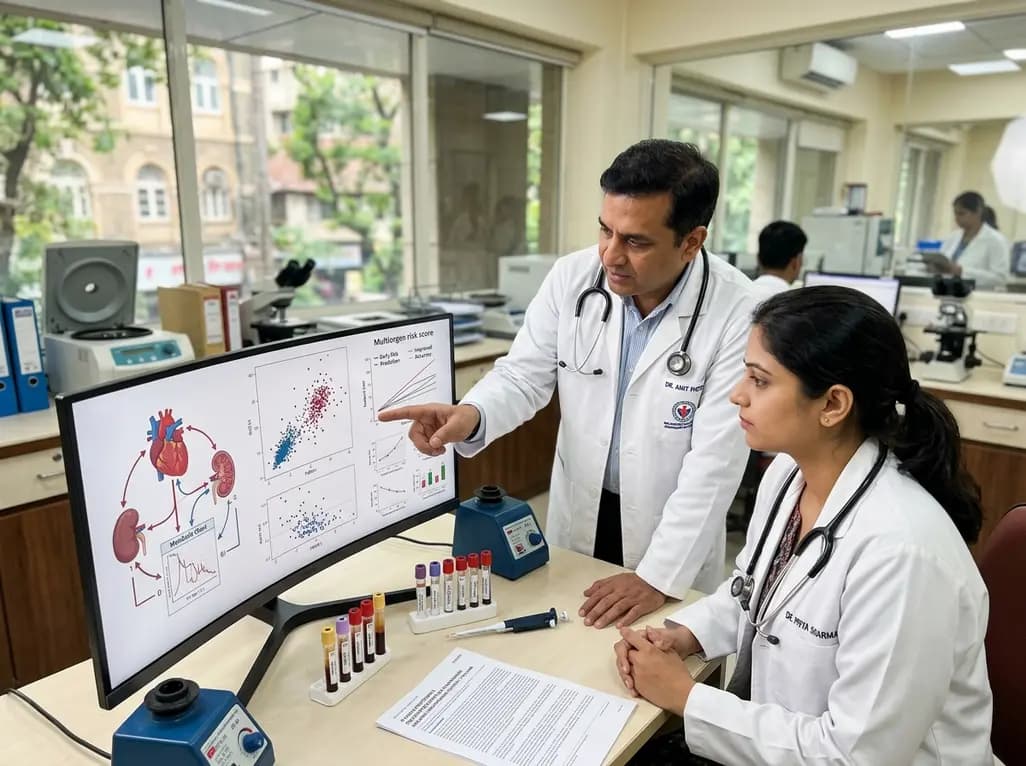
A large UK Biobank study reveals that plasma proteomic signatures capture preclinical organ damage and improve multiorgan risk prediction across early CKM syndrome stages 0 to 2 beyond traditional PREVENT clinical models.
Today
A narrative review investigates whether the articularis genus muscle functions as an independent anatomical entity or blends with the vastus intermedius. We evaluate its morphology, role in retracting the suprapatellar bursa, and direct clinical significance in anterior knee pain and arthroplasty.
Today

A Bayesian multilevel meta-analysis reveals that aerobic training combined with moderate carbohydrate restriction modestly lowers HbA1c in type 2 diabetes. However, sparse data and very low certainty leave incremental benefits over exercise or diet alone unproven, highlighting the need for individualized care.
Today
