.webp&w=384&q=75)

Loading, please wait...
Loading, please wait...

Complex adult spinal deformity reconstructions present formidable clinical challenges, demanding rigorous preoperative risk stratification to prevent devastating perioperative adverse events. Although conventional tools measure static physiological vulnerability, surgeons increasingly recognize that patient resilience fluctuates over time. Consequently, introducing a continuous modifiable frailty index transforms how surgical teams evaluate elderly surgical candidates. By moving beyond fixed baseline demographics, this innovative framework treats patient vulnerability as a responsive target. Therefore, spine teams can systematically identify reversible physiological deficits, reduce surgical risk, and optimize patient health before entering the operating theater.
Over the past decade, spinal deformity surgery has expanded rapidly among aging populations worldwide. Historically, surgeons relied primarily on chronological age and isolated comorbidity indices to estimate operative morbidity. However, these metrics failed to capture multi-organ physiological reserve. The subsequent introduction of the 40-item Adult Spinal Deformity Frailty Index by Miller and colleagues established a critical benchmark for risk estimation. Despite its clinical value, that comprehensive tool remained largely descriptive and immutable. Clinicians could calculate perioperative risk, but they could rarely alter the underlying score through targeted medical therapy.
Furthermore, routine clinical application suffered because calculating forty independent deficits consumed valuable time in fast-paced surgical outpatient departments. Many high-volume centers, including spine units across India and globally, required a streamlined approach that prioritized actionable pathology. As operative volume surges among elderly demographics, clinicians demand dynamic tools that mirror preoperative improvements. Therefore, investigators recognized an urgent need for an index that directly reflects successful prehabilitation and medical management.
To resolve the limitations of traditional scoring systems, researchers evaluated multicenter cohorts from the International Spine Study Group. The investigators analyzed 572 patients undergoing extensive reconstructive procedures for complex spinal deformity. Initially, the team examined original frailty variables using Pearson bivariate correlation and stepwise multivariable regression models. Subsequently, they regressed ten core frailty deficits alongside three modifiable health factors against key adverse outcomes, including extended hospital stay, reoperation, and perioperative mortality.
Importantly, the statistical team utilized Johnson relative weights to assign mathematically robust point values to each predictor, yielding an overall scale ranging from 0 to 18. The resulting model accounted for an impressive 80.6% of the variance observed in original frailty scores. Within this weighted framework, active smoking and untreated osteoporosis carried the heaviest risks, each contributing three points. In contrast, severe cardiac disease, diabetes, leg weakness, and significant lifting impairment each added two points. Finally, depression, stair difficulty, marked disability, and body mass index extremes contributed one point each.
Unlike historical instruments that assign permanent risk penalties, the o-ASD-FI framework rewards proactive preoperative intervention. Specifically, clinicians subtract one full point for each optimized modifiable disease, focusing on medically managed depression, controlled diabetes, and treated osteoporosis. Consequently, patients who adhere to comprehensive prehabilitation regimens can transition into lower surgical risk tiers before their planned fusion procedure.
The authors established three distinct clinical tiers across the eighteen-point spectrum. Patients scoring below two points fall into the non-frail cohort, whereas scores between two and six denote moderate frailty. Patients scoring seven or greater represent the severely frail demographic. In the study cohort, 72.2% of patients met criteria for moderate frailty, 20.5% remained non-frail, and 7.3% exhibited severe frailty. Moreover, the average baseline score across all participants was 3.4 points. Because the scale incorporates negative point deductions for targeted optimization, clinicians can visually demonstrate progress to patients. Thus, surgical teams possess an objective scoreboard to track medical clearance and motivate lifestyle modification.
The clinical validity of any surgical index relies on its capacity to predict real-world clinical endpoints. In this multicenter cohort, higher frailty scores correlated strongly with protracted hospitalizations, impaired postoperative quality of life, and inferior sagittal alignment correction. Furthermore, multivariable analyses demonstrated that elevated scores independently predicted increased odds across multiple major complication domains.
Specifically, each single-point increase in frailty increased the odds of spinal adverse events by 20% and elevated medical complication risks by 9%. Similarly, each additional point heightened the likelihood of intraoperative adverse events and general in-hospital complications by 10%. These statistical associations remained robust even after adjusting for surgical invasiveness, age, and baseline deformity severity. Consequently, severely frail patients suffered considerably higher rates of deep wound infections, proximal junctional failure, and prolonged intensive care stays. These findings underscore that physiological vulnerability exerts profound influence over mechanical and biological healing following major reconstruction. Therefore, surgeons must treat systemic frailty with the same precision they apply to biomechanical instrumentation.
Adopting the modifiable frailty index into daily spine practices provides an actionable roadmap for multidisciplinary prehabilitation. When surgeons identify candidates with elevated baseline scores, they can delay elective reconstruction to implement targeted risk-reduction protocols. For instance, endocrinologists can optimize glycemic control through structured medical therapy, reducing hemoglobin A1c prior to incision. Similarly, metabolic bone specialists can initiate anabolic bone agents such as teriparatide to treat osteoporosis, thereby mitigating catastrophic screw loosening and hardware failure.
Additionally, dedicated psychiatric support and cognitive behavioral therapy can alleviate depressive symptoms, which directly improves postoperative rehabilitation participation. Smoking cessation programs must remain mandatory, given that tobacco abuse contributes three full points to operative risk. In Indian healthcare settings, where patients often bear out-of-pocket expenses and present with unmonitored comorbidities, this optimization protocol prevents costly secondary revisions. Ultimately, dynamic frailty evaluation aligns surgical decision-making with patient safety. By converting frailty assessment into an active therapeutic intervention, surgical teams empower vulnerable individuals to achieve superior, complication-free spinal outcomes.
Traditional frailty indices assess fixed historical deficits that remain unchanged regardless of clinical intervention. In contrast, the modifiable frailty index incorporates dynamic health components such as osteoporosis, diabetes, and depression. When clinicians actively treat and control these conditions before surgery, the tool subtracts points from the overall score. Consequently, this dynamic scoring system reflects real-time physiological improvements, enabling surgical teams to monitor prehabilitation success rather than relying on immutable risk scores.
Smoking and untreated osteoporosis contribute three points each, representing the largest individual risk factors in the scoring system. Furthermore, severe cardiac disease, uncontrolled diabetes, lower-extremity weakness, and lifting impairment each contribute two points. Body mass index extremes, depression, stair difficulty, and general disability add one point each. Importantly, optimizing depression, diabetes, or bone density deducts one point per condition, offering an immediate mathematical incentive for targeted preoperative medical prehabilitation.
Surgeons calculate the patient score during the initial surgical consultation to identify physiological deficits and categorize procedural risk. If a patient scores within the frail or severely frail categories, the team can safely postpone elective spinal reconstruction. During this therapeutic window, multidisciplinary specialists aggressively manage bone mineral density, blood glucose, and psychological wellbeing. Once repeat evaluation confirms deficit reduction and score lowering, the surgical team proceeds with reconstructive intervention under significantly minimized complication risk.
Disclaimer: This content is for informational and educational purposes only. It is not intended to provide medical advice, diagnosis, or treatment regimens. Clinical decisions should always be made by a qualified healthcare professional based on individual patient presentation. Refer to the latest local and national guidelines for clinical practice.
References

Read summarized clinical updates, watch expert medical content, and earn CME certifications right from your smartphone.
Open your smartphone camera to scan and install.





The newly validated continuous modifiable frailty index (o-ASD-FI) enables surgical teams to quantify and reverse physiological deficits in complex adult spinal deformity patients before surgery. By targeting diabetes, osteoporosis, and depression, clinicians can actively reduce postoperative complications.
last month
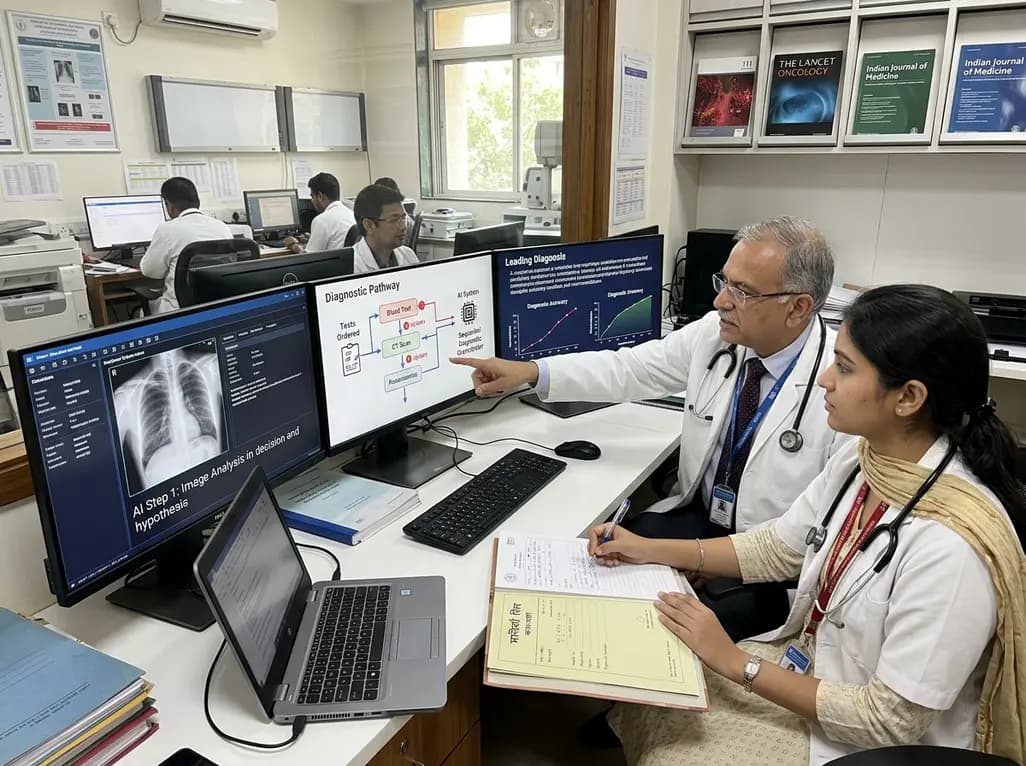
A breakthrough peer-reviewed study demonstrates that a sequential AI diagnosis system can mirror real-world clinical reasoning. By ordering stepwise tests and updating hypotheses dynamically, this multi-agent orchestrator achieved superior diagnostic accuracy while reducing investigative costs.
Today

A prenatal case highlights severe glutaric acidemia type II presenting as bilateral hyperechoic cystic kidneys at 18 weeks. Whole-exome sequencing revealed a novel homozygous ETFDH frameshift variant, demonstrating the power of rapid genetic testing in fetal renal anomalies.
Today

Review how tailored exercise programs benefit frail older patients with heart failure. Explore pathophysiological mechanisms, individualized training prescriptions, and strategies to overcome adherence barriers in clinical practice.
Yesterday

This comparative study evaluates posterior labral tears with and without glenohumeral instability, highlighting distinct demographic patterns, MRI underestimation in stable shoulders, and successful arthroscopic repair outcomes.
Yesterday

A clinical study demonstrates that early intervention with tocilizumab, either as monotherapy or bridged with corticosteroids, achieves significant proptosis reduction and resolves active inflammation in treatment-naive thyroid eye disease.
Yesterday
