.webp&w=384&q=75)

Loading, please wait...
Loading, please wait...

The recent Congo Ebola outbreak has triggered a severe public health crisis in northeastern Ituri province. Currently, first responders are facing critical shortages of basic medical supplies like protective masks, pain medications, and motorbikes. Because the rare Bundibugyo strain of the virus circulated undetected, health authorities are struggling to contain its rapid spread.
First, the sudden influx of suspected cases completely overwhelms local healthcare facilities. Since there are no approved vaccines for this strain, doctors must rely strictly on supportive and palliative care. Consequently, patients receive isolation, rehydration, and pain management. However, the lack of personal protective equipment places frontline healthcare workers at extreme risk.
Furthermore, underfunded infrastructure complicates the tracing of active contacts across difficult terrain. Although international aid agencies are delivering emergency supplies, recent foreign funding cuts have slowed the overall response. Therefore, local groups must tap into limited contingency stocks to manage this critical situation.
In response, the World Health Organization has airlifted tons of medical supplies to the region. Additionally, the United States State Department has pledged to fund up to fifty rapidly deployable treatment clinics. Meanwhile, epidemiologists emphasize that robust surveillance remains the most critical tool to stop transmission. Ultimately, global health partners must act quickly to prevent further cross-border spread.
Q1: Why is the Bundibugyo strain particularly difficult to manage?
Unlike the common Zaire strain, the Bundibugyo strain has no licensed vaccines or specific antiviral treatments. Therefore, healthcare providers must rely entirely on supportive care.
Q2: How are resource shortages impacting the containment efforts?
Resource shortages directly compromise contact tracing and infection control. Specifically, the lack of face masks exposes healthcare workers to infection. Additionally, a shortage of motorbikes prevents teams from tracking potential exposures in remote areas.
Disclaimer: This content is for informational and educational purposes only. It does not constitute medical advice or replace professional judgment. Refer to the latest local and national guidelines for clinical practice.
References

Read summarized clinical updates, watch expert medical content, and earn CME certifications right from your smartphone.
Open your smartphone camera to scan and install.





First responders in the Democratic Republic of Congo face a critical shortage of basic medical supplies as they combat the 17th Ebola outbreak in Ituri....
5 months ago

Explore vital recurrent stroke predictors in lacunar stroke patients managed with intensive blood pressure lowering. This analysis examines trial findings from SPS3 to uncover residual vascular risks, metabolic factors, and targeted secondary prevention strategies for high-risk neurological patients.
Today

Odisha has established India's first state-level clinical protocol specifically tailored for pregnant women with sickle cell disease. Developed with NHM and UNICEF, the framework provides structured antenatal screening, crisis mitigation, standardized referral pathways, and specialized interdisciplinary care.
Today

India is advancing preventive healthcare by integrating genomics, artificial intelligence, and quantum technologies. With the SANGAM programme sequencing one million Indian genomes, clinicians can unlock personalized therapies, detect cardiometabolic risks early, and curb the burden of diabetes and heart disease.
Today
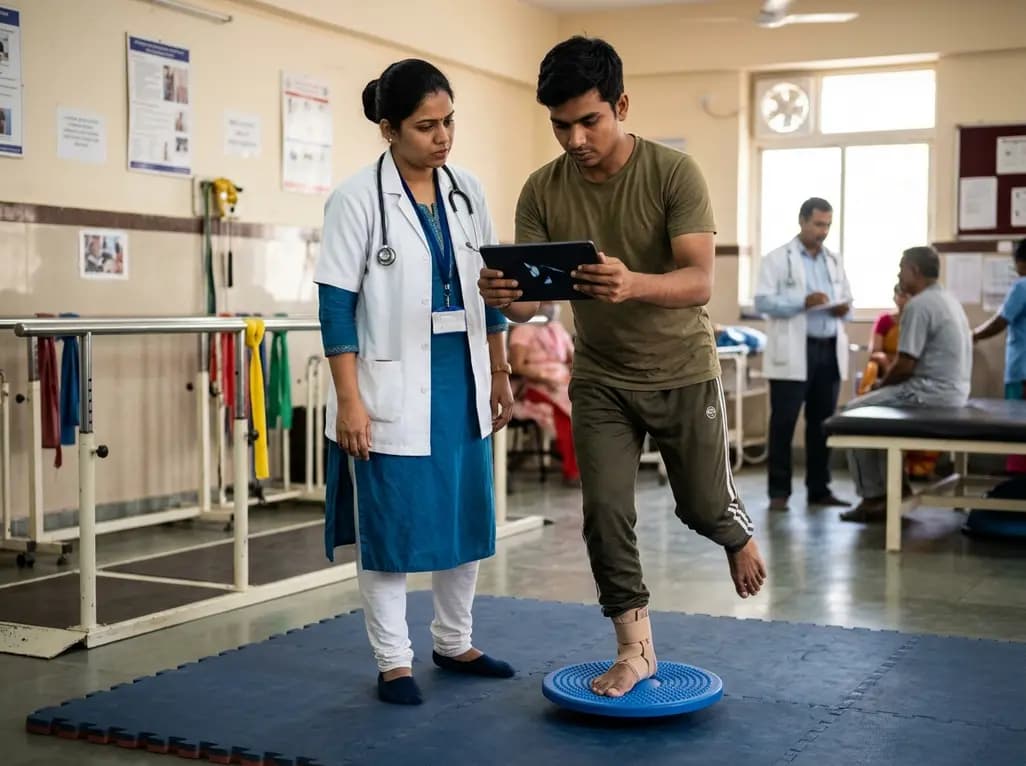
A randomized controlled trial demonstrates that an eight-week dual-task training intervention significantly improves static and dynamic postural control over standard balance exercises in individuals with chronic ankle instability, addressing critical neurocognitive deficits during athletic and daily activities.
Today

A retrospective cohort study of 7,716 ICU patients from the MIMIC-IV database demonstrates that Gradient Boosting Decision Trees significantly outperform traditional SOFA scores in predicting in-hospital mortality among patients with sepsis and diabetes, with SHAP analysis providing clinical interpretability.
Today
