

Loading, please wait...
Loading, please wait...
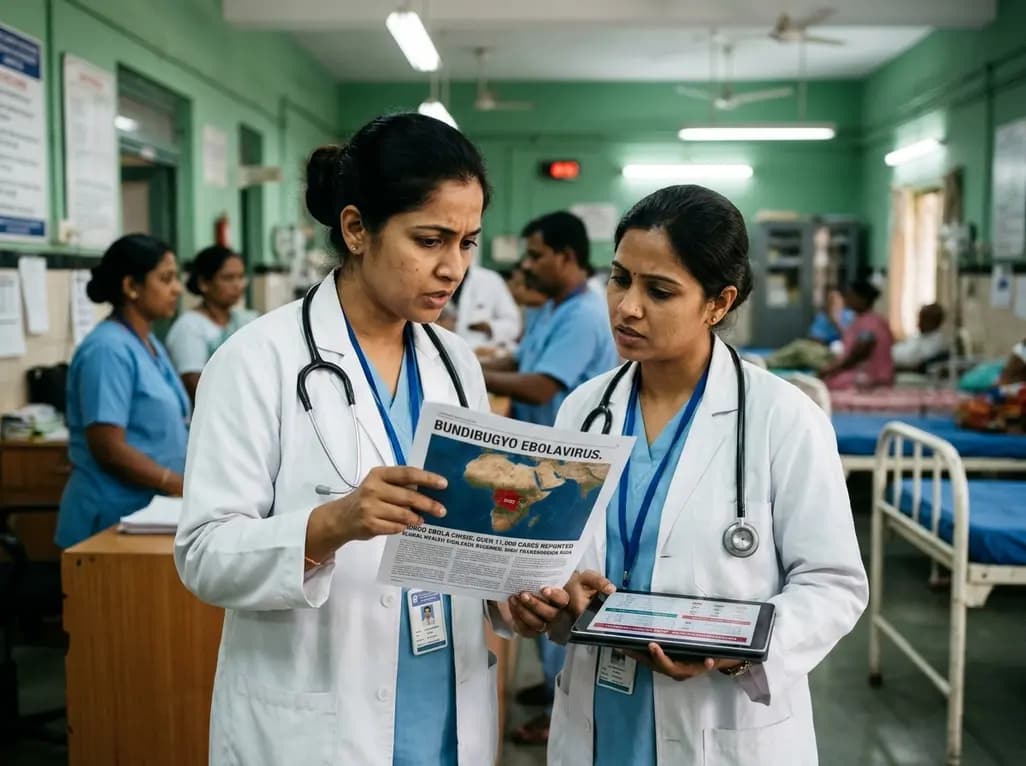
The escalating Congo Ebola outbreak has reached a catastrophic milestone, surpassing 11,000 confirmed cases within six months. According to Médecins Sans Frontières, health authorities are failing to contain viral transmission across affected northeastern provinces. Furthermore, epidemiological modeling indicates that frontline surveillance teams detect only half of all active infections. Consequently, the crisis now ranks as the second-deadliest Ebola event in recorded history. Because this emergency involves a rare viral species, international healthcare teams face unprecedented clinical and operational obstacles.
The ongoing Congo Ebola outbreak began in mid-May and quickly accelerated across vulnerable communities. In fact, mathematical models from Imperial College London reveal that active transmission will likely persist for over a year. Consequently, epidemiologists warn that total case tallies could eventually surpass the historic 2014 West African epidemic. Currently, clinicians estimate that between 2,000 and 3,000 active patients require specialized medical care in the Democratic Republic of the Congo.
However, case detection systems remain severely impaired across key conflict zones such as Ituri and North Kivu. For example, surveillance data shows that only nine percent of newly admitted individuals had registered as known contacts. This alarming deficit means that unmonitored transmission chains operate widely within residential settlements. In addition, nearly two-thirds of recent deaths occurred at home rather than inside medical facilities. Therefore, undetected community mortality fuels further viral dissemination through traditional burial rites and domestic caregiving. International agencies must urgently deploy mobile surveillance units to close these expanding diagnostic blind spots.
Unlike previous outbreaks driven by the Zaire strain, this crisis stems entirely from the rare Bundibugyo ebolavirus. Importantly, regulatory authorities have approved zero specific antiviral therapeutics or licensed vaccines for this particular viral species. The crude case fatality rate hovers near fifty percent, creating immense challenges for attending physicians. Therefore, medical teams must rely exclusively on aggressive supportive intensive care to preserve organ function.
Clinically, infected patients initially present with nonspecific constitutional signs, including high fever, severe fatigue, and diffuse myalgia. Subsequently, gastrointestinal symptoms develop rapidly, manifesting as profuse watery diarrhea, intractable vomiting, and severe abdominal cramping. Because fluid losses frequently exceed ten liters per day, hypovolemic shock and electrolyte derangements represent immediate lethal threats. In addition, vascular leakage and coagulopathy emerge in advanced stages, producing overt mucosal hemorrhages and petechial rashes. Consequently, clinicians must prioritize early intravenous fluid resuscitation, balanced electrolyte replacement, and empirical broad-spectrum antimicrobial coverage. Without targeted antibody therapies, meticulous hemodynamic management remains the definitive determinant of patient survival.
Nosocomial amplification represents one of the most alarming aspects of the current epidemic. In the Beni health zone of North Kivu, nearly three-quarters of identified patients contracted the virus inside healthcare facilities. This staggering statistic underscores profound deficiencies in basic water, sanitation, and hygiene infrastructure. Furthermore, frontline centers frequently run completely out of clean running water, medical-grade chlorine, and standard personal protective equipment.
Consequently, healthcare workers face extreme personal risk while attempting to treat incoming febrile patients. In fact, dozens of frontline doctors and nurses have already succumbed to severe viral hemorrhagic illness. In addition, chronic funding delays leave clinical staff unpaid for months, prompting demoralizing strikes and severe staffing shortages. Many municipal ambulances remain idle simply because response teams lack fuel for transport. Therefore, unequipped clinics inadvertently transform into amplification hubs rather than treatment sanctuaries. To protect clinical personnel, global donors must immediately convert financial pledges into tangible equipment, personal protective suits, and reliable supply chains.
Violent civil conflict significantly complicates epidemiological containment efforts across northeastern Congo. Specifically, armed militia groups frequently target public health infrastructure and isolation centers. A devastating attack in Cantine-Aloya recently claimed sixty-six civilian lives, including three dedicated healthcare workers. As a direct result, tracking teams lost contact with more than one thousand exposed individuals. Furthermore, three confirmed Ebola patients vanished into surrounding communities during the chaotic aftermath.
Meanwhile, widespread community distrust hampers early isolation and safe burial protocols. Because local populations have experienced decades of unrest, many residents regard external medical teams with profound suspicion. Consequently, families frequently conceal symptomatic relatives within domestic quarters, which escalates secondary household attack rates. In addition, unmonitored home burials expose grieving mourners to massive viral loads from infectious postmortem remains. Therefore, health officials must rebuild public trust through transparent community engagement and culturally adapted health education. Without securing local cooperation and neutralizing armed threats, epidemic containment will remain virtually impossible.
Although this emergency centers in Central Africa, global medical professionals must sustain heightened vigilance against imported viral hemorrhagic fevers. In an era of interconnected international travel, contagious pathogens can cross borders within hours. Therefore, acute care clinicians in tertiary centers and emergency departments must routinely obtain detailed travel histories for all febrile returnees.
Specifically, physicians should maintain a high index of suspicion whenever a patient presents with sudden fever, headache, and recent travel to endemic African regions. In such scenarios, clinicians must immediately institute contact and droplet precautions before initiating exhaustive diagnostic workups. Furthermore, hospital administrators should verify institutional isolation capabilities, airborne infection isolation rooms, and adequate personal protective supplies. Healthcare facilities must also conduct regular simulation drills for managing suspected viral hemorrhagic fevers. Meanwhile, diagnostic laboratories should establish rapid referral pathways with national reference institutes for definitive molecular testing. By maintaining rigorous barrier nursing standards and early identification protocols, hospitals can effectively protect both staff and the wider public.
Q1: Why is the Bundibugyo Ebola outbreak particularly challenging to treat?
The Bundibugyo species lacks approved antiviral medications and licensed vaccines, unlike the more common Zaire strain. Consequently, clinicians cannot administer monoclonal antibodies such as Ebanga or Inmazeb. Instead, medical teams must depend entirely on optimized supportive care, including aggressive intravenous hydration, electrolyte correction, organ support, and symptomatic relief to reduce the nearly fifty percent case fatality rate.
Q2: How does Ebola transmission occur within healthcare settings?
Transmission within clinical settings occurs through direct contact with blood, secretions, or bodily fluids of infected patients. Furthermore, handling contaminated medical devices, soiled bedding, or unsterilized surfaces without proper personal protective equipment spreads the virus rapidly. In resource-constrained clinics, severe shortages of running water and disinfectant solutions accelerate nosocomial cross-infection among healthcare staff and uninfected patients.
Q3: What initial protocols should hospital emergency departments follow for suspected cases?
Emergency clinicians must immediately place any febrile patient with an endemic travel history into an isolated, negative-pressure room. Furthermore, healthcare staff must don complete personal protective equipment, including respirators, fluid-resistant gowns, and double gloves before patient interaction. Clinicians must avoid unnecessary invasive procedures, notify infection control officers immediately, and contact public health authorities for urgent diagnostic viral testing.
Disclaimer: This content is for informational and educational purposes only. It does not constitute medical advice or replace professional judgment. Refer to the latest local and national guidelines for clinical practice.
References

Read summarized clinical updates, watch expert medical content, and earn CME certifications right from your smartphone.
Open your smartphone camera to scan and install.





Six months in, DR Congo faces over 11,000 cases from the Bundibugyo ebolavirus strain. Severe resource deficits, hospital transmission, and regional insecurity hinder containment. Clinicians worldwide must maintain heightened vigil for acute hemorrhagic fever and uphold strict infection control standards.
Today

Ascertainment bias in cancer case-control studies inflates odds ratios and penetrance estimates when cases are drawn from high-risk clinics. A landmark modeling study demonstrates substantial bias ranging up to 23.72, highlighting the critical need for ascertainment adjustment in genetic risk counseling.
Today

Researchers demonstrate that central induction of synthetic torpor in non-hibernating rats provides striking cardioprotection, reducing myocardial infarct size by ~40% during ischaemia-reperfusion injury through endogenous survival signaling, independent of hypothermia.
Today

A prospective study evaluates DeepSeek for knee osteoarthritis outcomes. While the model excels at baseline diagnosis and clinical scoring, its six-month prognostic predictions fall short of clinicians and simple persistence models, demonstrating high run-to-run variability.
Today

A novel fluorine-functionalized near-infrared copper fluorescent probe selectively illuminates lung tissue, revealing critical links between hyperglycemia, ER stress, and pulmonary malignancy for improved early diagnosis.
Today
