.webp&w=384&q=75)

Loading, please wait...
Loading, please wait...
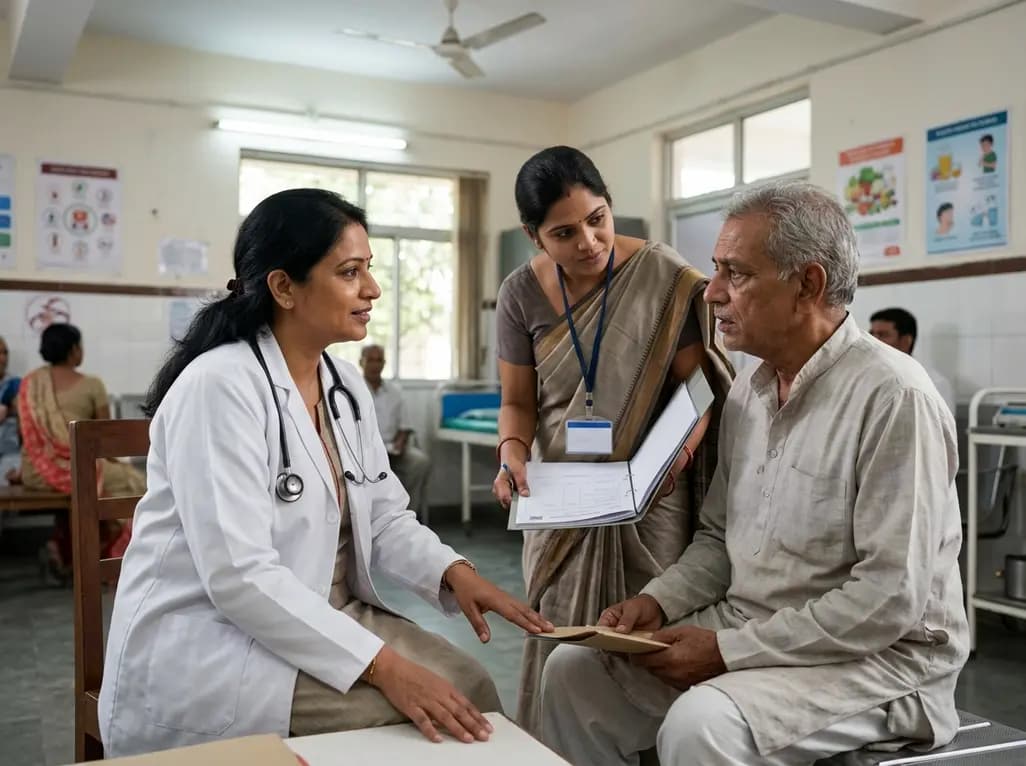
Australia currently faces a critical health crisis where individuals living with complex mental health challenges face a reduced life expectancy of 15 to 20 years. This staggering disparity arises primarily from preventable physical conditions. Specifically, chronic illnesses such as cardiovascular disease and diabetes are highly prevalent in this population. Often, these conditions link directly to lifestyle-related behaviours, including physical inactivity, smoking, and poor nutrition. Consequently, health systems must transition toward more integrated models to effectively bridge this inequity.
Furthermore, evidence demonstrates that integrated physical health and lifestyle interventions are both feasible and highly effective. However, the translation of these pilots into routine clinical care remains fragmented across the country. To address this, community-managed organisations (CMOs) emerge as essential pillars for reform. These organisations provide recovery-oriented and peer-led psychosocial care to adults. Therefore, CMOs are uniquely positioned to manage physical health inequities at the grassroots level. Unfortunately, many of these organisations remain under-resourced and underfunded. Additionally, national health policy frameworks often fail to recognise their full capability. Moreover, strategic investment in CMO capacity is necessary to lead a systemic response.
Addressing these health disparities requires structured models of intervention and better care pathways. First, we must develop integrated pathways that connect mental and physical health services. Second, workforce development is vital to equip staff with lifestyle medicine skills. Third, research priorities should focus on scaling sustainable models beyond small pilot programs. In addition, health policy must elevate the role of CMOs within mainstream frameworks. By doing so, we can ensure that people with complex mental health challenges receive equitable and holistic healthcare. Ultimately, this systemic approach will improve long-term survival and quality of life for vulnerable populations.
People with complex mental health challenges often face higher rates of smoking, obesity, and physical inactivity. Furthermore, medication side effects and systemic barriers to healthcare access contribute significantly to this 15-20 year mortality gap.
CMOs provide peer-led, psychosocial support in community settings. Consequently, they are ideally placed to deliver integrated lifestyle interventions that help patients manage their physical and mental health simultaneously.
Disclaimer: This content is for informational and educational purposes only and does not constitute professional medical advice, diagnosis, or treatment. Always seek the advice of your physician or other qualified health provider with any questions you may have regarding a medical condition. Refer to the latest local and national guidelines for clinical practice.
References
Lederman O et al. Mobilising community-managed organisations: A call to action to confront physical health inequities in people living with complex mental health challenges. Aust N Z J Psychiatry. 2026 Jun 03. doi: 10.1177/00048674261450383. PMID: 42237059.
World Health Organization. Management of physical health conditions in adults with severe mental disorders: WHO Guidelines. Geneva: World Health Organization; 2018.
Firth J, et al. The Lancet Psychiatry Commission: a blueprint for protecting physical health in people with mental illness. Lancet Psychiatry. 2019 Aug;6(8):675-712. doi: 10.1016/S2215-0366(19)30132-4.

Read summarized clinical updates, watch expert medical content, and earn CME certifications right from your smartphone.
Open your smartphone camera to scan and install.





Australia calls for mobilising Community-Managed Organisations to address the 20-year life expectancy gap in people with complex mental health challenges....
4 months ago

Novel diimide and hydrazone scaffolds, particularly compound #C4, synergistically reactivate latent HIV-1 when combined with JQ1 or PKC activators. Demonstrating donor-matched proviral transcription ex vivo and non-canonical signaling, these findings advance shock and kill strategies toward reservoir eradication.
Today

A cross-sectional study reveals that maternal RSV vaccination coverage reached only 43.7% in Argentina, with maternal vaccine knowledge being the sole independent predictor of uptake. Clinicians play a crucial role in eliminating informational and structural barriers to optimize infant health.
Today

Review how tailored exercise programs benefit frail older patients with heart failure. Explore pathophysiological mechanisms, individualized training prescriptions, and strategies to overcome adherence barriers in clinical practice.
Yesterday

This comparative study evaluates posterior labral tears with and without glenohumeral instability, highlighting distinct demographic patterns, MRI underestimation in stable shoulders, and successful arthroscopic repair outcomes.
Yesterday

A clinical study demonstrates that early intervention with tocilizumab, either as monotherapy or bridged with corticosteroids, achieves significant proptosis reduction and resolves active inflammation in treatment-naive thyroid eye disease.
Today
