.webp&w=384&q=75)

Loading, please wait...
Loading, please wait...

Clinicians frequently encounter Common Vulvar Neoplasms during routine gynecological examinations. These growths encompass a wide spectrum of pathology, ranging from simple benign cysts to aggressive malignant cancers. Therefore, accurate identification is essential to ensure patients receive appropriate care. Benign entities, such as epidermal inclusion cysts and fibroepithelial polyps, often present as painless nodules. However, they can sometimes mimic more serious conditions, creating significant diagnostic challenges for the healthcare provider. Moreover, Bartholin gland tumors may require careful evaluation to exclude underlying malignancy, especially in postmenopausal patients.
In contrast, malignant vulvar tumors carry high morbidity and mortality rates. Squamous cell carcinoma remains the most frequent malignancy, though clinicians also see melanoma and sarcomas. Additionally, extramammary Paget disease represents a rare but important diagnosis that often requires specialized management. Because these conditions vary significantly in their clinical behavior, a multidisciplinary approach is vital for achieving the best possible patient outcomes.
Modern medicine has revolutionized how we approach these lesions. For instance, advances in histopathology and molecular techniques now allow for much higher diagnostic precision. Consequently, doctors can now move away from one-size-fits-all treatments. They now prefer individualized therapeutic strategies that consider the specific biology of the tumor. Furthermore, high-resolution imaging plays a pivotal role in staging and surgical planning for malignant cases.
Effective management relies on a comprehensive understanding of classification systems. Clinicians should prioritize biopsy for any suspicious or persistent lesion to ensure an accurate diagnosis. Specifically, early detection of squamous cell carcinoma can significantly improve survival rates. Therefore, maintaining a high index of suspicion for atypical presentations is crucial for every women's health specialist. By uniting precise classification with evidence-based management, we can enhance the quality of care for all patients with vulvar disease.
Patients often present with a palpable lump, persistent itching, or localized pain. Some malignant lesions may also cause bleeding or ulceration that does not heal with topical treatments.
While clinical appearance provides clues, a punch or incisional biopsy is the gold standard for diagnosis. Histopathological examination allows for the definitive identification of the tissue type and the presence of any cellular atypia.
Disclaimer: This content is for informational and educational purposes only and does not constitute medical advice or a professional relationship. Always seek the advice of a qualified healthcare provider regarding any medical condition. Refer to the latest local and national guidelines for clinical practice.
References
Frasier K et al. Common Vulvar Neoplasms-Benign and Malignant. Clin Obstet Gynecol. 2026 Mar 30. doi: 10.1097/GRF.0000000000001003. PMID: 41906990.
Abu-Rustum NR, et al. Vulvar Cancer, Version 3.2024, NCCN Clinical Practice Guidelines in Oncology. J Natl Compr Canc Netw. 2024;22(2):117-135. doi: 10.6004/jnccn.2024.0013.
Bhatla N, et al. Cancer of the vulva: 2025 update. FIGO Cancer Report 2025. Int J Gynaecol Obstet. 2025;170(S1):101-115. doi: 10.1002/ijgo.15783.
"
Read summarized clinical updates, watch expert medical content, and earn CME certifications right from your smartphone.
Open your smartphone camera to scan and install.





A comprehensive guide to common vulvar neoplasms, covering benign lesions, malignant tumors, diagnostic precision, and individualized therapeutic strategies...
6 months ago

Explore vital recurrent stroke predictors in lacunar stroke patients managed with intensive blood pressure lowering. This analysis examines trial findings from SPS3 to uncover residual vascular risks, metabolic factors, and targeted secondary prevention strategies for high-risk neurological patients.
Today
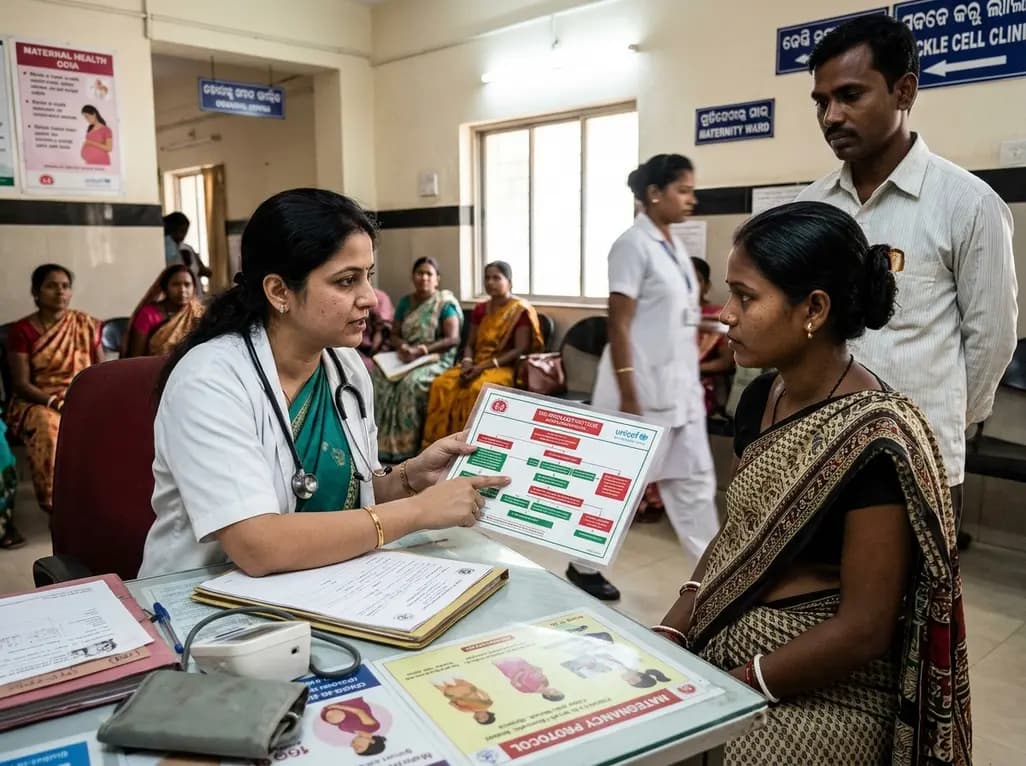
Odisha has established India's first state-level clinical protocol specifically tailored for pregnant women with sickle cell disease. Developed with NHM and UNICEF, the framework provides structured antenatal screening, crisis mitigation, standardized referral pathways, and specialized interdisciplinary care.
Today

India is advancing preventive healthcare by integrating genomics, artificial intelligence, and quantum technologies. With the SANGAM programme sequencing one million Indian genomes, clinicians can unlock personalized therapies, detect cardiometabolic risks early, and curb the burden of diabetes and heart disease.
Today

A randomized controlled trial demonstrates that an eight-week dual-task training intervention significantly improves static and dynamic postural control over standard balance exercises in individuals with chronic ankle instability, addressing critical neurocognitive deficits during athletic and daily activities.
Today

A retrospective cohort study of 7,716 ICU patients from the MIMIC-IV database demonstrates that Gradient Boosting Decision Trees significantly outperform traditional SOFA scores in predicting in-hospital mortality among patients with sepsis and diabetes, with SHAP analysis providing clinical interpretability.
Today
