.webp&w=384&q=75)

Loading, please wait...
Loading, please wait...

Understanding colorectal cancer symptoms is vital for improving patient outcomes in India. A recent survey in Chennai highlights a critical gap in public knowledge regarding these red flags. Specifically, only 11.7% of residents correctly identified blood in stool as a warning sign of malignancy. Consequently, many people ignore symptoms like persistent changes in bowel habits or abdominal discomfort. Moreover, patients often dismiss weight loss as a minor digestive issue. Therefore, late-stage diagnosis remains a significant challenge for oncologists and general practitioners alike.
The survey results indicate a worrying trend regarding medical consultation delays in urban centers. Furthermore, 83.2% of respondents admitted they delay visiting a doctor even when experiencing significant bowel changes. Instead of seeking professional help, nearly 90% of individuals choose self-medication or home remedies. This behavior leads to avoidable delays in starting life-saving treatments. Additionally, irregular bowel movements are common but frequently overlooked by the public. Timely medical advice is necessary to ensure that early-stage lesions do not progress into advanced cancer.
On a national level, awareness levels are similarly poor across multiple Indian cities. For instance, over 80% of respondents across 14 cities do not associate rectal bleeding with colorectal cancer. Lifestyle factors such as processed food consumption and tobacco use also increase the overall risk. However, regular screening and early detection can prevent this disease entirely. Therefore, clinicians must encourage regular check-ups for patients over the age of 45. Greater public education is essential to reduce the disease burden and improve long-term survival rates.
Q1: What are the most common colorectal cancer symptoms?
Common signs include blood in the stool, persistent changes in bowel habits such as diarrhea or constipation, abdominal pain, and unexplained weight loss.
Q2: When should individuals begin screening for colorectal cancer?
Most clinical guidelines recommend starting routine screening at age 45 or 50. However, individuals with a family history of the disease should consult a specialist earlier.
Disclaimer: This content is for informational and educational purposes only. It does not constitute medical advice or replace professional judgment. Refer to the latest local and national guidelines for clinical practice.
References

Read summarized clinical updates, watch expert medical content, and earn CME certifications right from your smartphone.
Open your smartphone camera to scan and install.





A Chennai survey reveals that only 11.7% of residents recognize blood in stool as a sign of colorectal cancer, highlighting a critical gap in early detectio...
6 months ago
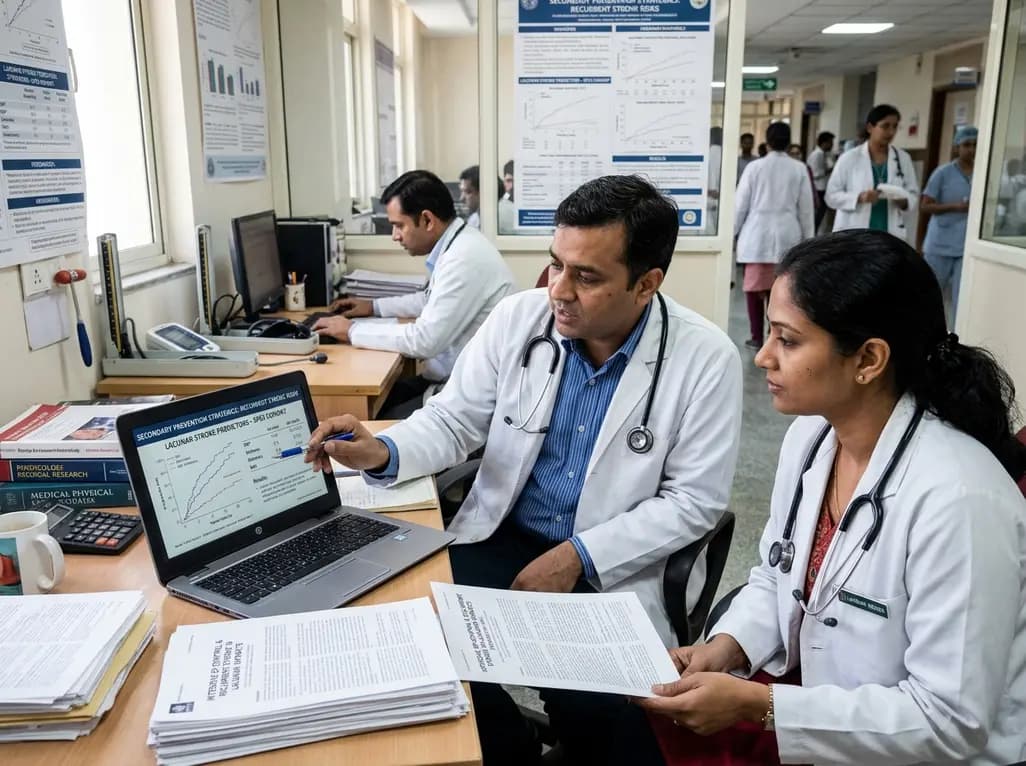
Explore vital recurrent stroke predictors in lacunar stroke patients managed with intensive blood pressure lowering. This analysis examines trial findings from SPS3 to uncover residual vascular risks, metabolic factors, and targeted secondary prevention strategies for high-risk neurological patients.
Today

A comprehensive scoping review synthesises evidence linking prenatal maternal mental health to long-term offspring neurodevelopment, evaluating neuroendocrine, inflammatory, and epigenetic pathways while highlighting clinical screening and future research priorities.
Today

The Directorate General of Health Services directs Indian states to halt the hazardous reuse and reprocessing of single-use medical devices. Discover regulatory implications under the Drugs and Cosmetics Act, critical infection risks, legal liabilities, and operational changes required across clinical specialties.
Today
Mitochondria-targeted nanoparticles self-assembled from EGCG and L-glutamic acid effectively restore mitochondrial homeostasis, suppress synovial inflammation, and attenuate chondrocyte senescence in osteoarthritis, offering a promising disease-modifying nanotherapy.
Today

India is advancing preventive healthcare by integrating genomics, artificial intelligence, and quantum technologies. With the SANGAM programme sequencing one million Indian genomes, clinicians can unlock personalized therapies, detect cardiometabolic risks early, and curb the burden of diabetes and heart disease.
Today
