

Loading, please wait...
Loading, please wait...

Differentiating idiopathic Parkinson's disease from atypical parkinsonian syndromes presents a persistent challenge in clinical neurology. While classical motor features often overlap during early stages, atypical parkinsonian syndromes exhibit distinct underlying neuropathology and significantly accelerated functional decline. Consequently, clinicians frequently encounter diagnostic delays that impede timely supportive therapy and prognostic counseling. Emerging evidence demonstrates that detailed cognitive screening and behavioral assessments offer powerful discriminative utility. By harmonizing robust data across extensive prospective cohorts, investigators have identified syndrome-specific cognitive deficits and behavioral disturbances that reliably differentiate these conditions.
Standardized bedside cognitive assessments reveal distinct domains of neurocognitive vulnerability across diagnostic categories. For instance, progressive supranuclear palsy causes prominent frontal executive dysfunction early in the illness. Patients struggle with set-shifting, verbal fluency, and response inhibition due to frontostriatal network disruption. Conversely, corticobasal syndrome manifests with pronounced visuospatial impairment, limb apraxia, and cortical sensory deficits. These deficits reflect asymmetrical parietal and peri-rolandic cortical degeneration. Meanwhile, multiple system atrophy produces comparatively milder cognitive changes. In multiple system atrophy, deficits primarily involve subtle executive slowing and mild memory retrieval issues, closely mirroring early Parkinson's disease. Therefore, routine screening tools such as the Montreal Cognitive Assessment can distinguish atypical parkinsonian syndromes effectively when clinicians analyze specific subscores rather than aggregate numbers alone. Furthermore, recognizing these distinct patterns enables neurologists to detect non-classical presentations early, avoiding common diagnostic pitfalls during initial clinical consultations.
Neuropsychiatric disturbances provide even greater discriminative power than isolated cognitive scores when evaluating patients with suspected atypical parkinsonian syndromes. Corticobasal syndrome features exceptionally high frequencies of severe depressive symptoms and persistent anxiety. In contrast, progressive supranuclear palsy demonstrates pervasive apathy as its dominant neuropsychiatric manifestation. Notably, apathy in progressive supranuclear palsy frequently coexists with marked impulsivity and loss of social decorum. This creates an apparent paradox that directly mimics behavioral variant frontotemporal dementia. Idiopathic Parkinson's disease, on the other hand, exhibits greater rates of rapid eye movement sleep behavior disorder and fatigue. Multiple system atrophy presents intermediate emotional dysregulation without the extreme behavioral disinhibition typical of tauopathies. Consequently, structured behavioral questionnaires yield invaluable diagnostic separation. Clinicians must actively query caregivers regarding motivational deficits, personality changes, and disinhibition, as patients often lack adequate insight into their behavioral alterations.
Although both motor impairment and cognitive decline advance with disease duration, their physiological relationship diverges significantly across disorders. In progressive supranuclear palsy, corticobasal syndrome, and idiopathic Parkinson's disease, motor disability correlates strongly with cognitive decline. Thus, as motor signs worsen, cognitive faculties deteriorate in parallel due to widespread multi-system neurodegeneration. In striking contrast, multiple system atrophy displays a notable decoupling between motor severity and cognitive function. Patients with multiple system atrophy may experience devastating motor disability, severe cerebellar ataxia, and profound dysautonomia while preserving relative cognitive clarity. Therefore, clinicians cannot rely on physical disability to infer mental status in multiple system atrophy. This dissociation underscores the unique distribution of oligodendroglial alpha-synuclein pathology, which selectively spares associative neocortical networks until advanced terminal phases.
Biofluid biomarkers increasingly provide objective biochemical verification of ongoing neuroaxonal injury. Circulating levels of plasma neurofilament light chain are markedly elevated in atypical parkinsonian syndromes compared to idiopathic Parkinson's disease. Moreover, in patients with progressive supranuclear palsy, plasma neurofilament light chain concentrations correlate directly with the severity of frontal cognitive deficits. Intriguingly, these biomarker levels show little association with motor scores in progressive supranuclear palsy cohorts. This observation suggests that plasma neurofilament light chain primarily tracks active subcortical and cortical axonal destruction underlying cognitive and executive deterioration. Integrating plasma neurofilament light chain quantification with routine cognitive batteries therefore sharpens diagnostic certainty. Clinicians can leverage these accessible blood-based markers to identify aggressive underlying neurodegenerative pathology before classical ocular motor palsies or severe postural instability manifest.
Cognitive impairment contributes substantially to the loss of functional independence in atypical parkinsonian syndromes, independently of motor disability. Every two-point decline on the Montreal Cognitive Assessment worsens functional independence on the Schwab and England Activities of Daily Living scale by one point. This quantitative impact highlights that executive and visuospatial failures directly impair medication adherence, nutritional intake, and personal safety. In response to these diagnostic challenges, validated predictive classifiers combining bedside cognitive tests, behavioral metrics, and plasma biomarkers are transforming clinical management. Accurate in vivo classification enables clinicians to initiate targeted multidisciplinary rehabilitation, provide realistic prognostic education, and avoid ineffective polypharmacy. Furthermore, early diagnostic stratification remains paramount as disease-modifying clinical trials targeting specific tau and synuclein proteinopathies expand globally.
Progressive supranuclear palsy predominantly causes severe frontal executive dysfunction, including impaired verbal fluency and reduced cognitive flexibility. Conversely, corticobasal syndrome presents with prominent visuospatial deficits, cortical sensory loss, and asymmetric limb apraxia. These distinct bedside neurocognitive profiles reflect differential regional degeneration within frontostriatal networks versus asymmetric parietal cortices.
In multiple system atrophy, alpha-synuclein glial cytoplasmic inclusions selectively destroy striatonigral, olivopontocerebellar, and autonomic pathways, driving severe physical disability. However, associative cortical networks and limbic structures remain relatively preserved during early and intermediate stages. Consequently, patients often retain stable cognitive faculties despite advanced physical and motor impairment.
Plasma neurofilament light chain serves as a sensitive biomarker of active neuroaxonal degeneration. Levels are substantially higher in atypical parkinsonian syndromes than in Parkinson's disease. Furthermore, elevated neurofilament light chain levels correlate with rapid cognitive decline in progressive supranuclear palsy, aiding early differential diagnosis and disease monitoring.
Disclaimer: This content is for informational and educational purposes only and should not be considered as medical advice or a substitute for professional healthcare guidance. Refer to the latest local and national guidelines for clinical practice.
References

Read summarized clinical updates, watch expert medical content, and earn CME certifications right from your smartphone.
Open your smartphone camera to scan and install.





A comprehensive multicentre cohort study reveals that cognitive and neuropsychiatric phenotypes reliably differentiate atypical parkinsonian syndromes from Parkinson's disease, providing crucial diagnostic markers for earlier in vivo recognition.
Today

Kenya's confirmation of its eighth Ebola infection highlights the acute risk of secondary transmission in hospital environments. Clinicians must maintain high vigilance, enforce strict infection prevention protocols, and implement rapid triage mechanisms for viral hemorrhagic fevers across healthcare settings.
Today
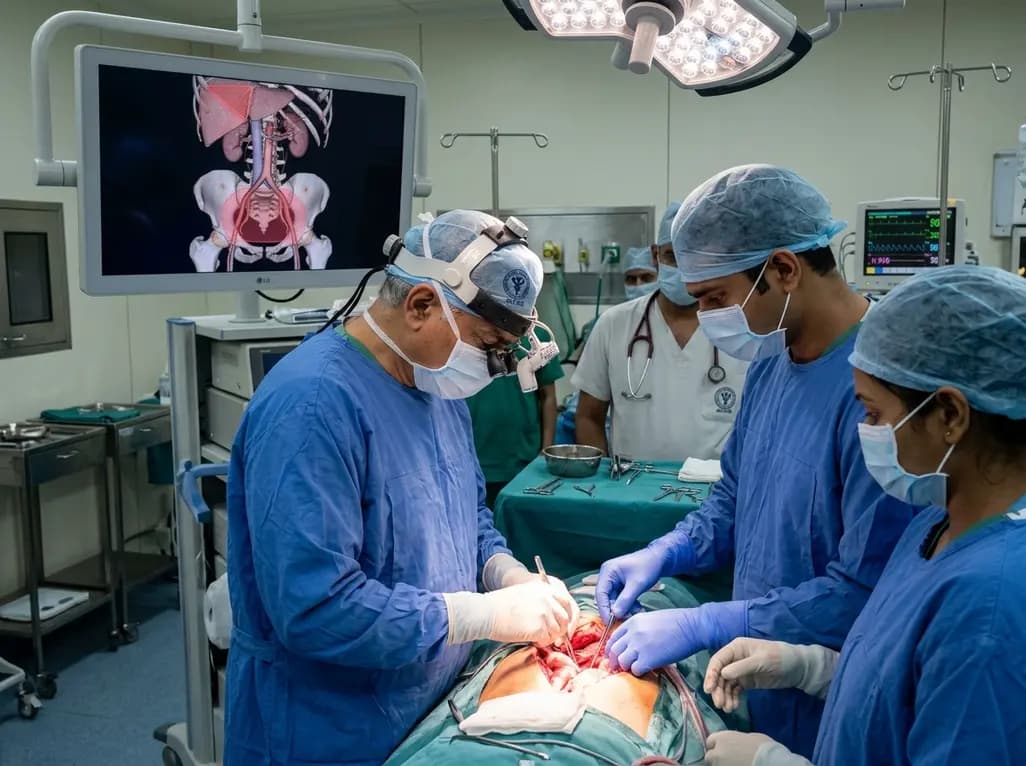
Surgical oncologists at AIIMS Delhi have mapped two critical anatomical landmarks: Ray's Zone in the deep pelvis and Ray's Hepatocaval Triangle near the liver. These predefined hazard boundaries guide dissection, dramatically reduce severe intraoperative bleeding, and preserve vital nerves and visceral organs.
Today

A study reveals that the MYLK c.4079G>A, p.(Gly1360Asp) variant is linked to high-penetrance heritable thoracic aortic disease and early-onset aortic dissection, showing a founder effect in Finnish cohorts. Findings emphasize early cascade screening and vigilant surveillance.
Today
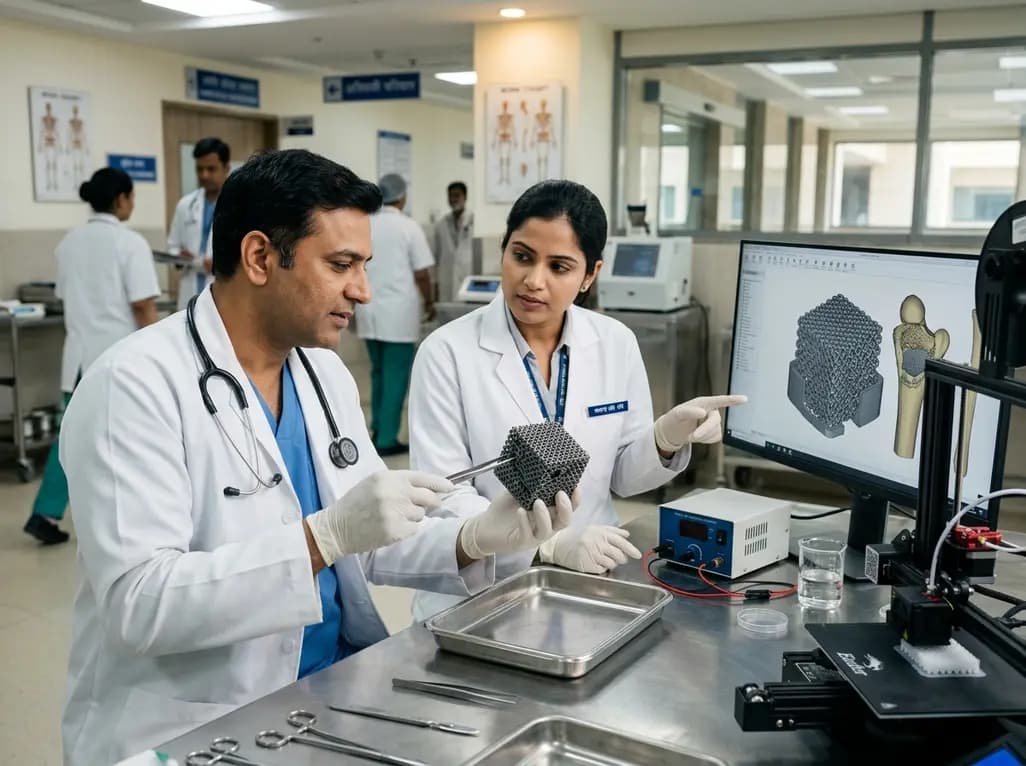
A novel sacrificial-template technique combines FDM polymer 3D printing and micro-arc oxidation to fabricate orientation-controlled porous titanium scaffolds. These bioactive constructs offer tailored stiffness, exceptional multidirectional load resistance, and robust osseointegration for bone defect repair.
Today

An animal model study reveals that gestational exposure to polystyrene microplastics causes persistent intrauterine growth restriction, testicular hypoplasia, Leydig cell depletion, and an atypical low-testosterone, low-LH endocrine profile in male offspring from birth into adulthood.
Today
