

Loading, please wait...
Loading, please wait...

Understanding occupational respiratory threats remains a primary objective for physicians managing workforce health. Essential industrial personnel, particularly surface and underground miners, face distinct environmental challenges that could alter transmission dynamics during viral outbreaks. Consequently, investigating how heavy particulate exposure influences SARS-CoV-2 infection risk provides critical insights for preventive pulmonology and occupational health policy. Early biological hypotheses suggested that chronic respirable dust accelerates viral entry via cellular receptor upregulation. However, longitudinal real-world cohort investigations reveal far more complex transmission patterns among essential manual laborers.
Preclinical investigations frequently emphasize direct molecular interactions between particulate matter and pulmonary cellular architecture. When individuals inhale fine particulate dust, alveolar macrophages and epithelial barriers trigger prolonged inflammatory cascades. Furthermore, experimental animal models demonstrate that chronic particulate exposure upregulates alveolar angiotensin-converting enzyme 2 receptors. Because SARS-CoV-2 relies on these specific entry receptors to infect host tissues, researchers hypothesized that dusty occupational environments would heighten infection susceptibility. In addition, localized epithelial micro-abrasions caused by mineral particulates could theoretically weaken frontline mucosal defenses. Therefore, pulmonary specialists expected to observe a steep escalation in viral transmission rates among mining cohorts. Nevertheless, biological plausibility in controlled laboratory settings does not always translate into clinical infection incidence within active workplaces. Observational epidemiology requires clinicians to evaluate behavioral adaptations alongside molecular mechanisms. For instance, workers in high-dust environments often wear protective gear or follow modified ventilation guidelines. Thus, relying solely on cellular pathways without accounting for actual industrial hygiene leads to incomplete clinical conclusions. Physicians must contextualize cellular vulnerability against the complex realities of occupational exposure.
To evaluate environmental risk factors, investigators established a prospective longitudinal cohort examining 230 surface coal miners across New Mexico and Wyoming. The observational surveillance spanned from February 2021 through March 2022, capturing dynamic waves of community viral transmission. Researchers categorized participants based on self-reported exposure levels to occupational mineral dust, residential biomass combustion, and shared vehicular transit. Furthermore, the protocol utilized rigorous serological tracking rather than relying merely on symptomatic self-reporting. Specifically, clinicians measured plasma immunoglobulin G antibodies against the nucleocapsid protein of the virus at baseline, three, six, and twelve months. This serial testing approach enabled investigators to identify post-baseline incident seroconversions with high analytical precision. In addition, the statistical team implemented multivariable logistic regression utilizing Firth-penalized likelihood alongside LASSO selection techniques. These statistical controls adjusted thoroughly for confounding variables, including demographic background, mine geographic location, previous seropositivity, and vaccination status. Consequently, the study minimized residual confounding across diverse geographic cohorts. By focusing on objective serological markers, this investigation established a dependable methodological framework for studying occupational infectious disease epidemiology.
The cohort analysis revealed unexpected findings that contradicted initial mechanistic hypotheses. At baseline, approximately 25% of the enrolled miners reported substantial daily exposure to occupational coal dust. Surprisingly, participants reporting higher dust exposure exhibited lower unadjusted odds of acquiring incident viral infection. After extensive multivariable adjustment for vaccination status, mine site, and baseline serological status, this inverse trend persisted without reaching statistical significance. Specifically, the adjusted odds ratio was 0.42 with a 95% confidence interval ranging from 0.17 to 1.07. Consequently, researchers could not substantiate the premise that occupational dust exposure directly accelerates viral acquisition. Instead, occupational health experts emphasize that this apparent protective signal likely stems from unmeasured microenvironmental factors. For example, workers assigned to heavy dust generation zones frequently operate inside isolated, filtered vehicle cabins or strictly utilize advanced respiratory protection. Furthermore, operational physical distancing protocols naturally occur during intense mechanical extraction tasks. Therefore, clinicians must avoid misinterpreting these results as evidence that particulate matter confers biological resistance against viral transmission. Unmeasured protective equipment compliance fundamentally explains these clinical discrepancies.
In addition to workplace particulates, the study tracked common rural environmental exposures, focusing specifically on indoor wood burning and commuter carpooling. Approximately 18% of participants reported burning wood very often for home heating, while 23% frequently shared vehicular transportation. Public health models previously suggested that enclosed vehicular travel and biomass smoke would substantially accelerate viral transmission. However, the empirical cohort data showed no significant correlation between shared vehicular transit and incident seroconversion. Similarly, researchers recorded zero incident infections among the 35 miners who reported frequent residential wood combustion. Consequently, multivariable models confirmed that domestic wood smoke did not increase the statistical odds of acquiring infection. These outcomes challenge conventional assumptions regarding rural domestic transmission dynamics during pandemics. Researchers theorize that individuals burning wood often reside in lower-density rural environments with reduced ambient community viral circulation. In addition, rural carpooling groups often consist of stable social bubbles, which limits widespread transmission networks. Therefore, environmental exposures in rural communities exhibit complex contextual behaviors that counter generic urban epidemiological models.
These epidemiological findings offer essential guidance for physicians managing respiratory health in industrial and resource-constrained settings. First, clinicians must recognize that biological plausibility does not automatically equal real-world clinical risk without verified exposure data. While laboratory studies verify that particulate matter alters receptor dynamics, workplace hygiene protocols can successfully negate transmission risks. Therefore, occupational health programs should continue enforcing strict personal protective equipment standards and engineering ventilation controls. Second, physicians caring for miners must prioritize comprehensive surveillance and routine vaccination. In this cohort, baseline vaccination rates reached only 23%, underscoring a continuous need for community immunization advocacy. Furthermore, practitioners should not assume that workers with chronic dust exposure possess intrinsic immunity or protection against airborne pathogens. On the contrary, persistent particulate inhalation inflicts severe long-term parenchymal lung injury, including pneumoconiosis and chronic obstructive pulmonary disease. Consequently, contracting viral infections on top of pre-existing occupational lung damage poses grave risks of severe clinical deterioration. Medical professionals should proactively promote dual-layered protection encompassing industrial respiratory barriers and proactive seasonal vaccination campaigns.
High occupational dust exposure did not correlate with increased infection rates primarily due to unmeasured industrial protective behaviors. Workers operating in dusty mining zones frequently utilize certified respirators, such as N95 or elastomeric masks, which simultaneously filter out virus-laden aerosols. In addition, many heavy machinery operators work inside sealed, well-ventilated vehicle cabs. Consequently, these industrial hygiene measures effectively mitigate airborne viral transmission despite elevated ambient particulate levels in the broader working environment.
Laboratory and preclinical models demonstrate that chronic exposure to fine particulate matter upregulates alveolar angiotensin-converting enzyme 2 receptors in pulmonary epithelial cells. Because SARS-CoV-2 binds directly to this surface receptor during viral entry, toxicologists hypothesized that particulate inhalation would heighten cellular vulnerability. Furthermore, fine dust causes localized microvascular inflammation and impairs mucociliary clearance. However, clinical acquisition ultimately depends on viral load, interpersonal distancing, and personal protective equipment adherence rather than receptor density alone.
Clinicians managing industrial workforces should emphasize multi-layered preventive strategies rather than relying solely on environmental assumptions. First, occupational physicians must advocate for high uptake of authorized seasonal vaccines to prevent severe respiratory illness. In addition, medical teams should enforce strict workplace hygiene standards, including regular maintenance of vehicle cabin air filters and mandatory fit-tested respirator use in dust-generating tasks. Finally, establishing routine occupational health surveillance helps detect infectious clusters early and preserves pulmonary function.
Disclaimer: This content is for informational and educational purposes only and does not constitute medical advice. Refer to the latest local and national guidelines for clinical practice.
References

Read summarized clinical updates, watch expert medical content, and earn CME certifications right from your smartphone.
Open your smartphone camera to scan and install.





A longitudinal cohort study of 230 coal miners reveals that high occupational dust exposure did not increase SARS-CoV-2 infection risk, highlighting the protective role of unmeasured workplace controls and personal protective equipment in essential industrial settings.
Today

A new study evaluates a multilingual digital health platform combining rule-based cervical cancer risk assessment, retrieval-augmented generation AI, and geospatial navigation. The tool dramatically reduces clinical hallucinations while providing actionable health guidance for underserved populations.
Today
A prospective study reveals that tracking intradialytic foot temperature gradients offers a noninvasive approach to screen for severe peripheral artery disease in hemodialysis patients.
Today
A large registry study reveals that postoperative dysphagia occurs more frequently and persists longer after multilevel anterior cervical spine surgery than single-level procedures. Key risk factors include baseline dysphagia, diabetes, upper cervical segment involvement, and medical comorbidities.
Today
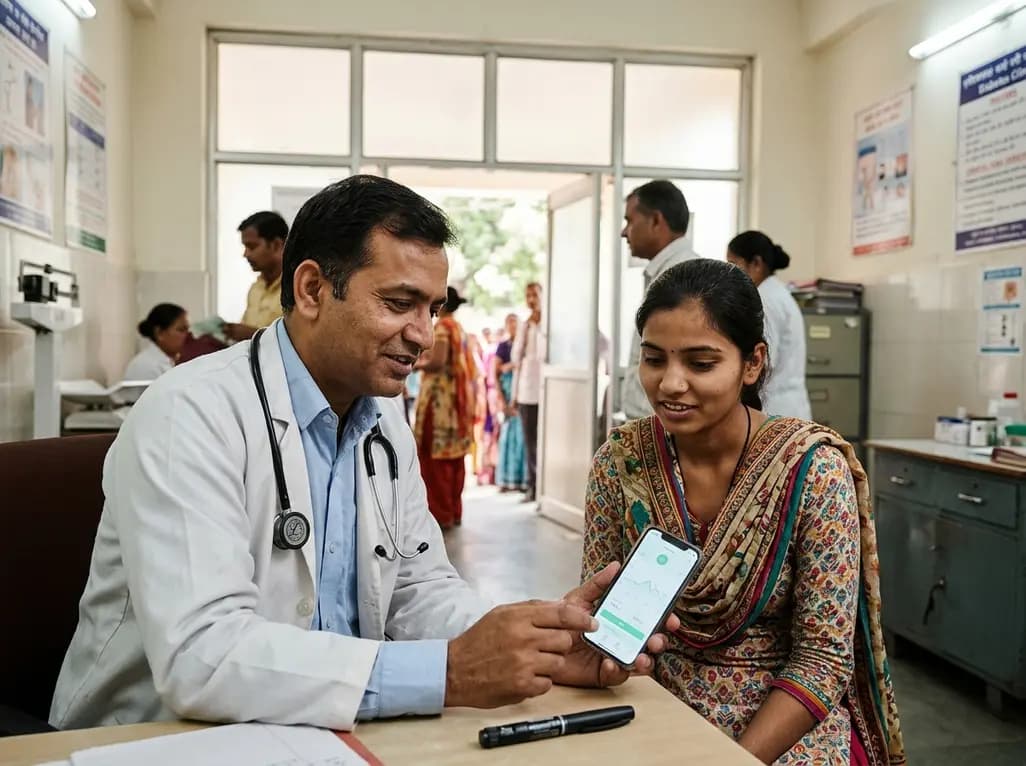
A pilot feasibility study demonstrates that a newly developed mobile app for bolus insulin dose adjustment significantly improves dosing confidence, treatment adherence, and hypoglycemia prevention for patients with type 1 diabetes while reducing provider workload in resource-limited clinical settings.
Today
