.webp&w=384&q=75)

Loading, please wait...
Loading, please wait...

Constitutional mismatch repair deficiency (CMMRD) represents a rare but critical hereditary cancer syndrome in the pediatric population. When evaluating an 8-year-old girl with a high-grade glioma, researchers identified a distinct PMS2 deficiency. This finding is central to a successful CMMRD pediatric glioma diagnosis. Significantly, the patient lacked a clear family history of cancer, which often complicates early recognition. However, specific molecular and radiological markers eventually pointed toward this underlying syndrome.
Neuroimaging initially revealed a right frontoparietal mass. Interestingly, clinicians observed an adjacent developmental venous anomaly (DVA) during the evaluation. Researchers suggest that DVAs might serve as a biological marker for specific PIK3R1 pathway alterations. Consequently, neuroradiologists should maintain high suspicion for CMMRD when they encounter these anomalies alongside pediatric brain tumors. Clinical recognition remains difficult because many patients do not follow the typical autosomal dominant inheritance patterns seen in Lynch syndrome. Furthermore, the absence of cutaneous signs like café-au-lait spots does not entirely rule out the condition.
Histopathological analysis confirmed a diffuse high-grade glioma with marked mitotic activity. The tumor displayed a unique ultra-hypermutated profile, which is a hallmark of mismatch repair failure. Specifically, the tumor mutational burden (TMB) reached an impressive 117.4 mutations/Mb. Genetic testing subsequently identified a pathogenic PMS2 frameshift variant. Moreover, co-occurring mutations in TP53 and various components of the PI3K pathway, such as PIK3CA and PTEN, were discovered. These complex molecular alterations often drive the aggressive nature of CMMRD-associated tumors.
Establishing an accurate CMMRD pediatric glioma diagnosis requires routine immunohistochemistry (IHC) for mismatch repair markers. In this case, both the tumor and non-neoplastic cells showed a complete loss of PMS2 expression. This widespread loss is a definitive indicator of a constitutional deficiency rather than a sporadic somatic mutation. Therefore, clinicians must prioritize routine MMR assessment in all pediatric high-grade gliomas, regardless of family history. Accurate diagnosis facilitates appropriate genetic counseling and opens doors for targeted therapeutic implications, such as immune checkpoint inhibitors.
Key indicators include an ultra-hypermutated tumor profile (TMB > 100 mutations/Mb), loss of mismatch repair protein expression in both tumor and healthy tissues, and specific radiological signs like developmental venous anomalies.
Many CMMRD cases occur without a family history of cancer or typical skin findings. Routine IHC allows for the early identification of this syndrome, which is essential for genetic counseling and personalized treatment planning.
Yes. The high tumor mutational burden associated with CMMRD makes these tumors potentially responsive to immune checkpoint inhibitors, offering a possible alternative to traditional chemotherapy and radiation.
Disclaimer: This content is for informational and educational purposes only. It is not intended as medical advice or a substitute for professional healthcare consultation. Refer to the latest local and national guidelines for clinical practice.
References
Erbağcı A et al. A PMS2-deficient pediatric high-grade glioma with PI3K-pathway mutations and adjacent developmental venous anomaly suggestive of CMMRD. Childs Nerv Syst. 2026 Mar 26. doi: undefined. PMID: 41886087.
Wimmer K, Kratz CP, Vasen HF, et al. Diagnostic criteria for constitutional mismatch repair deficiency syndrome: suggestions of the European consortium "care for CMMRD" (C4CMMRD). J Med Genet. 2014;51(6):355-365.
Shlien A, Campbell BB, de Borja R, et al. Combined hereditary and somatic mutations of replication error repair genes result in rapid onset of ultra-hypermutated cancers. Nat Genet. 2015;47(3):257-262.

Read summarized clinical updates, watch expert medical content, and earn CME certifications right from your smartphone.
Open your smartphone camera to scan and install.





This case report discusses a PMS2-deficient pediatric high-grade glioma, highlighting CMMRD diagnostic clues like ultra-hypermutation and PI3K mutations....
6 months ago

The TREM-AB open-label pilot study evaluated a wearable passive nonlinear vibration absorber for essential tremor. The Nonlinear Energy Sink bracelet reduced clinical Fahn-Tolosa-Marin tremor scores by 32.1% and electrophysiological tremor power by 49.2% with no adverse effects reported.
Today

A study in JAMIA Open shows lightweight open-source reasoning LLMs achieve up to 95% sensitivity and accelerate evidence synthesis screening by nearly twentyfold, presenting a cost-effective, scalable AI solution for biomedical research and systematic reviews.
Today
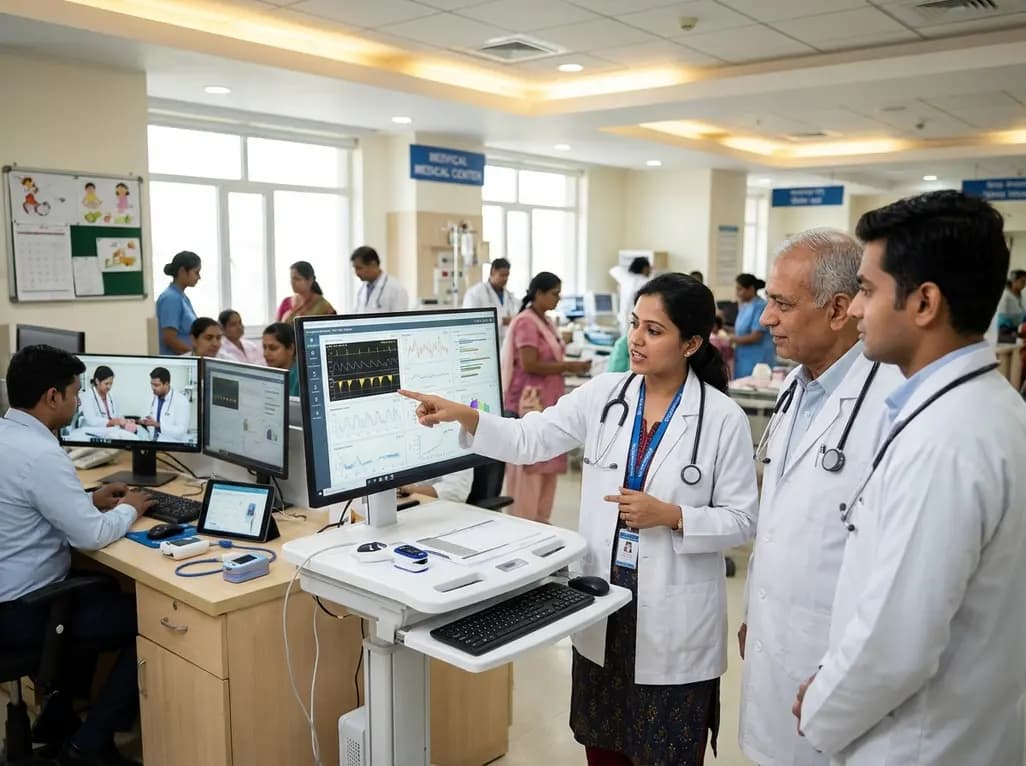
A landmark study details how an enterprise pediatric remote patient management model expanded from a single cardiology pilot to 16 diverse specialty programs by combining centralized digital operations with specialty clinical leadership.
Today

A comparative review of tension band wiring and intramedullary screw fixation in thumb metacarpophalangeal arthrodesis, evaluating union rates, hardware complications, and clinical outcomes.
Today

A breakthrough ultrathin multimodal sensor decouples physical hemodynamic monitoring from disposable electrochemical calibration, achieving long-term wearable glucose prediction with 81.36% accuracy and a 9.12% MARD. This offers a robust, drift-free solution for outpatient metabolic surveillance.
Today
