.webp&w=384&q=75)

Loading, please wait...
Loading, please wait...
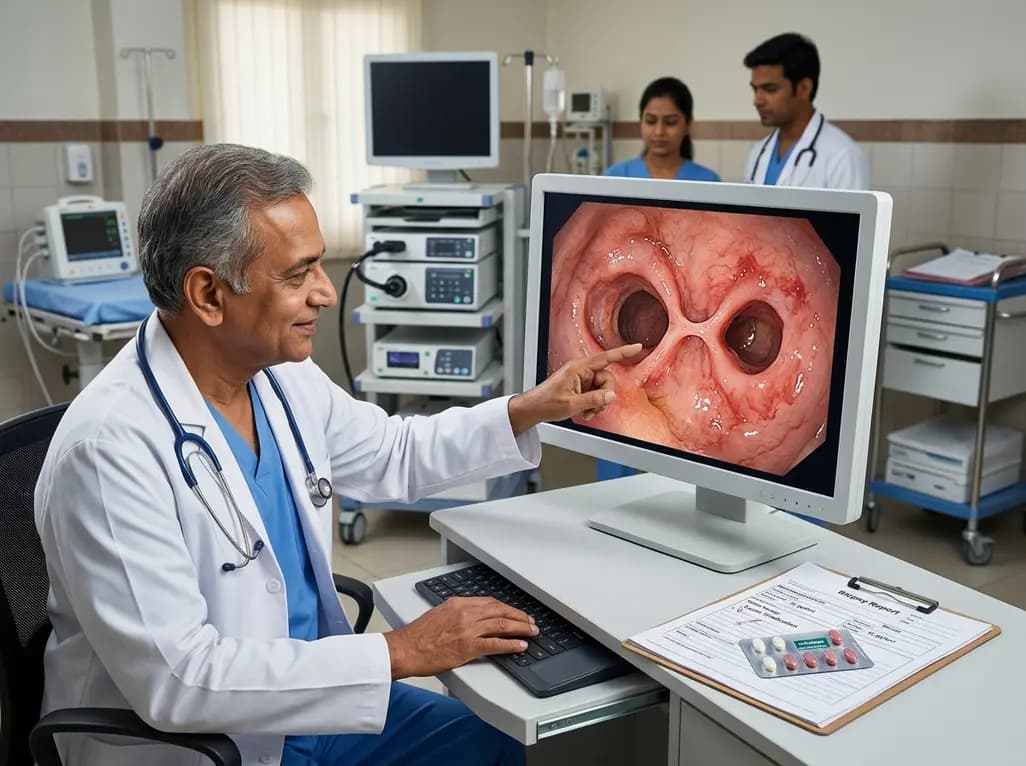
Acquired double pylorus is an uncommon gastrointestinal finding characterized by two distinct openings connecting the gastric antrum to the duodenal bulb. This condition primarily occurs when a chronic peptic ulcer erodes through the gastric or duodenal wall. Consequently, a fistulous tract forms, creating a secondary channel alongside the anatomical pylorus. While congenital cases are typically asymptomatic, patients with the acquired form often present with significant dyspeptic symptoms or complications related to underlying diseases.
Recent clinical reports emphasize that acquired double pylorus can affect a wide demographic range. For instance, cases involving a 72-year-old woman and a 15-year-old girl highlight the variability in presentation. The elderly patient reported a five-month history of dyspepsia, while the adolescent suffered from unexplained abdominal pain for six years. Both individuals were eventually diagnosed using upper gastrointestinal endoscopy, which identified the accessory channel. Notably, both cases were associated with Helicobacter pylori infection, a major contributor to the development of peptic ulcers and subsequent fistula formation.
Upper gastrointestinal endoscopy remains the gold standard for diagnosing double pylorus. During the procedure, clinicians can visualize the tissue bridge separating the two channels. Furthermore, histopathological examination of biopsies is essential to exclude malignancy, particularly in older patients with chronic ulcers. Once the diagnosis of acquired double pylorus is confirmed, treatment focuses on aggressive anti-ulcer therapy. For H. pylori-positive cases, a standard 10-day triple therapy regimen—comprising Omeprazole, Amoxicillin, and Metronidazole—is typically effective. Most patients experience rapid symptomatic relief, although the fistulous tract may persist or occasionally fuse with the native pylorus over time.
Congenital double pylorus is a developmental anomaly often discovered incidentally, as it rarely causes symptoms. In contrast, the acquired form results from complications of peptic ulcer disease or gastric cancer and is typically associated with chronic pain or bleeding.
The main risk factors include chronic Helicobacter pylori infection, long-term use of nonsteroidal anti-inflammatory drugs (NSAIDs), and systemic conditions like diabetes that impair mucosal healing.
Most cases respond well to medical management with proton pump inhibitors and H. pylori eradication. Surgery is generally reserved for patients with refractory symptoms, recurrent bleeding, or suspected gastric malignancy.
Disclaimer: This content is for informational and educational purposes only and does not constitute medical advice. Always seek the advice of a qualified healthcare provider with any questions regarding a medical condition. Refer to the latest local and national guidelines for clinical practice.
References

Read summarized clinical updates, watch expert medical content, and earn CME certifications right from your smartphone.
Open your smartphone camera to scan and install.





A clinical review of double pylorus, exploring its etiology, endoscopic diagnosis, and the management of acquired cases through H. pylori eradication....
4 months ago

Novel diimide and hydrazone scaffolds, particularly compound #C4, synergistically reactivate latent HIV-1 when combined with JQ1 or PKC activators. Demonstrating donor-matched proviral transcription ex vivo and non-canonical signaling, these findings advance shock and kill strategies toward reservoir eradication.
Today

A cross-sectional study reveals that maternal RSV vaccination coverage reached only 43.7% in Argentina, with maternal vaccine knowledge being the sole independent predictor of uptake. Clinicians play a crucial role in eliminating informational and structural barriers to optimize infant health.
Today

Review how tailored exercise programs benefit frail older patients with heart failure. Explore pathophysiological mechanisms, individualized training prescriptions, and strategies to overcome adherence barriers in clinical practice.
Yesterday

This comparative study evaluates posterior labral tears with and without glenohumeral instability, highlighting distinct demographic patterns, MRI underestimation in stable shoulders, and successful arthroscopic repair outcomes.
Yesterday

A clinical study demonstrates that early intervention with tocilizumab, either as monotherapy or bridged with corticosteroids, achieves significant proptosis reduction and resolves active inflammation in treatment-naive thyroid eye disease.
Yesterday
