.webp&w=384&q=75)

Loading, please wait...
Loading, please wait...
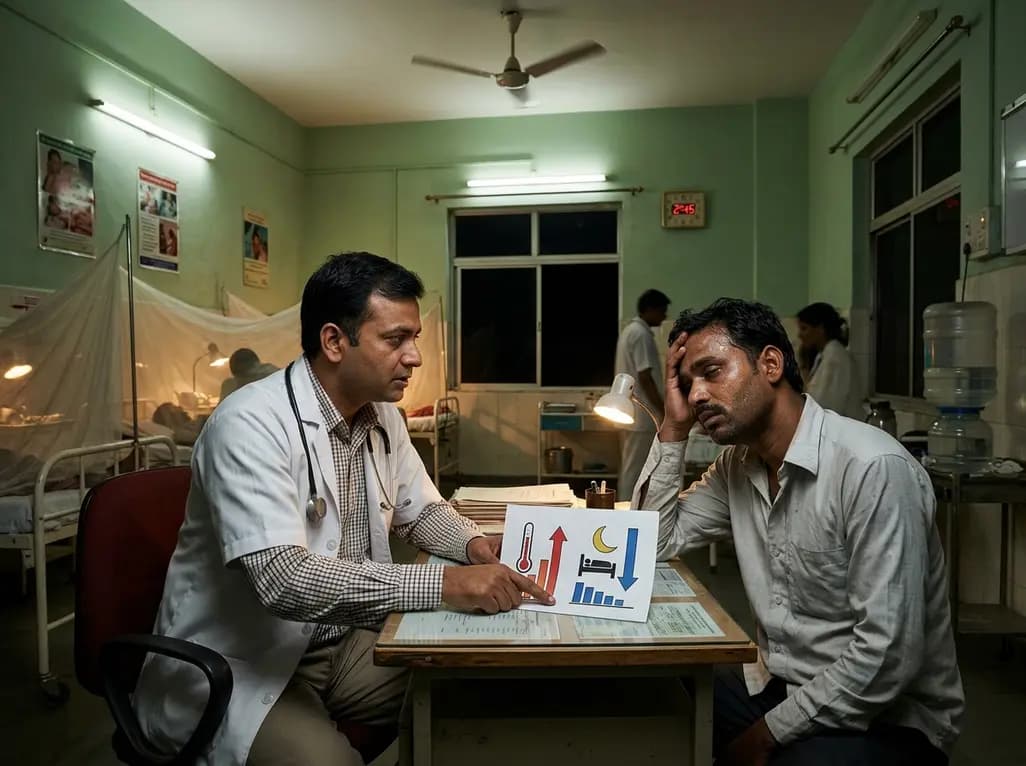
Recent scientific evidence highlights a silent but profound crisis affecting global public health. Specifically, a new comprehensive analysis from Climate Central names India as a key hotspot for climate-related sleep loss. As nighttime temperatures continue to rise due to greenhouse gas emissions, millions of individuals are experiencing severely fragmented rest. Consequently, this widespread environmental disruption is undermining one of the most fundamental requirements for human health and physiological recovery. For clinicians, understanding this direct correlation is vital because sleep deprivation acts as a major catalyst for chronic diseases. Therefore, addressing environmental factors in patient consultations has transitioned from an environmental concern into a clinical necessity.
To begin with, appreciating the scale of this issue requires examining the quantitative data. Globally, individuals lost nearly 56 hours of sleep annually due to nighttime heat between 2020 and 2025. This loss is equivalent to losing nearly seven full nights of sleep each year. Notably, the report attributes at least six hours of this annual loss directly to human-induced global warming. Furthermore, temperature-related sleep loss has at least doubled in over 1,300 global cities since the early 1970s. This rapid escalation shows how fossil fuel emissions translate into measurable health deficits. In regions with already warm climates, the impact is even more severe. Consequently, what once seemed like a distant ecological problem is now directly invading the bedrooms of our patients. Clinicians must recognize that this sleep loss represents a cumulative physiological strain. Over several years, losing dozens of hours of rest can severely compromise a patient's metabolic and immunological reserve. Thus, tracking local climate trends is becoming relevant to preventive medicine.
India has emerged as one of the most severely impacted global hotspots. Specifically, residents in the southern states face the highest burden, losing 78 to 91 hours of sleep annually. Of this total, climate change directly drives eight to nine hours of lost sleep. Additionally, the analysis of 107 Indian cities revealed significant regional disparities. Among these, Tamil Nadu recorded the highest climate change-driven sleep loss, with an additional 7.9 hours per person annually. Similarly, major metros show alarming statistics. Chennai residents lose 93 hours of sleep annually, followed by Mumbai at 84 hours and Kolkata at 80 hours. Meanwhile, Bengaluru recorded the strongest climate change signal with an annual loss of eight hours. In the past, cities like Bengaluru and Dehradun enjoyed cooler nights, but concrete-heavy development has warmed them. As a result, the urban heat island effect traps heat and prevents nighttime cooling in these urban centers. For instance, Bengaluru residents saw their annual sleep loss rise from 59 hours in the 1970s to 67 hours in 2025. This evidence indicates that urban microclimates exacerbate the broader atmospheric warming, which directly impacts our patients.
To understand how high temperatures impair sleep, we must review core human thermoregulatory mechanisms. Normally, the body must lower its core temperature to initiate and maintain deep sleep. This physiological drop relies heavily on heat dissipation through distal skin vasodilation. However, elevated ambient nighttime temperatures interfere with this thermal gradient. When the bedroom environment remains warm, the body cannot shed heat efficiently. Consequently, this thermoregulatory struggle keeps the sympathetic nervous system highly active. Instead of entering deep, restorative slow-wave sleep, patients experience frequent micro-arousals. Indeed, research shows that high ambient temperatures significantly reduce both slow-wave sleep and rapid eye movement sleep. These particular sleep stages are critical for cellular repair and memory consolidation. Furthermore, elevated humidity, common in coastal cities like Chennai and Mumbai, further suppresses sweat evaporation. This physiological bottleneck prevents the core body temperature from reaching its optimal setpoint. Ultimately, patients wake up feeling unrefreshed, even if they spent eight hours in bed. Over time, this recurring disruption alters the hypothalamic-pituitary-adrenal axis, elevating baseline cortisol levels. Therefore, nighttime heat acts as a persistent physical stressor, disrupting neuroendocrine balance and systemic homeostasis.
As clinicians, we must recognize that poor sleep is not just a lifestyle complaint. Rather, it is a primary driver of major cardiometabolic and psychological pathologies. For instance, sleeping less than seven hours per night severely impairs immune function. Consequently, patients become more susceptible to common infections and show reduced vaccine efficacy. Moreover, chronic sleep restriction correlates with weight gain and visceral adiposity. This occurs because sleep deprivation disrupts leptin and ghrelin levels, which stimulates appetite. Additionally, glucose metabolism suffers, significantly increasing the risk of type 2 diabetes. From a cardiovascular perspective, insufficient sleep prevents the normal nocturnal dipping of blood pressure. As a result, patients face a much higher risk of developing chronic hypertension and ischemic heart disease. Mental health also suffers significantly under these conditions. Specifically, fragmented sleep exacerbates anxiety, major depressive disorder, and emotional dysregulation. Patients also report impaired cognitive performance, which increases clinical errors and workplace accidents. Ultimately, persistent sleep loss increases all-cause mortality. Because of these wide-ranging systemic effects, physicians must proactively evaluate sleep hygiene in every patient presenting with chronic health issues.
To address this mounting environmental challenge, doctors should implement proactive counseling strategies. First, we must identify vulnerable populations, including elderly patients, pregnant women, and lower-income families. These groups often lack access to air conditioning and suffer disproportionately. Second, physicians should recommend practical behavioral adjustments for thermal comfort. For instance, taking a lukewarm shower before bed helps initiate skin vasodilation and lowers core body temperature. Additionally, using lightweight cotton bedding and loose sleepwear significantly improves passive cooling. Patients should also keep windows open during cooler evening hours to enhance ventilation. However, if outdoor air is highly humid, this approach might be less effective. In such cases, using simple table fans to create cross-breezes can facilitate sweat evaporation. Furthermore, optimizing evening nutrition can support thermoregulation. For example, avoiding heavy, protein-rich meals close to bedtime reduces diet-induced thermogenesis. Clinicians must also highlight the importance of avoiding late-night alcohol and caffeine, which impair vascular response. Ultimately, integrating climate awareness into routine clinical assessments helps patients make informed adjustments to protect their sleep. Through targeted counseling, we can reduce the public health impact of warming nighttime temperatures across India.
Q1: Why does climate-related sleep loss affect residents in southern India more severely?
Southern India experiences a unique combination of tropical climate, elevated baseline temperatures, and high coastal humidity. Consequently, the temperature-related sleep loss is naturally high in these states. Furthermore, highly populated urban centers trap heat due to the urban heat island effect. As a result, concrete buildings release trapped heat after sunset, keeping nighttime temperatures dangerously warm and preventing proper physiological cooling during sleep.
Q2: What is the primary physiological mechanism by which nighttime heat impairs sleep quality?
Normally, initiating sleep requires a decrease in core body temperature, which occurs through peripheral skin vasodilation. However, elevated ambient temperatures disrupt this thermal gradient, making heat dissipation difficult. Consequently, the body remains in a hyper-aroused state, activating the sympathetic nervous system. Instead of experiencing restorative slow-wave sleep, patients suffer from frequent micro-arousals, which reduces deep sleep and impairs cellular repair.
Q3: How should clinicians talk to patients about managing heat-related sleep disruption?
Physicians should counsel patients on basic behavioral interventions to facilitate heat loss. For instance, taking a lukewarm shower before bedtime promotes vasodilation and lowers core temperature. Additionally, individuals should wear loose cotton sleepwear and use fans to encourage cooling. Clinicians should also advise avoiding heavy late-night meals and alcohol, which increase metabolic heat production and impair normal thermoregulatory mechanisms.
Disclaimer: This content is for informational and educational purposes only. It does not constitute medical advice or replace professional judgment. Refer to the latest local and national guidelines for clinical practice.
References

Read summarized clinical updates, watch expert medical content, and earn CME certifications right from your smartphone.
Open your smartphone camera to scan and install.





An alarming report by Climate Central reveals that rising nighttime temperatures are robbing Indians of up to 91 hours of sleep annually. Discover how climate-driven sleep disruption impacts public health, immunity, and cardiovascular systems, and learn effective patient-management strategies for clinicians.
3 months ago

Explore vital recurrent stroke predictors in lacunar stroke patients managed with intensive blood pressure lowering. This analysis examines trial findings from SPS3 to uncover residual vascular risks, metabolic factors, and targeted secondary prevention strategies for high-risk neurological patients.
Today

A comprehensive scoping review synthesises evidence linking prenatal maternal mental health to long-term offspring neurodevelopment, evaluating neuroendocrine, inflammatory, and epigenetic pathways while highlighting clinical screening and future research priorities.
Today

The Directorate General of Health Services directs Indian states to halt the hazardous reuse and reprocessing of single-use medical devices. Discover regulatory implications under the Drugs and Cosmetics Act, critical infection risks, legal liabilities, and operational changes required across clinical specialties.
Today
Mitochondria-targeted nanoparticles self-assembled from EGCG and L-glutamic acid effectively restore mitochondrial homeostasis, suppress synovial inflammation, and attenuate chondrocyte senescence in osteoarthritis, offering a promising disease-modifying nanotherapy.
Today

India is advancing preventive healthcare by integrating genomics, artificial intelligence, and quantum technologies. With the SANGAM programme sequencing one million Indian genomes, clinicians can unlock personalized therapies, detect cardiometabolic risks early, and curb the burden of diabetes and heart disease.
Today
