.webp&w=384&q=75)

Loading, please wait...
Loading, please wait...
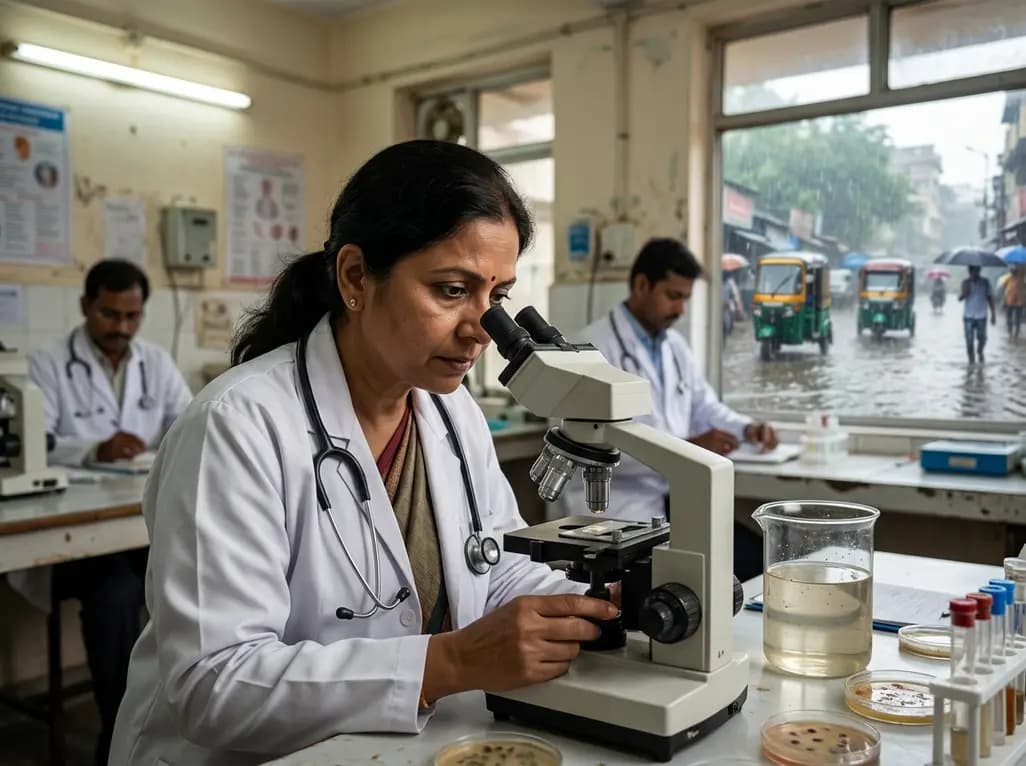
Recent scientific findings underscore a critical challenge confronting global healthcare. Specifically, the relationship between climate change waterborne diseases highlights how shifting environmental conditions can escalate risk, thereby threatening to reverse decades of public health progress. Historically, substantial investments in sanitation and hygiene significantly decreased the incidence of diarrheal diseases. However, a comprehensive new review published in the journal Nature Reviews Microbiology reveals that more frequent extreme weather events are actively dismantling these hard-won achievements. This study, led by researchers at the University of Colorado Anschutz and the University of Washington, highlights how altering global weather patterns disrupt established transmission pathways. Consequently, healthcare providers and clinical specialists must urgently adapt their preventive and therapeutic paradigms. Understanding these changing environmental dynamics is no longer optional for clinicians. It is now a necessity. As global temperatures continue to rise, medical professionals must remain vigilant to identify emerging trends in patient presentations and coordinate effective local interventions.
For decades, researchers associated the spread of waterborne pathogens with severe flooding and heavy seasonal rainfall. When extreme precipitation events occur, runoff washes agricultural waste, sewage, and soil-bound microbes directly into municipal drinking water systems. This mechanism clearly compromises local water treatment plants, which leads to immediate spikes in acute gastroenteritis cases. However, the latest review reveals that droughts pose an equally severe threat to global health. During prolonged dry periods, freshwater resources diminish significantly. As a result, pathogenic microorganisms become highly concentrated in the remaining shallow water bodies. Furthermore, water scarcity forces local populations to rely on unsafe, alternative water sources, which dramatically increases exposure risks. Clinicians must realize that both water abundance and water scarcity alter human behavior and pathogen density. Therefore, medical teams cannot rely solely on historical seasonal patterns to predict outbreaks. They must monitor local environmental shifts continuously. By recognizing that dry spells are just as dangerous as monsoon floods, health systems can better prepare for sudden influxes of infected patients.
Medical educators emphasize that climate change does not impact all pathogens in a uniform manner. Instead, different classes of microorganisms exhibit highly specific biological responses to changing local temperatures. For instance, elevated global temperatures generally accelerate the replication, survival, and virulence of bacterial pathogens. Organisms such as Vibrio cholerae and Salmonella thrive in warmer waters, which leads to expanded seasonal transmission windows. Similarly, protozoan parasites often benefit from warmer ambient temperatures, which allows them to persist longer in natural reservoirs. Conversely, many enteric viruses, including norovirus, rotavirus, and adenovirus, spread much more efficiently under cooler and drier atmospheric conditions. Because of this, viral transmission might actually decrease in regions experiencing extreme, sustained warming. This pathogen-specific variability underscores the futility of utilizing broad-brush public health strategies. Medical providers must anticipate distinct seasonal shifts depending on which pathogen dominates the local environment. Consequently, diagnostics must remain highly specific. Doctors should order precise laboratory testing rather than assuming a universal cause for seasonal diarrheal surges.
To understand the full scope of climate change waterborne diseases, clinicians must revisit the classic epidemiological triad. This foundational model comprises three essential components: the agent, the host, and the environment. Shifting climate dynamics fundamentally alter each leg of this triad simultaneously. First, climate shifts directly impact the agent by modifying survival rates, reproductive speed, and overall infectivity. Second, environmental changes affect human hosts by altering their water-use behavior, geographic distribution, and baseline susceptibility. For example, extreme heatwaves can cause widespread dehydration, which weakens mucosal immunity and makes individuals more vulnerable to gastrointestinal infections. Third, extreme weather directly degrades sanitation infrastructure and mobilizes pathogens across previously protected environments. When floods breach sewage systems, they carry dangerous microbes into clean drinking reservoirs. Consequently, the entire transmission web becomes highly unpredictable. Clinicians cannot view cholera or giardiasis as static diseases anymore. Instead, they must analyze how localized weather trends modify host susceptibility and pathogen survival in real-time. This holistic view is crucial for formulating timely clinical interventions.
Waterborne illnesses continue to represent a leading cause of global mortality and morbidity. This burden falls disproportionately on low and middle-income nations, particularly among vulnerable pediatric populations. Indeed, diarrheal diseases remain one of the primary causes of death for children under the age of five worldwide. For pediatricians and family physicians, these statistics represent a call to action. As changing weather patterns expand the geographic range of enteric pathogens, clinical cases will likely rise. Clinicians must prepare for more frequent presentations of severe dehydration, electrolyte imbalances, and secondary malnutrition in young patients. Furthermore, elderly patients and immunocompromised individuals face heightened risks from these shifting transmission cycles. General practitioners should proactively counsel vulnerable patients about safe water storage and home treatment methods, such as boiling or filtration. Moreover, clinical teams should closely track localized weather patterns, as sudden temperature spikes often precede pediatric admission surges. By integrating environmental health concepts into daily patient care, doctors can provide timely, life-saving advice before a localized outbreak escalates.
Mitigating the medical threats posed by climate change requires robust clinical and infrastructural adaptations. To protect communities, the researchers recommend substantial investments in climate-resilient water, sanitation, and hygiene systems. Health systems must also expand pathogen-specific disease surveillance to track emerging outbreaks with precision. If clinicians identify rise in specific pathogen cases early, they can deploy targeted vaccination campaigns rapidly. For instance, expanding rotavirus and cholera immunization programs can create a strong protective shield for high-risk communities. Additionally, medical education must evolve to include climate medicine in standard curricula. Doctors and nurses need to recognize how localized environmental indicators correlate with infectious disease trends. Since the rules of pathogen transmission are changing, clinical tools must be utilized more dynamically. While the medical community possesses many of the necessary tools, the primary challenge remains deploying them effectively under unprecedented environmental pressures. Through interdisciplinary collaboration, clinicians can help build resilient health systems capable of withstanding the ecological challenges of tomorrow.
Q1: How exactly does climate change accelerate the transmission of waterborne diseases?
Climate change accelerates waterborne disease transmission by altering environmental conditions that favor pathogen survival and reproduction. Rising global temperatures enable bacteria and protozoa to multiply rapidly and display higher virulence. Simultaneously, extreme weather events, such as heavy rainfall and floods, damage local sanitation infrastructure, washing sewage into drinking supplies. Conversely, droughts concentrate pathogens in limited water sources, forcing vulnerable populations to use contaminated water.
Q2: Why do different pathogens respond uniquely to environmental shifts?
Different pathogens respond uniquely due to their distinct biological structures and survival mechanisms. Bacteria and protozoa generally thrive and replicate faster in warmer conditions, expanding their transmission seasons. In contrast, enteric viruses like norovirus and rotavirus are highly stable in cooler, drier environments, meaning warming trends may actually reduce their spread. This variation highlights why public health strategies must be pathogen-specific rather than generic.
Q3: What proactive strategies can clinicians implement to mitigate these climate-induced risks?
Clinicians can mitigate risks by educating patients on safe water treatment and hygiene, particularly before monsoon seasons. They should advocate for pathogen-specific disease surveillance and support localized vaccination campaigns, such as those for rotavirus and cholera. Additionally, doctors must monitor local weather patterns to anticipate clinical admission surges, ensuring healthcare facilities maintain sufficient hydration supplies and medical resources to handle sudden patient influxes.
Disclaimer: This content is for informational and educational purposes only. It does not constitute medical advice or replace professional judgment. Refer to the latest local and national guidelines for clinical practice.
References

Read summarized clinical updates, watch expert medical content, and earn CME certifications right from your smartphone.
Open your smartphone camera to scan and install.





A landmark review in Nature Reviews Microbiology warns that escalating climate change is altering pathogen transmission dynamics, threatening decades of global progress in reducing waterborne diseases. Learn why tailored public health strategies are vital.
3 months ago

Novel diimide and hydrazone scaffolds, particularly compound #C4, synergistically reactivate latent HIV-1 when combined with JQ1 or PKC activators. Demonstrating donor-matched proviral transcription ex vivo and non-canonical signaling, these findings advance shock and kill strategies toward reservoir eradication.
Today

A cross-sectional study reveals that maternal RSV vaccination coverage reached only 43.7% in Argentina, with maternal vaccine knowledge being the sole independent predictor of uptake. Clinicians play a crucial role in eliminating informational and structural barriers to optimize infant health.
Today

Review how tailored exercise programs benefit frail older patients with heart failure. Explore pathophysiological mechanisms, individualized training prescriptions, and strategies to overcome adherence barriers in clinical practice.
Yesterday

This comparative study evaluates posterior labral tears with and without glenohumeral instability, highlighting distinct demographic patterns, MRI underestimation in stable shoulders, and successful arthroscopic repair outcomes.
Yesterday

A clinical study demonstrates that early intervention with tocilizumab, either as monotherapy or bridged with corticosteroids, achieves significant proptosis reduction and resolves active inflammation in treatment-naive thyroid eye disease.
Yesterday
