.webp&w=384&q=75)

Loading, please wait...
Loading, please wait...

Stress assessment remains an essential pillar of contemporary psychological and psychiatric care. Clinicians frequently evaluate how patients navigate chronic illnesses, acute life events, and mental distress. The Coping Inventory for Stressful Situations (CISS) serves as an established psychometric instrument designed to capture how individuals manage life distress across distinct behavioral domains. While the full 48-item version delivers granular insights, busy clinical workflows necessitate brief yet robust alternatives. Recent longitudinal research highlights the psychometric strength of the 21-item short form (CISS-SF). Consequently, this abbreviated tool offers an efficient way to measure coping strategies without compromising diagnostic rigor. Healthcare providers can rapidly identify maladaptive responses, track behavioral evolution over time, and tailor psychological support effectively.
The short form of this inventory condenses psychological evaluation into 21 carefully selected items. Furthermore, it preserves the core theoretical tripartite framework originally developed for coping assessment. Specifically, the instrument categorizes responses into task-oriented, emotion-oriented, and avoidance-oriented coping domains. Task-oriented coping reflects active, problem-focused strategies intended to alter or resolve the underlying stressor. In contrast, emotion-oriented coping captures self-preoccupation, rumination, and affective distress management. Avoidance-oriented strategies describe cognitive or behavioral distraction and social diversion to disengage from situational demands. Confirmatory factor analyses demonstrate that this three-factor structure provides an excellent fit for empirical data across broad adult populations. Therefore, clinicians obtain a clear multidimensional profile from a single, streamlined assessment.
A crucial attribute of any behavioral instrument is its consistency over repeated clinical encounters. Recent longitudinal investigations examined community-based cohorts across three separate evaluations conducted one year apart. Importantly, the CISS-SF demonstrated robust internal reliability across all subscales throughout these multi-year administrations. In addition, one-year and two-year test-retest correlations confirmed substantial temporal stability. These findings indicate that the instrument measures stable coping dispositions rather than transient mood fluctuations. Furthermore, advanced psychometric analyses verified measurement invariance across diverse age cohorts and gender groups. Because the underlying factor structure operates equivalently across demographic cohorts, clinicians can confidently apply the tool without significant measurement bias or demographic confounding.
Understanding how coping tendencies interface with fundamental personality traits provides vital diagnostic context. Construct validation studies show meaningful correlations between CISS-SF domains and Big Five personality dimensions. For instance, task-oriented coping correlates positively with conscientiousness and extraversion. This pattern reflects organized, goal-directed behavior when confronting environmental challenges. Conversely, emotion-oriented coping exhibits strong positive correlations with neuroticism and emotional vulnerability. Avoidance strategies show more nuanced relationships, often linking with varying levels of introversion or impulsive disengagement. Consequently, these findings reaffirm that the short inventory accurately mirrors established psychological models. Clinicians gain valuable insights into how enduring personality structures shape immediate coping behaviors.
The practical value of assessing coping styles lies in their direct connection to psychiatric morbidity. Coping mechanisms frequently modulate individual vulnerability to mood and anxiety disorders. Longitudinal data reveal that high scores on the emotion-oriented subscale consistently predict elevated symptoms of depression and generalized anxiety. Patients relying on emotional rumination often experience amplified distress and prolonged symptom severity. On the other hand, robust task-oriented coping operates as a protective buffer against psychological decompensation. Individuals using structured problem-solving experience lower levels of psychological exhaustion. Therefore, identifying these behavioral patterns allows primary care physicians and psychiatrists to deliver targeted interventions before severe clinical decompensation occurs.
Integrating concise psychometric tools into primary care and outpatient psychiatry enhances patient management. Because the CISS-SF contains only 21 items, patients can complete the questionnaire in under five minutes within waiting areas or digital intake portals. Clinicians can immediately review subscale scores to pinpoint whether a patient employs adaptive or maladaptive coping strategies. In primary care, this information clarifies why certain patients struggle with chronic disease adherence or somatic distress. In psychiatric settings, therapists can utilize baseline scores to structure cognitive-behavioral therapy, focusing specifically on reducing emotional preoccupation while building practical problem-solving skills. Thus, the inventory functions as both a baseline diagnostic instrument and a progress-tracking outcome measure.
The CISS-SF assesses three primary coping domains: task-oriented, emotion-oriented, and avoidance-oriented coping. Task-oriented focuses on direct problem-solving, emotion-oriented involves affective rumination and distress management, and avoidance-oriented involves disengaging through distraction or social diversion. These domains provide a comprehensive view of how an individual habitually responds to perceived life challenges.
Longitudinal research demonstrates that CISS-SF scores exhibit solid temporal stability over one-year and two-year intervals. The inventory captures enduring, trait-like coping styles rather than temporary situational fluctuations. This longitudinal stability ensures clinicians can reliably distinguish between a patient's stable behavioral baseline and acute psychological changes during therapeutic interventions.
Yes, primary care physicians can easily administer the 21-item CISS-SF during routine appointments. Its brief administration time makes it suitable for waiting rooms or electronic health record questionnaires. The resulting scores help clinicians understand patient adherence, detect hidden psychosocial stressors, and determine whether psychological referrals are warranted.
Disclaimer: This content is for informational and educational purposes only and should not be considered as medical advice. Always consult a qualified healthcare professional regarding any medical condition or treatment decisions. Refer to the latest local and national guidelines for clinical practice.
References

Read summarized clinical updates, watch expert medical content, and earn CME certifications right from your smartphone.
Open your smartphone camera to scan and install.





Explore the psychometric evaluation of the 21-item Coping Inventory for Stressful Situations Short Form (CISS-SF). This concise tool reliably assesses task, emotion, and avoidance coping styles across diverse demographic cohorts, streamlining psychiatric and primary care assessments.
last month

This clinical review examines the dangerous intersection of climate change and antimicrobial resistance (AMR). It highlights thermal selection, altered transmission pathways, and the imperative for One Health and Planetary Health adaptation frameworks to preserve therapeutic efficacy.
Today
Discover the crucial distinctions between mesonephric and mesonephric-like proliferations of the female genital tract. Learn the key histomorphologic, immunohistochemical, and molecular differences essential for accurate diagnosis and clinical management.
Today
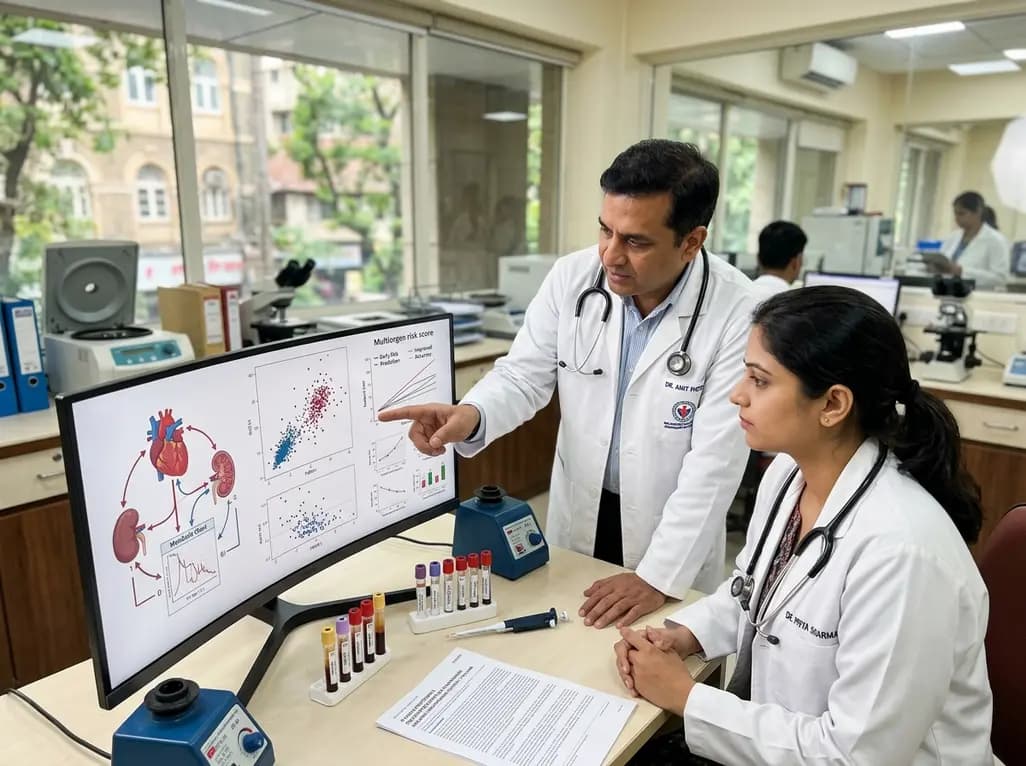
A large UK Biobank study reveals that plasma proteomic signatures capture preclinical organ damage and improve multiorgan risk prediction across early CKM syndrome stages 0 to 2 beyond traditional PREVENT clinical models.
Today

A narrative review investigates whether the articularis genus muscle functions as an independent anatomical entity or blends with the vastus intermedius. We evaluate its morphology, role in retracting the suprapatellar bursa, and direct clinical significance in anterior knee pain and arthroplasty.
Today

A Bayesian multilevel meta-analysis reveals that aerobic training combined with moderate carbohydrate restriction modestly lowers HbA1c in type 2 diabetes. However, sparse data and very low certainty leave incremental benefits over exercise or diet alone unproven, highlighting the need for individualized care.
Today
