.webp&w=384&q=75)

Loading, please wait...
Loading, please wait...
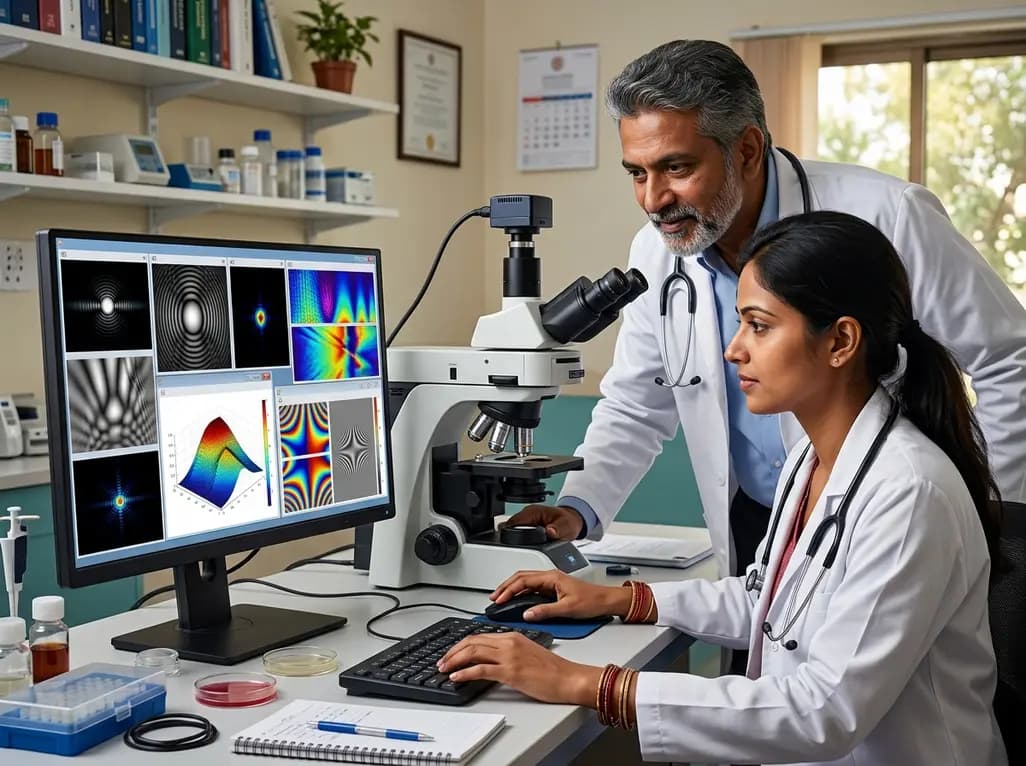
Modern microscopy methods increasingly incorporate computational modeling to solve complex imaging problems or optimize system designs. To address the lack of standardized frameworks in this field, researchers have introduced Chromatix, a differentiable wave-optics library. This open-source tool builds on JAX to provide high-performance, GPU-accelerated simulations for diverse optical systems.
Computational optics serves as a critical foundation for advanced medical imaging and biological research. However, many researchers previously faced the burden of building their own simulations from scratch. Consequently, this independent approach often led to limited reusability and suboptimal performance. Chromatix effectively solves these challenges by offering a standardized collection of optical elements and propagation methods. This allows for seamless integration into various imaging workflows.
The primary advantage of Chromatix lies in its remarkable speed and flexibility. By utilizing GPU acceleration, the library demonstrates speed improvements of 2-6 times on a single GPU and up to 22 times on 8 GPUs. Therefore, it enables the simulation and optimization of complex optical designs that were once computationally impractical. Researchers can now iterate through design spaces much faster than before.
Additionally, the developers have demonstrated the library’s utility in several high-impact areas. These include snapshot microscopy, holography, and phase retrieval. Because the framework is fully differentiable, it is particularly effective for solving inverse problems. For instance, developers can fine-tune system parameters automatically to achieve optimal image reconstruction results. Furthermore, the library is designed to be user-friendly for those familiar with deep learning frameworks.
Chromatix is an open-source library designed to provide a standardized, high-performance framework for differentiable wave-optics simulations using GPU acceleration.
Computational optics researchers, biomedical engineers, and imaging scientists can use Chromatix to speed up the design and optimization of advanced microscopy systems.
Disclaimer: This content is for informational and educational purposes only. It does not constitute medical advice or endorse any specific software for clinical diagnosis. Refer to the latest local and national guidelines for clinical practice.
References
Deb D et al. Chromatix: a differentiable, GPU-accelerated wave-optics library. Nat Methods. 2026 Jun 08. doi: 10.1038/s41592-026-03121-x. PMID: 42260310.
Deb D et al. Chromatix: a differentiable, GPU-accelerated wave-optics library. bioRxiv. 2025. doi: 10.1101/2025.04.29.651152.

Read summarized clinical updates, watch expert medical content, and earn CME certifications right from your smartphone.
Open your smartphone camera to scan and install.





Chromatix is an open-source library for differentiable wave-optics simulations, designed to accelerate computational microscopy and system optimization....
4 months ago

Explore vital recurrent stroke predictors in lacunar stroke patients managed with intensive blood pressure lowering. This analysis examines trial findings from SPS3 to uncover residual vascular risks, metabolic factors, and targeted secondary prevention strategies for high-risk neurological patients.
Today

Odisha has established India's first state-level clinical protocol specifically tailored for pregnant women with sickle cell disease. Developed with NHM and UNICEF, the framework provides structured antenatal screening, crisis mitigation, standardized referral pathways, and specialized interdisciplinary care.
Today

The Directorate General of Health Services directs Indian states to halt the hazardous reuse and reprocessing of single-use medical devices. Discover regulatory implications under the Drugs and Cosmetics Act, critical infection risks, legal liabilities, and operational changes required across clinical specialties.
Today

Mitochondria-targeted nanoparticles self-assembled from EGCG and L-glutamic acid effectively restore mitochondrial homeostasis, suppress synovial inflammation, and attenuate chondrocyte senescence in osteoarthritis, offering a promising disease-modifying nanotherapy.
Today

India is advancing preventive healthcare by integrating genomics, artificial intelligence, and quantum technologies. With the SANGAM programme sequencing one million Indian genomes, clinicians can unlock personalized therapies, detect cardiometabolic risks early, and curb the burden of diabetes and heart disease.
Today
