

Loading, please wait...
Loading, please wait...

Modern clinical therapeutics rely heavily on biopharmaceutical innovations, ranging from monoclonal antibodies for metastatic oncology to targeted fusion proteins for recalcitrant autoimmune diseases. Over the past six decades, CHO cell line development has emerged as the definitive backbone of biopharmaceutical manufacturing, providing clinicians worldwide with reliable, life-saving therapies. Chinese hamster ovary cells first entered laboratory research in 1957. Since that initial isolation, relentless technological evolution has transformed these mammalian hosts into resilient, hyper-productive microscopic factories. For healthcare providers, understanding this evolution is not merely an academic exercise. Rather, it reveals the biological underpinnings of critical quality attributes, batch uniformity, and biosimilar therapeutic equivalence that directly influence bedside patient outcomes.
Historically, bioprocess engineers faced formidable biological barriers when attempting mammalian protein production. Early cell cultures required animal serum supplements, which introduced considerable contamination risks and profound batch variability. However, during the 1970s and 1980s, investigators unlocked monumental breakthroughs by isolating specific mutant lineages, most notably the dihydrofolate reductase-deficient CHO-DG44 and CHO-DUKX-B11 variants. Consequently, researchers could introduce exogenous human genes alongside selectable markers, using methotrexate to amplify target gene copy numbers exponentially. In addition, the subsequent creation of the glutamine synthetase expression system further streamlined high-expression clone isolation. These molecular milestones established recombinant tissue plasminogen activator in 1986, launching modern industrial biomanufacturing. Over subsequent decades, biomanufacturers successfully eliminated fetal bovine serum, transitioning entirely to chemically defined, serum-free culture media. Therefore, modern biomanufacturing facilities achieve dramatic cell density elevations without compromising microbial sterility. Ultimately, these early metabolic innovations built the foundation enabling Indian pharmaceutical manufacturers to produce critical biologics affordably.
Initially, molecular scientists relied upon random genomic integration, allowing expression cassettes to insert haphazardly throughout the host genome. Unfortunately, this stochastic mechanism produced unpredictable gene silencing, variable protein expression, and unstable genetic clones. To overcome these hurdles, researchers developed targeted integration strategies that deposit recombinant DNA directly into transcriptionally active genomic hotspots. Furthermore, contemporary genetic engineers deploy advanced CRISPR-Cas9 ribonucleoproteins, zinc-finger nucleases, and transcription activator-like effector nucleases to edit the CHO genome precisely. As a result, development teams systematically excise deleterious host genes, such as those encoding pro-apoptotic molecules or unwanted host proteases. Moreover, synthetic biology approaches introduce tailored promoter architectures, epigenetic stabilizing elements, and post-transcriptional response elements that sustain robust transgene transcription. In addition, automated single-cell printing and high-throughput microfluidic platforms have replaced tedious manual limiting dilution assays. Consequently, biopharmaceutical developers can now isolate, verify, and document monoclonality within compressed timelines, reducing cell line development schedules significantly. These remarkable engineering advancements directly guarantee that commercial cell banks maintain phenotypic stability and consistent protein production throughout commercial lifecycles.
From a clinician's perspective, the primary clinical advantage of mammalian systems rests in their exquisite post-translational processing machinery. Therapeutic monoclonal antibodies require precise N-linked glycosylation within their crystallizable fragment domains to engage human immune effector mechanisms effectively. Specifically, terminal galactosylation and sialylation dictate circulating serum half-life, anti-inflammatory potential, and complement-dependent cytotoxicity. Furthermore, removing core fucose residues from antibody glycans dramatically elevates antibody-dependent cellular cytotoxicity against malignant tumor cells. In contrast, non-mammalian expression hosts, such as bacteria or yeasts, generate immunogenic glycan structures that trigger rapid anaphylactoid clearance in patients. Fortunately, Chinese hamster ovary cells naturally assemble complex biantennary glycans mimicking endogenous human glycoforms without incorporating dangerous immunogenic sugars. Moreover, modern cell engineers actively manipulate glycosyltransferase and fucosyltransferase enzymes within CHO hosts to produce customized glycoforms with heightened potency. For instance, oncologists prescribing afucosylated monoclonal antibodies observe superior receptor binding affinity and enhanced clinical response rates. Therefore, fine-tuning host cell genetics translates directly into enhanced pharmacodynamics, predictable pharmacokinetic profiles, and lowered immunogenicity risks across diverse patient populations.
In India, the widespread adoption of affordable biologics has transformed the clinical management of rheumatology, diabetes, and oncology. However, expanding access requires uncompromised product quality and clinical safety. To protect public health, the Central Drugs Standard Control Organization enforces rigorous regulatory requirements through its specialized biosimilar guidelines. Notably, the CDSCO framework emphasizes that biosimilar developers should preferably utilize the identical host cell expression system employed by the reference biological product. Because host cell genetics fundamentally dictate critical quality attributes, selecting a divergent host lineage can introduce altered protein folding or unexpected impurities. Furthermore, regulatory authorities mandate thorough characterization of master cell banks, requiring manufacturers to prove genetic stability and phenotypic reproducibility. In addition, biosimilar manufacturers must demonstrate comprehensive physicochemical and biological comparability using advanced analytical tools before initiating clinical trials. Consequently, Indian clinicians can prescribe domestically manufactured biosimilars with profound confidence, knowing that rigorous regulatory scrutiny ensures identical clinical efficacy. Thus, rigorous host cell standardization forms the indispensable bedrock of modern regulatory concordance and patient pharmacovigilance.
As biotherapeutics evolve beyond standard monoclonal antibodies, the pharmaceutical sector demands unprecedented operational agility and synthetic complexity. Clinicians now utilize bispecific antibodies, antibody-drug conjugates, and engineered fusion proteins to overcome therapeutic resistance. However, these complex multispecific formats often suffer from poor assembly, light-chain mispairing, and high intracellular aggregation. To solve these molecular challenges, biomanufacturers now integrate artificial intelligence and predictive machine learning models into cell engineering workflows. Specifically, advanced neural algorithms analyze vast genomic and transcriptomic datasets to predict optimal chromosomal insertion sites and forecast metabolic flux patterns. In addition, continuous perfusion culture systems maintain ultra-high viable cell densities while rapidly harvesting fragile proteins before enzymatic degradation occurs. Furthermore, synthetic biologists are actively designing minimal CHO genomes, systematically deleting non-essential chromosomal segments to optimize energetic efficiency. Therefore, these digital and genetic innovations significantly reduce batch production costs, accelerate bench-to-bedside translation, and ensure robust manufacturing yields. Ultimately, this technological convergence guarantees a steady, resilient global supply of sophisticated biological medicines for complex chronic conditions.
Unlike microbial hosts such as bacteria or yeast, Chinese hamster ovary cells perform complex post-translational modifications, including accurate human-like glycosylation, correct disulfide bond pairing, and precise macromolecular folding. Microbial expression systems lack these sophisticated organelles, frequently generating misfolded proteins, immunogenic glycan structures, or toxic bacterial endotoxins. Consequently, mammalian cell expression ensures high serum half-life, preserved immunological effector functions, and minimal anti-drug antibody formation, making them the safest standard for clinical therapeutics.
Regulatory authorities like India's CDSCO closely evaluate critical quality attributes, particularly glycosylation profiles and charge variants, during biosimilar evaluations. Host cell line engineering directly dictates these biochemical traits. By utilizing advanced gene-editing techniques and matching the host cell lineage of the reference biological, biosimilar developers eliminate discordant post-translational modifications. This rigorous engineering guarantees identical pharmacokinetic behavior, avoids therapeutic neutralizing antibodies, and confirms clinical interchangeability, reassuring prescribers that the biosimilar achieves therapeutic parity.
Host cell proteins represent residual non-product impurities derived from expression hosts during biomanufacturing. If downstream purification fails to eliminate these residual host proteins, they can trigger profound clinical complications upon parenteral administration. Specifically, residual host cell proteins may provoke acute hypersensitivity reactions, severe immunogenic anaphylaxis, or the induction of cross-reactive neutralizing anti-drug antibodies. Consequently, regulatory guidelines mandate rigorous downstream chromatography clearance and high-sensitivity immunoassay quantitation to ensure residual host proteins remain below strict safety thresholds.
Disclaimer: This content is for informational and educational purposes only. It is not intended as medical advice, diagnosis, or treatment. Always consult a qualified healthcare professional regarding any medical condition and never disregard professional medical advice or delay seeking it because of something you have read here. Refer to the latest local and national guidelines for clinical practice.
References

Read summarized clinical updates, watch expert medical content, and earn CME certifications right from your smartphone.
Open your smartphone camera to scan and install.





This clinical overview reviews the 60-year evolution of CHO cell line development for biologics manufacturing. It examines molecular advances, glycosylation control, CDSCO regulatory requirements for biosimilars, and the clinical implications of host cell engineering for modern medical practice.
Today
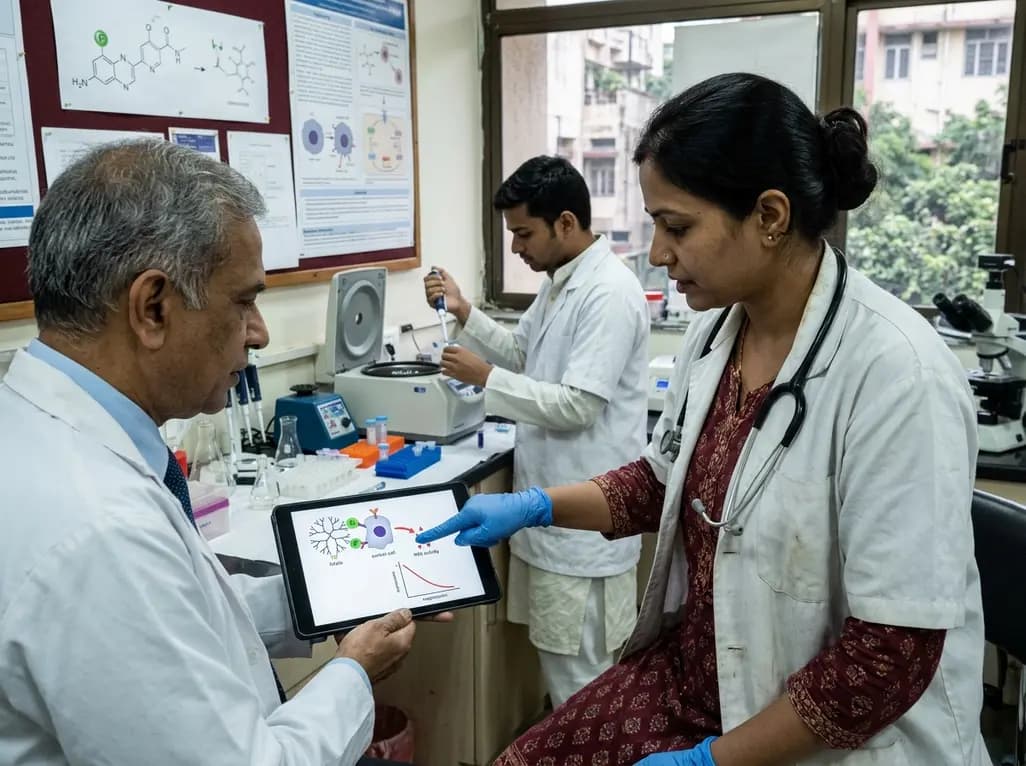
A novel folate-conjugated tecto-dendrimer nanoplatform successfully delivers siRNA to achieve targeted HK2 silencing, disrupting ovarian cancer glycolysis and suppressing lactate output.
Today
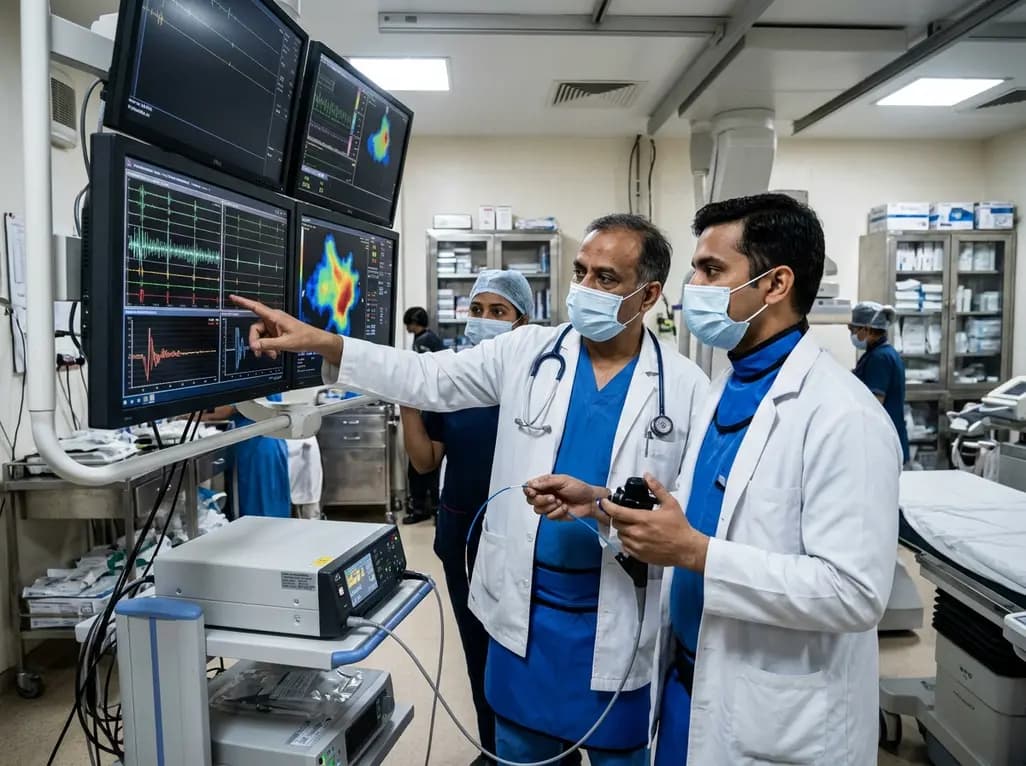
A comparative non-contact study reveals that high-power radiofrequency delivery with the QDOT MICRO catheter induces an artifactual contact force rise. Electrophysiologists must understand this power-dependent thermal and electrical phenomenon to avoid inadvertent catheter withdrawal and ineffective ablation.
Today

A novel proof-of-concept study presents a six-degree-of-freedom articulated manikin neck equipped with linear potentiometers. The system provides real-time kinematic motion feedback during cervical immobilisation, delivering sub-degree tracking accuracy to improve pre-hospital trauma training and patient safety.
Today

Novel glucose-responsive mPEG-PSA nanocarriers deliver insulin aspart on demand, achieving dual postprandial and basal glycemic control without hypoglycemia in diabetic models. This biomaterial breakthrough offers promising clinical implications for physiologic diabetes management.
Today
