.webp&w=384&q=75)

Loading, please wait...
Loading, please wait...

Chimeric antigen receptor T-cell therapies have transformed the clinical management of relapsed and refractory B-cell malignancies. However, clinicians frequently encounter profound CAR-T cell therapy toxicities that can compromise patient safety. These adverse events encompass cytokine release syndrome, immune effector cell-associated neurotoxicity syndrome, immune effector cell-associated hematotoxicity, and hemophagocytic lymphohistiocytosis-like syndrome. Furthermore, systemic hyperinflammation driven by rapid cellular expansion remains a primary culprit behind these acute complications. Consequently, researchers actively investigate host-intrinsic biological factors that might amplify these inflammatory responses.
Specifically, clonal hematopoiesis of indeterminate potential has emerged as a compelling candidate mechanism. Because premalignant somatic mutations in hematopoietic stem cells modulate myeloid reactivity, scientists hypothesize that clonal hematopoiesis could exacerbate cellular hyperactivation. In addition, baseline bone marrow suppression represents another critical pre-infusion parameter requiring close scrutiny. Therefore, evaluating pre-treatment neutropenia alongside clonal dynamics helps oncologists clarify patient vulnerabilities prior to lymphodepletion. Delineating how underlying hematologic variations interact with infused transgenic lymphocytes provides essential insights for individualized toxicity management in hematology practices. Consequently, clinicians can refine risk stratification and improve supportive management protocols.
In a comprehensive retrospective cohort study, investigators examined 113 patients receiving cellular immunotherapy for diverse B-cell neoplasms. Notably, targeted genomic sequencing identified clonal hematopoiesis in 30.8% of individuals with multiple myeloma. Similarly, clonal mutations occurred in 28.6% of patients with follicular and mantle cell lymphoma. In contrast, patients with large B-cell lymphoma displayed a lower baseline prevalence of 13.7%. Across all sequenced individuals, the epigenetic regulator DNMT3A represented the most frequently detected altered gene.
Furthermore, the researchers evaluated clonal kinetics by analyzing paired pre-infusion and post-infusion blood specimens. Consequently, they discovered that clonal hematopoiesis remained remarkably stable throughout the therapeutic trajectory. Neither the variant allele frequencies nor the cumulative mutational burdens showed meaningful shifts following cellular infusion. Therefore, cytotoxic conditioning regimens and subsequent immune activation did not accelerate clonal expansion. These stability findings suggest that clonal populations behave largely as passive bystanders rather than aggressively expanding neoplastic drivers during early recovery. Moreover, this predictable stability provides clinicians reassurance regarding the immediate oncogenic safety of administering engineered cells to patients harboring baseline somatic variants. Thus, existing somatic clones do not compromise genomic stability after lymphodepletion.
Although clonal hematopoiesis did not influence overall survival, it demonstrated distinct associations with secondary hyperinflammatory complications. In particular, multiple myeloma patients harboring clonal mutations experienced significantly elevated rates of immune effector cell-associated hemophagocytic lymphohistiocytosis-like syndrome. Furthermore, these individuals exhibited markedly higher serum ferritin levels during immune effector cell activation. Because mutated myeloid clones frequently overproduce interleukin-6 and other inflammatory cytokines, they may fuel pathologic macrophage hyperactivation.
Interestingly, this aberrant activation occurred without increasing the standard incidence of canonical cytokine release syndrome or neurotoxicity. Therefore, the pathophysiologic impact appears uniquely restricted to sustained, late-onset hemophagocytic pathways rather than early systemic shock. Clinicians must consequently maintain heightened vigilance when monitoring ferritin trajectories in myeloma patients with documented somatic mutations. In addition, early therapeutic interventions with targeted interleukin antagonists or corticosteroids could mitigate progressive organ damage if hyperferritinemia rapidly accelerates. Ultimately, understanding this selective vulnerability enables oncology teams to recognize atypical hyperinflammatory states before severe tissue dysfunction emerges. Accordingly, vigilant surveillance of inflammatory biomarkers prevents severe systemic deterioration.
Beyond somatic genetic mutations, investigators analyzed the clinical significance of baseline cytopenias prior to lymphodepleting chemotherapy. Notably, approximately 30% of patients across the study presented with pre-treatment neutropenia. Furthermore, statistical analysis revealed that pre-existing absolute neutrophil deficiency strongly correlated with the development of severe immune effector cell-associated hematotoxicity. This significant correlation persisted both within the total multi-disease cohort and within the CD19-directed recipient subgroup.
Consequently, compromised marrow reserve prior to infusion appears to undermine subsequent hematopoietic reconstitution. Patients with extensive prior chemoimmunotherapy lines frequently harbor damaged stromal niches that fail to recover swiftly following conditioning. Therefore, pre-treatment neutropenia serves as an accessible, cost-effective clinical biomarker for prolonged cytopenia. In contrast to genomic sequencing, absolute neutrophil counts are universally available in standard laboratory testing. Accordingly, hematologists can utilize baseline counts to anticipate prolonged growth factor requirements, proactive antimicrobial prophylaxis, and extended monitoring protocols. Thus, identifying this baseline deficiency directly refines supportive care pathways in routine practice. Consequently, proactive supportive care significantly reduces morbidity from prolonged marrow suppression.
Importantly, neither baseline clonal hematopoiesis nor pre-treatment neutropenia impaired the primary antitumor efficacy of cellular therapy. Statistical evaluations confirmed that progression-free survival remained comparable between patients with and without clonal mutations. Similarly, overall survival durations showed no detrimental divergence across these distinct biological groups. Furthermore, the presence of baseline cytopenias did not compromise long-term disease control or decrease overall complete response rates.
Therefore, these clinical findings offer profound practical implications for hematologic oncologists selecting candidates for cellular immunotherapy. Because these baseline abnormalities do not diminish life-prolonging efficacy, physicians should never exclude eligible patients solely due to clonal mutations or baseline cytopenias. In contrast to autologous stem cell transplantation where clonal hematopoiesis often heralds poorer survival, cellular therapies achieve potent tumor eradication independently. Nevertheless, clinicians must acknowledge study limitations, including its retrospective structure and heterogeneous sample cohort. Consequently, ongoing prospective clinical registries will further clarify optimal surveillance strategies and validate these critical observations across broader international patient populations. Ultimately, maintaining broad therapy access ensures that eligible candidates receive curative-intent treatment.
Clonal hematopoiesis does not increase the incidence of conventional cytokine release syndrome or neurotoxicity. However, it significantly increases the risk of immune effector cell-associated hemophagocytic lymphohistiocytosis-like syndrome, particularly in patients with multiple myeloma. Mutated myeloid clones exhibit an exaggerated inflammatory phenotype, driving excessive macrophage activation and severe hyperferritinemia. Consequently, clinicians should monitor post-infusion inflammatory biomarkers closely in patients known to carry somatic mutations such as DNMT3A.
Pre-treatment neutropenia indicates an exhausted bone marrow reserve resulting from multiple prior lines of cytotoxic chemotherapy. Furthermore, patients with baseline absolute neutrophil deficiency face a markedly higher risk of severe and prolonged immune effector cell-associated hematotoxicity following lymphodepletion. Because prolonged cytopenia predisposes patients to life-threatening bacterial and fungal infections, identifying pre-infusion neutropenia allows physicians to implement proactive antimicrobial prophylaxis, schedule granulocyte colony-stimulating factor therapy, and ensure vigilant outpatient monitoring.
No, patients harboring clonal hematopoiesis should not be excluded from receiving chimeric antigen receptor T-cell therapy. Clinical evidence demonstrates that neither clonal mutations nor pre-treatment cytopenias compromise overall survival or progression-free survival outcomes. In addition, the variant allele frequencies of clonal mutations remain stable following infusion without accelerated clonal progression. Therefore, eligible candidates should continue to receive this potentially curative immunotherapy, accompanied by tailored monitoring for hemophagocytic syndrome and hematologic toxicities.
Disclaimer: This content is for informational and educational purposes only... Refer to the latest local and national guidelines for clinical practice.
References

Read summarized clinical updates, watch expert medical content, and earn CME certifications right from your smartphone.
Open your smartphone camera to scan and install.





A retrospective analysis reveals that clonal hematopoiesis and pre-treatment neutropenia do not alter CAR-T survival outcomes, but predispose patients to specific toxicities like IEC-HS and prolonged cytopenias.
Today

With post-monsoon dengue surges threatening South Asian health systems, physicians must refine triage and management. This guide covers vital warning signs, plasma leakage detection, crystalloid titration, and vector containment strategies to prevent mortality during seasonal arboviral epidemics.
Today

Findings from Project Viva indicate that sustained postpartum weight retention, rather than excessive gestational weight gain alone, directly worsens women's mid-life cardiovascular health, degrading blood pressure and glycemic parameters decades after delivery.
Today
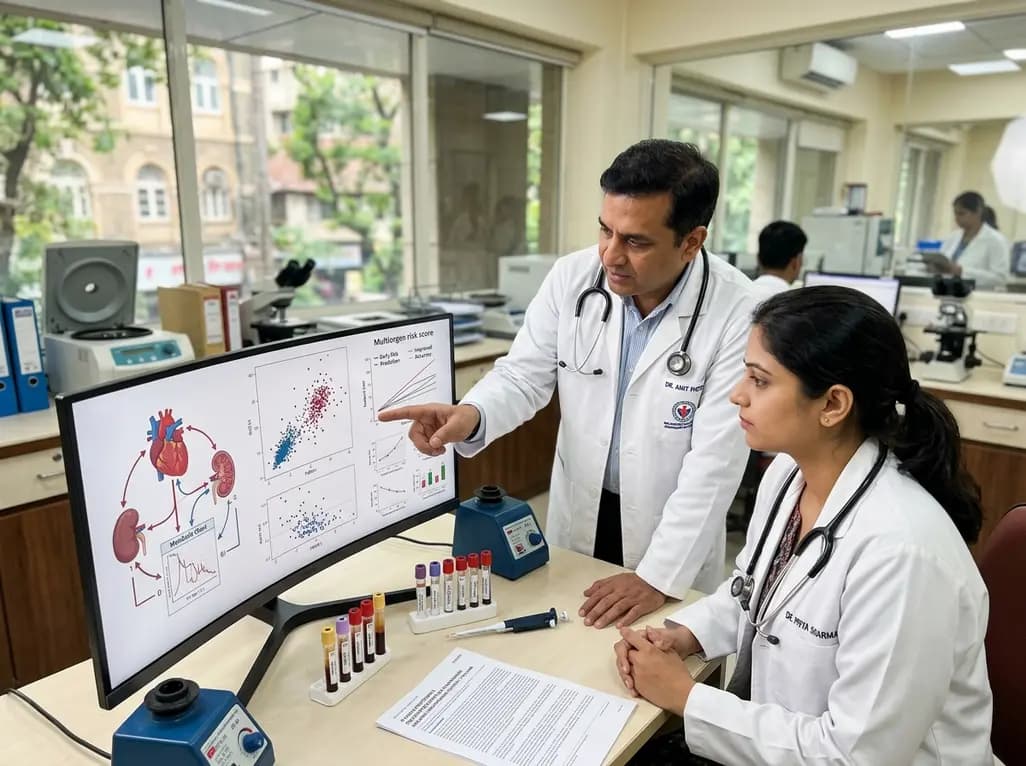
A large UK Biobank study reveals that plasma proteomic signatures capture preclinical organ damage and improve multiorgan risk prediction across early CKM syndrome stages 0 to 2 beyond traditional PREVENT clinical models.
Today

A retrospective CBCT study reveals that superior TMJ space asymmetry correlates moderately with occipital condyle-atlas-axis asymmetry in unilateral TMJ osteoarthritis, highlighting an imaging correlate between jaw biomechanics and upper cervical alignment rather than a standalone diagnostic marker.
Today

A Bayesian multilevel meta-analysis reveals that aerobic training combined with moderate carbohydrate restriction modestly lowers HbA1c in type 2 diabetes. However, sparse data and very low certainty leave incremental benefits over exercise or diet alone unproven, highlighting the need for individualized care.
Today
