.webp&w=384&q=75)

Loading, please wait...
Loading, please wait...

Research conducted in Cape Town recently explored childhood vaccination determinants to understand why some children miss essential doses. This study utilized the WHO Behavioural and Social Drivers (BeSD) framework to analyze uptake among 250 caregivers. Although the findings revealed a high overall vaccination rate of 93%, several structural and demographic challenges still remain. Furthermore, the analysis showed that 97% of caregivers are highly motivated to vaccinate their children. Consequently, healthcare providers must address specific systemic barriers to maintain these optimal coverage levels.
The study highlighted several significant factors that influence whether a child completes their immunization schedule. Specifically, researchers found that married status among caregivers significantly increased the likelihood of full vaccination. In contrast, uptake rates decreased as the child’s age increased. Moreover, this trend suggests that retention strategies are particularly necessary for older infants. Additionally, children with a higher birth order often faced a reduced likelihood of being fully vaccinated. This occurs because larger families often face increased logistical and financial burdens. Thus, targeted support for multi-child households is essential.
Despite high caregiver motivation, practical constraints often hindered access to vital services. For instance, 63% of participants reported long queues at clinics, while 26% expressed dissatisfaction with service quality. Furthermore, most decision-making rests with mothers, yet only 22% of caregivers reported receiving recent vaccine-related communication. Therefore, this gap indicates that improved messaging and clinic efficiency could significantly boost uptake rates. Ultimately, interventions should focus on these structural vulnerabilities to ensure that every child remains protected through timely immunization.
Key determinants include caregiver marital status, geographic location, and the child's birth order. Structural issues like clinic wait times and service quality also play a critical role in determining whether a child completes the full schedule.
Uptake often decreases because caregivers may face increased logistical challenges or a perceived reduction in the urgency of later doses. Strengthening follow-up strategies for the 18-month visit is essential to combat this trend.
Disclaimer: This content is for informational and educational purposes only. It is not a substitute for professional medical advice, diagnosis, or treatment. Refer to the latest local and national guidelines for clinical practice.
References
Mathebula L et al. Childhood vaccination uptake and associated determinants among caregivers of young children in Cape Town, South Africa. Vaccine. 2026 May 22. doi: undefined. PMID: 42172694.
Behera PR et al. A Cross-Sectional Study of Socio-Demographic Factors and Vaccination Compliance Among Children Under Two in Bhubaneswar, India. Cureus. 2025;17(4):e77842.
WHO. Global childhood vaccination coverage holds steady, yet over 14 million infants remain unvaccinated. World Health Organization News. 2025 July 15.

Read summarized clinical updates, watch expert medical content, and earn CME certifications right from your smartphone.
Open your smartphone camera to scan and install.





A study in Cape Town identifies key childhood vaccination determinants, such as child age and birth order, while highlighting high caregiver motivation....
5 months ago
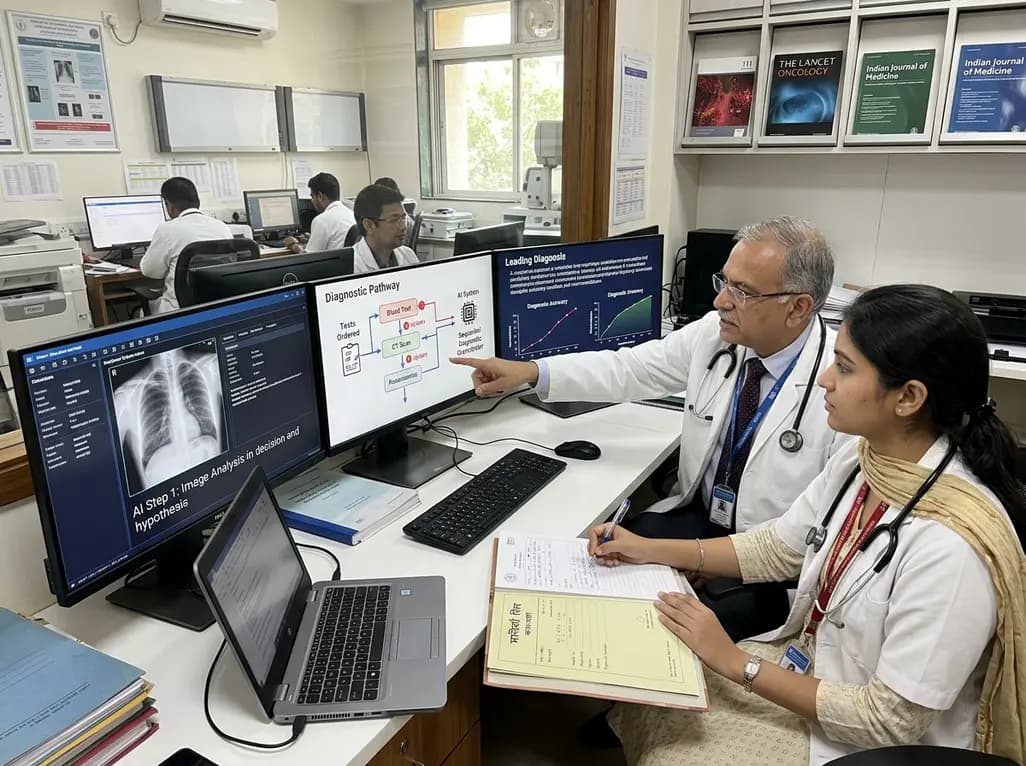
A breakthrough peer-reviewed study demonstrates that a sequential AI diagnosis system can mirror real-world clinical reasoning. By ordering stepwise tests and updating hypotheses dynamically, this multi-agent orchestrator achieved superior diagnostic accuracy while reducing investigative costs.
Today

A prenatal case highlights severe glutaric acidemia type II presenting as bilateral hyperechoic cystic kidneys at 18 weeks. Whole-exome sequencing revealed a novel homozygous ETFDH frameshift variant, demonstrating the power of rapid genetic testing in fetal renal anomalies.
Today

Review how tailored exercise programs benefit frail older patients with heart failure. Explore pathophysiological mechanisms, individualized training prescriptions, and strategies to overcome adherence barriers in clinical practice.
Yesterday

This comparative study evaluates posterior labral tears with and without glenohumeral instability, highlighting distinct demographic patterns, MRI underestimation in stable shoulders, and successful arthroscopic repair outcomes.
Yesterday

A clinical study demonstrates that early intervention with tocilizumab, either as monotherapy or bridged with corticosteroids, achieves significant proptosis reduction and resolves active inflammation in treatment-naive thyroid eye disease.
Yesterday
