.webp&w=384&q=75)

Loading, please wait...
Loading, please wait...

Consequently, evaluating functional resilience in geriatric populations requires a thorough life-course perspective. Modern clinicians increasingly evaluate intrinsic capacity to assess physical and mental reserves that dictate how older adults navigate aging. While adult lifestyle factors certainly influence functional health, early childhood exposures establish enduring physiological and psychological vulnerabilities. Therefore, researchers recently investigated how adverse childhood experiences influence intrinsic capacity trajectories across several decades. The resulting findings demonstrate that early life adversity leaves persistent biological imprints that substantially compromise functional independence during older age.
The World Health Organization defines intrinsic capacity as the composite of all physical and mental capabilities that an individual can draw upon. Specifically, this holistic construct encompasses five interdependent domains: locomotion, cognition, psychological resilience, sensory acuity, and metabolic vitality. Rather than focusing exclusively on clinical multimorbidity, assessing these functional domains allows physicians to detect subtle physiological declines before irreversible disability develops. However, intrinsic capacity does not develop in isolation during late adulthood. Biological embedding of early psychosocial stressors can impair neurodevelopment, immune regulation, and endocrine pathways across decades. Chronic toxic stress during childhood triggers sustained hypothalamic-pituitary-adrenal axis dysregulation and persistent low-grade systemic inflammation. In addition, these neurobiological changes elevate the lifetime risk of cardiovascular disease, cognitive impairment, and affective disorders. As older patients experience biological aging, their diminished physiological reserve becomes clinically apparent. Therefore, geriatric clinicians must recognize that childhood environmental conditions directly shape functional reserves in the eighth and ninth decades of life. A comprehensive geriatric assessment should actively account for these distant developmental determinants.
To evaluate these developmental associations, researchers analyzed data from the China Health and Retirement Longitudinal Study. The investigators evaluated 3,897 community-dwelling adults aged 60 years and older across longitudinal survey waves. They gathered comprehensive childhood trauma histories using a validated Life Event Survey. Furthermore, the researchers measured intrinsic capacity at baseline and follow-up across established clinical parameters. Through rigorous multivariable regression and mediation analyses, the authors examined how adverse experiences correlate with overall and domain-specific functional trajectories. Interestingly, adverse childhood experiences demonstrated a robust association with lower baseline intrinsic capacity scores. However, early trauma did not predict global intrinsic capacity decline over the follow-up period. This critical observation suggests that early adversity establishes a permanently reduced physiological baseline rather than accelerating overall systemic decline. Consequently, older adults with high childhood trauma burdens enter their senior years with compromised physiological reserves. Clinicians must realize that baseline vulnerability places these individuals closer to the critical threshold of functional dependence.
Adverse childhood experiences do not represent a uniform clinical entity. Epidemiologists commonly separate these events into threat-related exposures, such as physical abuse, and deprivation-related exposures, such as extreme neglect. Notably, the longitudinal analysis revealed that total trauma and threat-related exposures significantly accelerated psychological capacity decline over time. Patients with severe threat exposures showed a marked annual reduction in psychological resilience scores. Moreover, exposure to early deprivation specifically increased the risk of sensory decline among vulnerable subgroups. In contrast, researchers observed minimal direct impacts on locomotor and metabolic vitality trajectories. These distinct findings highlight that different childhood trauma subtypes activate divergent neurobiological pathways. Threat triggers chronic hypervigilance and amygdala dysregulation, ultimately exhausting cognitive-emotional networks. Deprivation, conversely, limits neural stimulation and nutritional support during sensory neurodevelopment. Because sensory and psychological deficits profoundly diminish quality of life, identifying these domain-specific vulnerabilities provides valuable prognostic insight for physicians caring for elderly populations.
Family living structures represent a vital social determinant of health in many traditional cultures. The research revealed that living arrangements dramatically modified the health impacts of childhood adversity. Specifically, older individuals who did not reside with their adult children exhibited far greater vulnerability to early life trauma. In this group, threat-related adversity produced significantly stronger reductions in baseline intrinsic capacity. Additionally, deprivation-related experiences drove marked sensory capacity decline exclusively among seniors living away from their children. Intriguingly, formalized adult social support did not statistically mediate these health associations. This finding suggests that direct, co-residential filial presence confers unique daily protective benefits that abstract social networks cannot duplicate. Living with children likely ensures regular assistance with sensory aids, balanced nutrition, and immediate safety interventions. Conversely, living alone or apart from family strips away an essential interpersonal buffer against latent biological trauma. Physicians must therefore examine household living arrangements when assessing vulnerable geriatric patients.
These compelling findings offer clear clinical lessons for primary care physicians, geriatricians, and psychiatrists. First, clinicians should incorporate trauma-informed approaches into standard comprehensive geriatric assessments. When older patients present with unexplained depressive symptoms or sensory impairment, clinicians should explore early psychosocial history. Furthermore, physicians must recognize that low intrinsic capacity often reflects lifelong developmental insults rather than acute organ failure alone. Screening for early adversity enables doctors to identify patients who require closer functional monitoring. In addition, healthcare providers must evaluate household family dynamics during routine consultations. When elderly patients with trauma histories live apart from their adult children, doctors should arrange targeted community and social interventions. Clinicians can coordinate occupational therapy, vision screening, audiology referrals, and psychological support services. Ultimately, bridging early life history with modern geriatric interventions can preserve functional independence and dignity in vulnerable older adults.
Adverse childhood experiences induce toxic stress that permanently alters physiological development. Early life trauma disrupts the neuroendocrine and immune systems through chronic glucocorticoid exposure and sustained systemic inflammation. Consequently, individuals accumulate covert cellular and vascular damage throughout adulthood. When these persons reach old age, they possess significantly lower baseline intrinsic capacity. Although early trauma does not accelerate the general rate of physical decline, it reduces total physiological reserves and lowers functional thresholds.
Threat-related exposures and deprivation-related experiences influence distinct neurobiological pathways during critical development windows. Threat experiences, such as abuse or violence, evoke persistent hyperarousal, amygdala overactivity, and prolonged autonomic stress responses. Therefore, threat primarily drives late-life psychological capacity declines and mood disorders. Conversely, early deprivation, including severe physical neglect or malnutrition, deprives developing neural circuits of necessary sensory and cognitive stimulation. Consequently, deprivation manifests in older age as sensory decline and deficits in perceptual processing.
Living with adult children provides immediate physical, logistical, and emotional assistance that mitigates functional vulnerability. Adult offspring often manage household safety, monitor medication adherence, encourage cognitive engagement, and ensure adequate nutrition. Furthermore, co-residence facilitates rapid intervention for vision and hearing issues before sensory deficits cause social isolation. Consequently, this daily co-residential support buffers vulnerable older adults against childhood trauma effects. Seniors living independently lack this direct household buffer, which leaves latent developmental vulnerabilities unaddressed.
Disclaimer: This content is for informational and educational purposes only... Refer to the latest local and national guidelines for clinical practice.
References
Tang Y et al. Adverse Childhood Experiences and Longitudinal Changes in Intrinsic Capacity in Older Chinese Adults: The Role of Social Support. Int J Aging Hum Dev. 2026 Sep 28. doi: 10.1177/00914150261474077. PMID: 42803784.
World Health Organization. Integrated care for older people (ICOPE): Guidance for person-centred assessment and pathways in primary care. Geneva: WHO; 2019.
Plys E et al. Are adverse socioeconomic conditions in childhood associated with intrinsic capacity in older age? A cross-sectional study from the Lausanne cohort Lc65+. BMJ Open. 2025;15(12):e097424.

Read summarized clinical updates, watch expert medical content, and earn CME certifications right from your smartphone.
Open your smartphone camera to scan and install.





New longitudinal research reveals that adverse childhood experiences impair baseline intrinsic capacity in older adults. Threat- and deprivation-related early trauma drive specific psychological and sensory declines, with living arrangements playing a crucial modifying role for aging populations.
Today

A recent preclinical study reveals that regulatory T cell therapy effectively cures chronic dermatitis but shows limited efficacy in chronic arthritis, driven by distinct tissue microenvironments and molecular pathway responses.
Today

Evaluating clinical trials often faces complications from post-treatment events such as nonadherence and death. A groundbreaking methodological framework demonstrates that when independent mechanisms generate these events, causal estimands can be identified without adjusting for unmeasured confounders.
Today

The Supreme Court has reserved its judgment on FSSAI's proposed front-of-pack nutritional warning labels for packaged foods. With debates over compliance timelines, added versus total sugars, and ultra-processed food definitions, this landmark decision carries profound public health implications for India.
Today

DOORS-GHF is a newly validated operative risk scoring system for geriatric hip fracture patients. Outperforming legacy tools like P-POSSUM, it accurately predicts 30-day postoperative complications and mortality, enhancing perioperative triage, clinical decision-making, and individualized orthogeriatric care.
Today
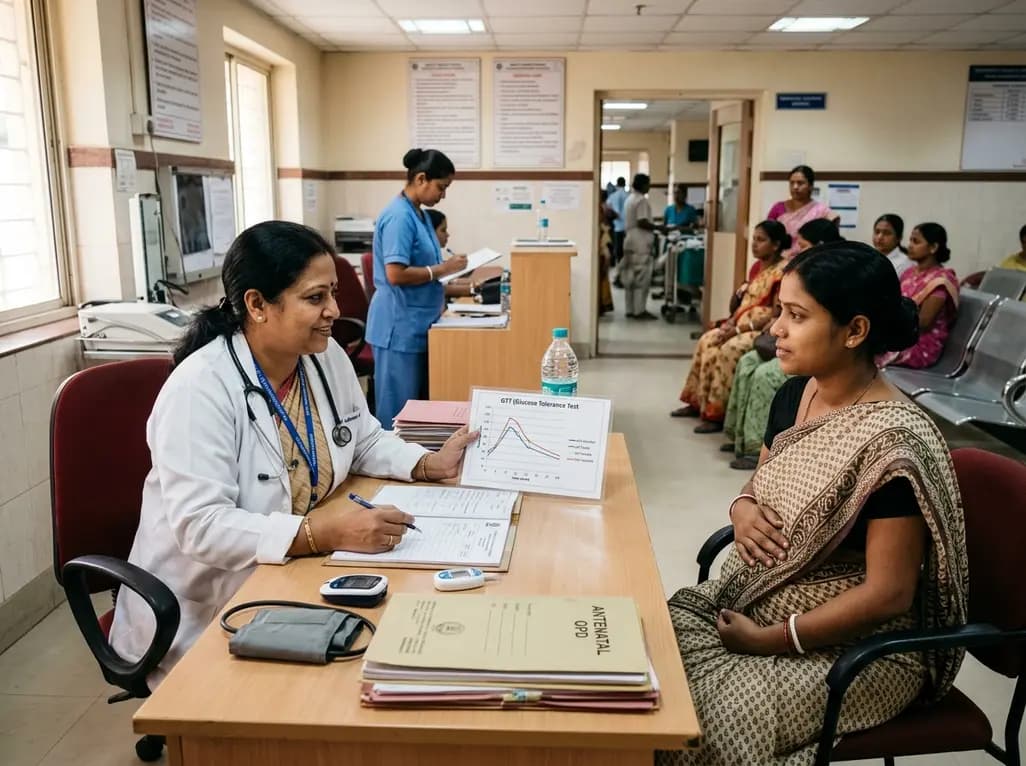
A comprehensive scoping review reveals a 23.24% prevalence of gestational diabetes mellitus in Vietnam alongside heightened risks in diaspora communities, underscoring urgent needs for standardized screening and culturally tailored metabolic interventions.
Today
