.webp&w=384&q=75)

Loading, please wait...
Loading, please wait...
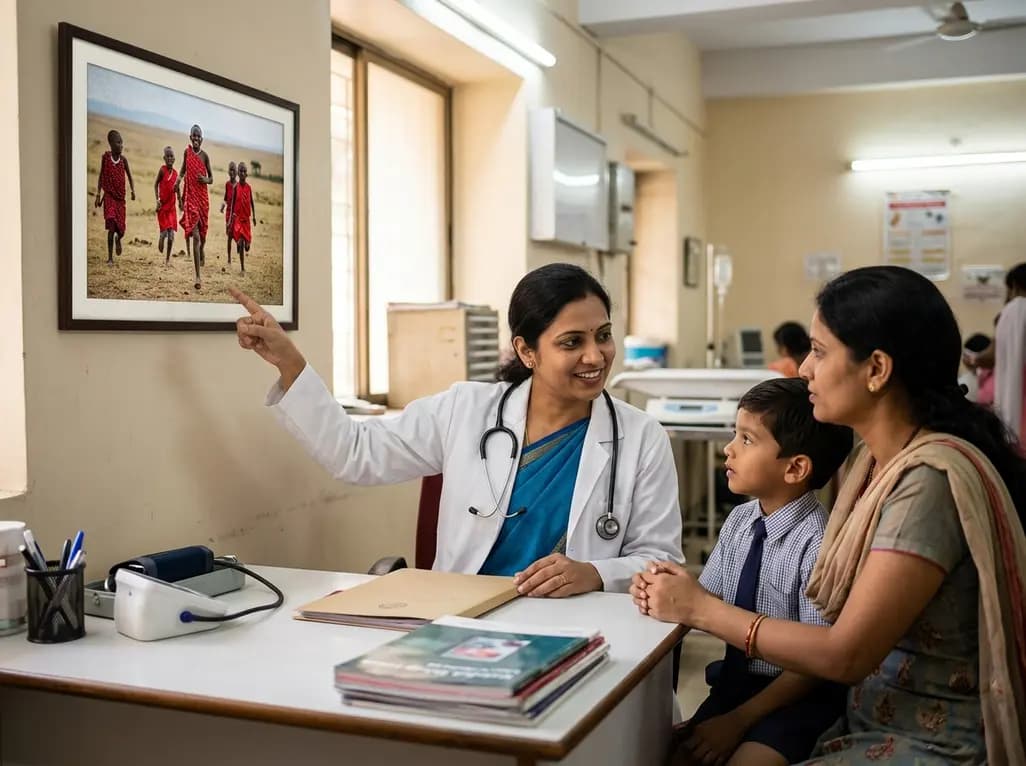
A recent study published in the American Journal of Biological Anthropology provides a rare glimpse into the high childhood physical activity levels maintained within the pastoralist Maasai community of Kenya. While global trends show a sharp decline in movement among youth, Maasai children demonstrate robust activity across their entire developmental span. Researchers utilized waist-worn accelerometers to track 180 children aged 2 to 18 years. The results revealed that Maasai children consistently engage in moderate-to-vigorous physical activity (MVPA) far exceeding international recommendations. Notably, mean MVPA rose from 89 minutes per day in young children to over 140 minutes in older cohorts. Consequently, these findings challenge our current understanding of sedentary behavior in developing societies.
The study attributes these high activity levels to a specific "developmental niche." In Maasai culture, parental norms emphasize childhood autonomy and staged social participation. Children engage with the landscape through daily tasks, livestock management, and active play. Furthermore, the researchers observed that boys were generally more active than girls. This variation reflects local social roles and the gendered nature of daily chores. In addition, the transition to formal schooling has not yet eroded these active habits. Even children attending school maintained high movement levels during their time outside the classroom. Therefore, the cultural environment plays a critical role in fostering embodied engagement with the land.
For medical practitioners in India, these findings offer a stark contrast to local trends. The 2022 India Report Card on Physical Activity indicated that overall activity levels received a 'C' grade, while sedentary behavior worsened significantly. Indian children frequently fail to meet the WHO's minimum recommendation of 60 minutes of MVPA per day. Consequently, clinicians must look beyond simple exercise prescriptions. We should consider how the "developmental niche" in urban India—characterized by high academic pressure and limited safe play spaces—stifles movement. Incorporating more autonomous, task-oriented activities could help reverse these sedentary trends. Specifically, pediatricians should encourage lifestyle-integrated movement that mirrors the functional activity seen in the Maasai community.
Maasai children average 130-143 minutes of MVPA and 17,000-21,000 steps daily. This is more than double the World Health Organization’s recommendation of 60 minutes per day.
The developmental niche refers to the ecocultural environment, including parental practices and social norms, that shapes a child's daily routine and physical engagement with their surroundings.
It provides a baseline for what is physiologically possible in childhood. It highlights how cultural shifts toward sedentary schooling and urbanization contribute to the obesity epidemic in India.
Disclaimer: This content is for informational and educational purposes only. It does not constitute medical advice or establish a doctor-patient relationship. Refer to the latest local and national guidelines for clinical practice.
References
Tian X et al. Childhood Physical Activity and Developmental Niche in Contemporary Pastoralist Maasai Community in Southern Kenya. Am J Biol Anthropol. 2026 Jun undefined. doi: 10.1002/ajpa.70283. PMID: 42226033.
World Health Organization. (2020). WHO guidelines on physical activity and sedentary behaviour. Geneva: World Health Organization.
Khadilkar A et al. (2022). The 2022 India Report Card on physical activity for children and adolescents. Journal of Exercise Science and Fitness, 20(4), 312-321.
"
Read summarized clinical updates, watch expert medical content, and earn CME certifications right from your smartphone.
Open your smartphone camera to scan and install.





A study on Maasai children reveals exceptionally high physical activity levels, offering insights for pediatric health and sedentary lifestyle management....
4 months ago

Novel diimide and hydrazone scaffolds, particularly compound #C4, synergistically reactivate latent HIV-1 when combined with JQ1 or PKC activators. Demonstrating donor-matched proviral transcription ex vivo and non-canonical signaling, these findings advance shock and kill strategies toward reservoir eradication.
Today

A cross-sectional study reveals that maternal RSV vaccination coverage reached only 43.7% in Argentina, with maternal vaccine knowledge being the sole independent predictor of uptake. Clinicians play a crucial role in eliminating informational and structural barriers to optimize infant health.
Today

Review how tailored exercise programs benefit frail older patients with heart failure. Explore pathophysiological mechanisms, individualized training prescriptions, and strategies to overcome adherence barriers in clinical practice.
Yesterday

This comparative study evaluates posterior labral tears with and without glenohumeral instability, highlighting distinct demographic patterns, MRI underestimation in stable shoulders, and successful arthroscopic repair outcomes.
Yesterday

A clinical study demonstrates that early intervention with tocilizumab, either as monotherapy or bridged with corticosteroids, achieves significant proptosis reduction and resolves active inflammation in treatment-naive thyroid eye disease.
Today
