

Loading, please wait...
Loading, please wait...

Adolescent psychiatric morbidity remains a major global public health concern, particularly across rapidly urbanizing societies and developing nations. Internal economic migration frequently compels parents to relocate for employment, leaving millions of children under the custody of extended family or alternate guardians. Recent clinical investigations highlight the complex relationship between childhood maltreatment and anxiety among vulnerable youth experiencing prolonged parental absence. When caregivers migrate, the resulting domestic disruption often alters the developmental environment of vulnerable adolescents. Consequently, healthcare providers must evaluate whether family separation directly triggers psychological distress or whether intermediate exposures mediate this outcome. Understanding these psychosocial dynamics equips family physicians, pediatricians, and mental health professionals to identify high-risk adolescents earlier in routine practice.
Parental migration represents a widespread phenomenon across several low- and middle-income regions, notably in Asia and parts of Africa. In China alone, tens of millions of youths grow up separated from one or both parents. Similarly, rural-to-urban domestic labor migration and overseas employment in India leave countless children in the care of aging grandparents or relatives. Clinicians frequently encounter these left-behind youth presenting with non-specific somatic complaints, emotional instability, or declining scholastic performance.
To quantify this burden, a landmark nationally representative cross-sectional survey evaluated 32,620 middle school students across diverse provinces. Ultimately, investigators gathered 30,174 valid questionnaires, identifying 2,748 left-behind adolescents within the cohort. The researchers administered standardized psychological instruments, including the Generalized Anxiety Disorder-7 (GAD-7) scale and the Childhood Trauma Questionnaire (CTQ).
The epidemiological analysis revealed alarming discrepancies between cohorts. Specifically, 46.4 percent of left-behind adolescents reported clinically significant anxiety symptoms, compared to 35.6 percent of their non-left-behind peers. Statistical analysis confirmed that parental absence significantly heightened the likelihood of anxiety disorders, yielding an odds ratio of 1.180. These data clearly illustrate that domestic separation elevates psychiatric vulnerability during critical neurodevelopmental windows.
While parental absence increases psychiatric vulnerability, researchers wanted to determine the direct and indirect causal mechanisms involved. Therefore, the investigative team performed mediation analyses using structural equation modeling. The results demonstrated that childhood maltreatment almost completely mediated the statistical association between being left-behind and developing adolescent anxiety. In fact, the total indirect mediation effect reached 0.857, showing that separation alone does not inevitably generate anxiety.
Instead, the absence of primary caregivers creates environments where abuse and neglect can flourish undetected. Left-behind youths proved significantly more susceptible to serious maltreatment across every measured dimension. When evaluating specific maltreatment categories, emotional abuse exerted the most substantial mediating influence, contributing an effect size of 0.648. Physical neglect, emotional neglect, and sexual abuse also served as significant sequential mediators.
Consequently, clinicians must recognize that emotional hostility, chronic belittling, and unaddressed basic needs act as primary drivers of psychiatric morbidity. Deprived of parental warmth and protection, adolescents often internalize hostile remarks from surrogate guardians or peers. Therefore, secondary caregivers frequently lack the emotional attunement or resources necessary to support an adolescent through turbulent developmental transitions.
The investigation highlighted several notable demographic factors that amplify anxiety risks among left-behind children. Specifically, female adolescents suffered substantially higher rates of anxiety symptoms compared to their male counterparts. Biological changes during puberty, coupled with traditional socio-cultural burdens, may increase psychological vulnerability in young girls. Furthermore, older adolescents in senior middle school cohorts demonstrated greater vulnerability than younger peers. As academic competition intensifies, older adolescents experience heightened pressure without direct parental emotional reassurance.
In addition, the duration and structure of separation significantly modified risk profiles. Adolescents separated from both parents exhibited far more profound trauma indicators than those retaining at least one co-habiting parent. Dual-parent absence often destabilizes household governance and eliminates emotional buffers.
Moreover, economic hardship compounded these adverse outcomes in rural settings. Surrogate caregivers, predominantly elderly grandparents, often struggle with their own physical infirmities and cognitive limitations. Consequently, they may rely on punitive disciplinary strategies or unintentionally neglect the emerging psychological distress of youth. Healthcare providers evaluating adolescent anxiety must therefore explore household compositions, caregiver relationships, and gender-specific pressures during standard clinical history taking.
Primary care physicians and pediatricians frequently serve as the initial contact point for distressed adolescents. However, young patients rarely present with explicit psychiatric complaints. Instead, they commonly present with chronic tension headaches, functional abdominal pain, sleep disturbances, or unexplainable fatigue. When clinicians encounter somatic presentations without organic etiology, they should immediately screen for underlying chronic stress and family separation.
Integrating standardized screening tools into routine adolescent visits facilitates timely detection. Practitioners can easily administer the GAD-7 tool alongside brief adverse childhood experience questionnaires. However, healthcare professionals must conduct these interviews privately, away from surrogate caregivers. Adolescents rarely disclose ongoing physical neglect or emotional abuse when guardians remain in the consultation room.
Furthermore, physicians must avoid dismissing emotional distress as standard teenage rebellion or transient moodiness. When anxiety scores indicate moderate to severe symptoms, clinicians should initiate structured interventions. Establishing a compassionate, non-judgmental therapeutic alliance provides a vital corrective emotional experience for neglected youth. In addition, medical practitioners can liaise with school counselors and community social workers to construct robust support networks around isolated adolescents.
Addressing this complex public health issue requires multifaceted interventions extending far beyond individual clinic visits. Because emotional abuse and neglect represent the primary mediating drivers, preventive strategies must target the caregiving environment directly. Healthcare systems should partner with educational institutions to implement trauma-informed training for teachers and surrogate guardians. Educating grandparents on positive communication methods significantly diminishes emotional maltreatment within migrant households.
Additionally, digital health technologies offer promising avenues for maintaining parent-child bonds across long distances. Clinicians should actively encourage migrating parents to schedule regular, supportive video interactions with their children. Even brief daily conversations focused on active listening can buffer adolescents against feelings of abandonment.
Moreover, policy makers and health authorities must expand community-based mental health resources in migrant-sending rural districts. In developing nations like India, integrating child psychiatric screening into district health centers and school health programs is imperative. Primary care physicians can champion local support groups that provide safe social outlets for left-behind teenagers. Ultimately, mitigating childhood maltreatment and strengthening domestic support structures will reduce the escalating burden of adolescent internalizing disorders.
Left-behind adolescents experience prolonged separation from primary caregivers, which disrupts secure emotional attachment and reduces essential parental monitoring. Consequently, these youth face heightened vulnerability to domestic maltreatment, social isolation, and academic stress. Surrogate caregivers often lack adequate emotional attunement, leaving adolescents unable to regulate negative emotions effectively, thereby precipitating chronic anxiety symptoms.
Mediation analyses show that emotional abuse serves as the predominant driver of anxiety in left-behind adolescents, accounting for most indirect effects. Additionally, physical neglect, emotional neglect, and sexual abuse contribute significantly. Chronic verbal degradation and unaddressed basic care weaken emotional resilience, fostering profound cognitive distress and persistent feelings of apprehension.
Clinicians should administer validated screening tools like the GAD-7 and Childhood Trauma Questionnaire during routine consultations. Crucially, healthcare providers must interview adolescents privately, separate from surrogate caregivers, to ensure psychological safety. Inquiring about somatic complaints, family migration history, and household communication dynamics helps practitioners identify concealed maltreatment and distress early.
Disclaimer: This content is for informational and educational purposes only. It is not intended as medical advice, diagnosis, or treatment. Always consult qualified healthcare professionals before making clinical decisions. Refer to the latest local and national guidelines for clinical practice.
References

Read summarized clinical updates, watch expert medical content, and earn CME certifications right from your smartphone.
Open your smartphone camera to scan and install.





A nationwide study reveals that childhood maltreatment, predominantly emotional abuse and neglect, mediates the link between parental absence and adolescent anxiety. Clinicians must adopt trauma-informed screening and private evaluations to protect left-behind youth.
Today

A Bayesian component network meta-analysis of 130 RCTs reveals that self-monitoring and gamification provide the clearest positive effects in mHealth physical activity interventions, while social comparison may have adverse psychological trade-offs.
Today

The GESS-AEEM consensus establishes a clear clinical implementation framework for testosterone therapy in postmenopausal women with hypoactive sexual desire disorder, focusing on transdermal dosing, precise laboratory monitoring, and safety communication.
Today
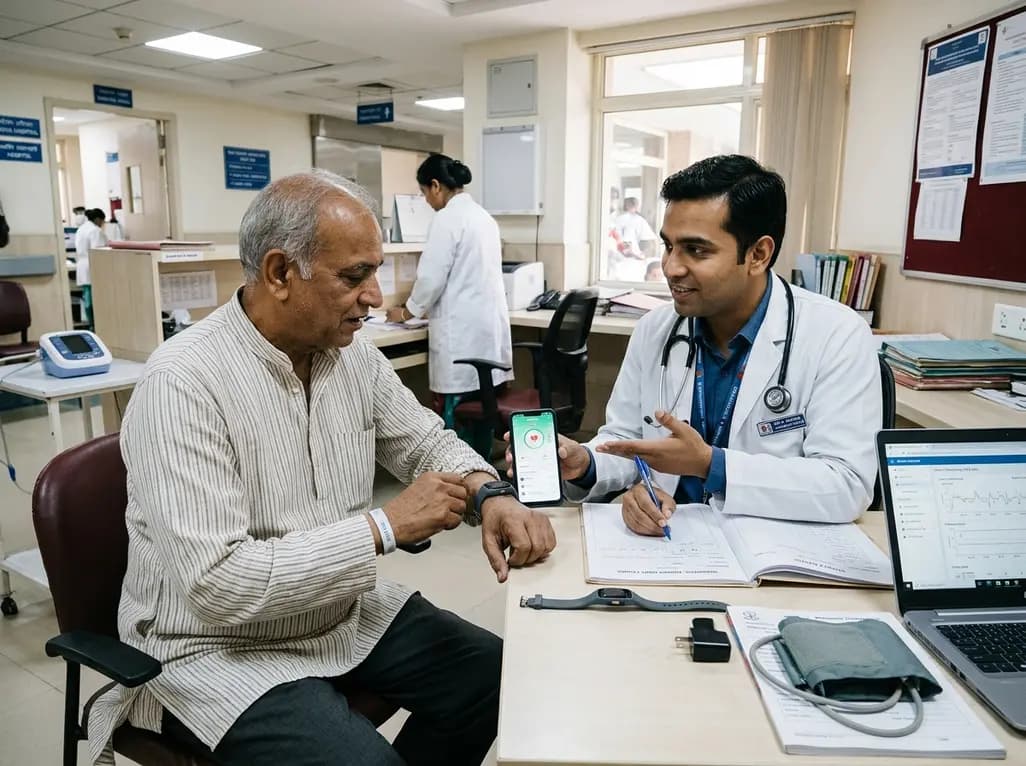
A multicenter observational study evaluated an 8-week digital health monitoring platform using wearable sensors in ambulatory heart failure. While participants achieved high daily wear-time of 11.7 hours and 80% completion, initial recruitment revealed significant technology-related onboarding barriers.
Today

A paired cadaveric study compared triple and quintuple percutaneous Achilles tendon lengthening. While quintuple hemisection showed numerically greater elongation, differences were not statistically significant.
Yesterday

A clinical decision-support framework using health checkup data from 231,683 adults predicts incident obesity with high discrimination (AUROC 0.918). The system integrates temporal survival analysis and risk-factor explanations to prioritize individualized preventive interventions.
Today
