.webp&w=384&q=75)

Loading, please wait...
Loading, please wait...

Panic disorder represents a debilitating psychiatric condition characterized by sudden, recurrent panic attacks and persistent anticipatory anxiety. While genetic factors contribute to vulnerability, environmental determinants play a critical role in triggering and sustaining panic symptomatology. Recent clinical investigations have underscored the complex relationship between early life trauma, proximal stressors, and neuroendocrine dysfunction. Specifically, researchers have identified that childhood adversity and panic pathology share an intricate biological bridge through the hypothalamic-pituitary-adrenal (HPA) axis. Understanding how distal developmental insults interact with proximal adult stressors provides indispensable insights for clinicians. Therefore, evaluating life stress history is essential for accurate risk stratification and comprehensive psychiatric management.
Epidemiological and clinical evidence shows that adverse life events rarely occur in isolation. Instead, early developmental trauma often sensitizes individuals to subsequent stressors across the lifespan. A landmark case-control study evaluated 113 patients diagnosed with panic disorder alongside 113 matched healthy controls to determine the impact of life events. The investigators utilized semistructured interviews and validated self-report instruments to capture both early childhood adversities and recent proximal stressors.
Consequently, the analysis revealed that patients with panic disorder experienced significantly higher rates of cumulative life events compared to control subjects. Furthermore, researchers identified a distinct cumulative interaction between childhood adversities and recent stressful life events. When individuals experienced multiple life events, they consistently manifested more severe panic symptoms and agoraphobic avoidance. Thus, early trauma appears to lower the threshold for panic onset when proximal triggers emerge in adulthood. These findings support the two-hit stress diathesis model in anxiety pathophysiology. Hence, clinicians must systematically assess lifetime stress exposure during initial evaluations.
The hypothalamic-pituitary-adrenal axis acts as the primary neuroendocrine mediator of the mammalian stress response. In healthy physiological states, the HPA axis maintains circadian rhythmicity and provides adaptive negative feedback following acute challenges. However, sustained or severe stress during critical neurodevelopmental windows can permanently alter HPA axis set points and glucocorticoid receptor sensitivity.
In the aforementioned study, researchers evaluated neuroendocrine function by measuring morning cortisol levels across patient and control cohorts. The results demonstrated that patients with panic disorder exhibited significantly elevated morning cortisol concentrations compared to healthy controls. More importantly, patients who reported significant childhood adversities displayed the highest morning cortisol levels among all subgroups. This endocrine alteration indicates persistent neurobiological dysregulation rather than a transient, state-dependent response to acute panic attacks. Moreover, altered glucocorticoid signaling impairs prefrontal cortical regulation over hyperactive amygdala circuits. As a result, baseline hypercortisolemia reflects chronic allostatic load that predisposes susceptible individuals to panic surges. Recognizing these biological markers allows clinicians to appreciate the somatic dimensions of trauma-related anxiety.
Understanding the interplay between childhood adversity and panic disorder requires an examination of stress sensitization mechanisms. Childhood trauma, such as emotional neglect, physical abuse, or parental loss, alters central autonomic and emotional processing networks. Consequently, these adverse experiences establish enduring neurobiological vulnerabilities that amplify reactivity to routine adult life stressors.
Recent statistical models demonstrate that the risk of panic disorder in individuals exposed to childhood adversities increases exponentially when recent stressful events occur. Conversely, proximal life events alone produce less severe panic manifestations in individuals without early trauma histories. This reciprocal amplification demonstrates that early adversity primes the neuroendocrine system, rendering it hypersensitive to subsequent psychosocial strain. Additionally, the presence of multiple adverse events correlates linearly with increased panic attack frequency, severe anticipatory anxiety, and greater functional impairment. Therefore, the clinical phenotype of panic disorder reflects an accumulated burden of neurodevelopmental and proximal environmental challenges. Clinicians should view panic symptoms not merely as isolated neurochemical imbalances, but as complex endophenotypes driven by cumulative neurobiological stress.
The established connection between life stress, neuroendocrine alterations, and panic symptomatology carries substantial clinical implications for daily practice. Routine psychiatric assessments frequently prioritize immediate symptom clusters over detailed chronological trauma histories. However, clinicians must actively screen for both childhood adversities and recent psychosocial stressors to construct accurate prognostic profiles.
Furthermore, identifying a history of childhood trauma can explain why certain patients experience treatment resistance or recurrent relapse. Because patients with high stress burdens exhibit baseline HPA axis hyperactivity, they often require tailored management strategies that address both biological and cognitive vulnerabilities. Standardized screening tools, such as the Childhood Trauma Questionnaire and life event inventories, offer valuable objective data during initial clinical intake. In addition, recognizing elevated somatic stress markers helps clinicians validate patient distress, which strengthens therapeutic alliance and improves treatment adherence. Ultimately, incorporating life event histories into routine diagnostic formulations enhances precision psychiatry and supports individualized care pathways for vulnerable patients.
Effective management of panic disorder in patients with extensive trauma histories necessitates an integrative, multifaceted treatment paradigm. Standard pharmacotherapies, including selective serotonin reuptake inhibitors and serotonin-norepinephrine reuptake inhibitors, remain first-line pharmacological choices. These agents effectively alleviate acute panic symptoms and gradually restore neurochemical equilibrium within hyperactive limbic circuits.
Nevertheless, medication alone may fail to completely resolve the underlying neuroendocrine dysregulation induced by early life trauma. Therefore, clinicians should combine pharmacological interventions with evidence-based psychotherapies, particularly trauma-informed cognitive behavioral therapy. Cognitive restructuring and interoceptive exposure help patients reframe catastrophic misinterpretations of physiological arousal and reduce hyperventilation-induced autonomic surges. Furthermore, structured stress reduction techniques, such as mindfulness-based stress reduction and progressive muscle relaxation, directly lower sympathetic tone and downregulate HPA axis activity. In addition, lifestyle modifications, including regular aerobic exercise and optimized sleep hygiene, facilitate neuroendocrine normalization. Consequently, a comprehensive biopsychosocial approach provides durable symptom remission and mitigates long-term relapse risk.
Childhood adversity fundamentally alters the developing hypothalamic-pituitary-adrenal axis and permanently sensitizes neural fear circuits within the brain. Consequently, these enduring neurodevelopmental modifications significantly reduce physiological stress tolerance during adulthood. When affected individuals encounter subsequent proximal life stressors, their primed neuroendocrine system overreacts intensely, precipitating sudden autonomic surges, catastrophic cognitive misinterpretations, and severe panic attacks.
Elevated morning cortisol serves as a reliable biological marker of chronic hypothalamic-pituitary-adrenal axis dysregulation in patients with panic disorder. Patients with substantial childhood trauma histories demonstrate particularly pronounced morning cortisol elevations. This persistent hypercortisolemia reflects sustained allostatic load and impaired glucocorticoid receptor feedback, which maintains central nervous system hyperarousal and substantially increases patient vulnerability to acute panic episodes.
Clinicians should adopt an integrated biopsychosocial strategy combining evidence-based pharmacotherapy with specialized trauma-informed cognitive behavioral therapy. Selective serotonin reuptake inhibitors help stabilize monoaminergic neurotransmission, while cognitive restructuring and interoceptive exposure systematically address conditioned fear responses. Furthermore, clinicians must incorporate structured stress reduction techniques, such as mindfulness and progressive relaxation, to normalize hypothalamic-pituitary-adrenal axis functioning and prevent symptom relapse.
Disclaimer: This content is for informational and educational purposes only. It should not be used as a substitute for professional medical advice, diagnosis, or treatment. Always seek the advice of your physician or other qualified health provider with any questions you may have regarding a medical condition. Refer to the latest local and national guidelines for clinical practice.
References

Read summarized clinical updates, watch expert medical content, and earn CME certifications right from your smartphone.
Open your smartphone camera to scan and install.





A cross-sectional case-control study reveals a cumulative link between childhood adversities, recent life events, and panic disorder severity. Patients with adverse backgrounds exhibit significant morning cortisol elevation, highlighting neuroendocrine dysregulation as a central pathophysiological mechanism.
last month

With post-monsoon dengue surges threatening South Asian health systems, physicians must refine triage and management. This guide covers vital warning signs, plasma leakage detection, crystalloid titration, and vector containment strategies to prevent mortality during seasonal arboviral epidemics.
Today

Findings from Project Viva indicate that sustained postpartum weight retention, rather than excessive gestational weight gain alone, directly worsens women's mid-life cardiovascular health, degrading blood pressure and glycemic parameters decades after delivery.
Today
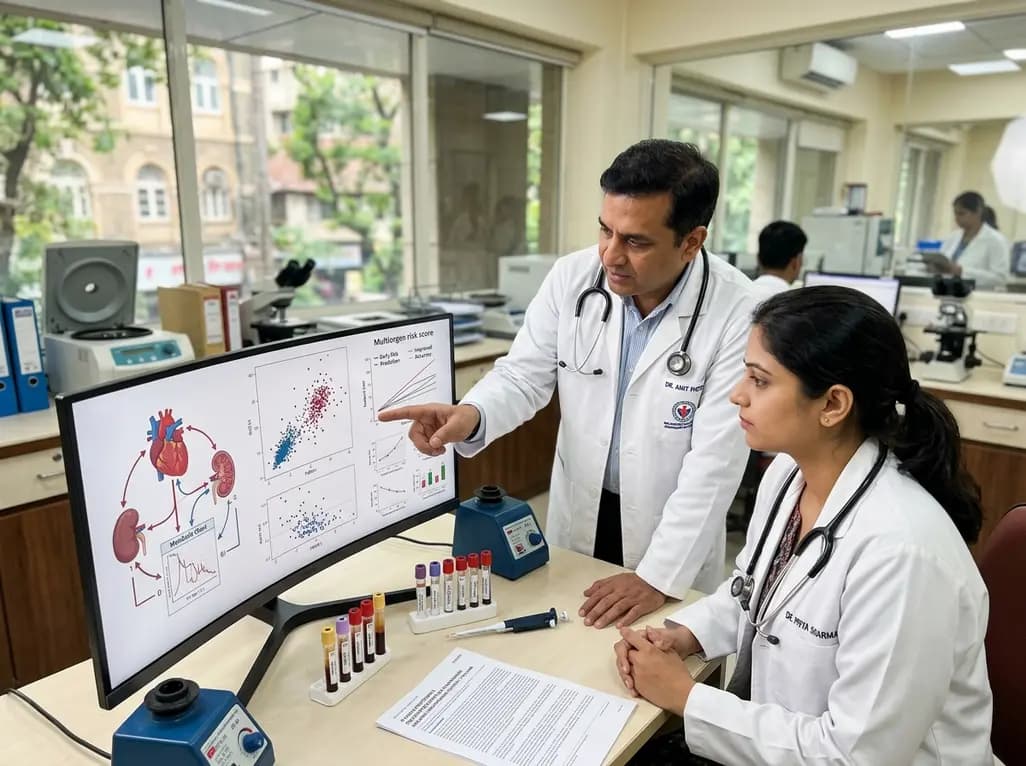
A large UK Biobank study reveals that plasma proteomic signatures capture preclinical organ damage and improve multiorgan risk prediction across early CKM syndrome stages 0 to 2 beyond traditional PREVENT clinical models.
Today

A retrospective CBCT study reveals that superior TMJ space asymmetry correlates moderately with occipital condyle-atlas-axis asymmetry in unilateral TMJ osteoarthritis, highlighting an imaging correlate between jaw biomechanics and upper cervical alignment rather than a standalone diagnostic marker.
Today

A Bayesian multilevel meta-analysis reveals that aerobic training combined with moderate carbohydrate restriction modestly lowers HbA1c in type 2 diabetes. However, sparse data and very low certainty leave incremental benefits over exercise or diet alone unproven, highlighting the need for individualized care.
Today
