.webp&w=384&q=75)

Loading, please wait...
Loading, please wait...
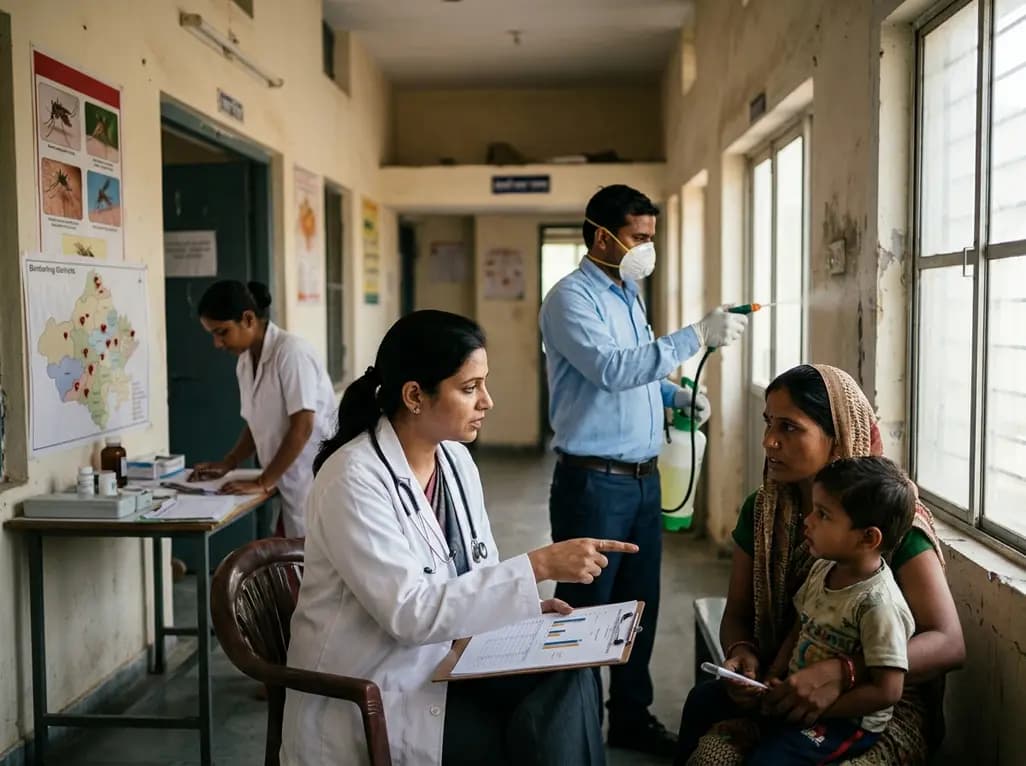
Health authorities in Rajasthan have intensified active surveillance along the Gujarat border following confirmed fatal cases linked to the chandipura virus outbreak. Recent pediatric fatalities in border districts have alarmed medical professionals and public health officials. Consequently, health departments are coordinating rapid field interventions, anti-vector measures, and public communication strategies. Chandipura virus represents an emerging arboviral disease capable of inducing severe encephalitis rapidly. Therefore, healthcare providers must understand the clinical presentation, transmission dynamics, and preventive vector control strategies to contain transmission effectively and improve survival rates among vulnerable pediatric populations.
The chandipura virus outbreak poses a severe public health challenge across central and western India. Historically, researchers isolated the Chandipura virus (CHPV) during an encephalitic illness outbreak in Maharashtra in 1965. CHPV belongs to the Vesiculovirus genus within the Rhabdoviridae family. Notably, the virus exhibits an extremely high case fatality rate, often exceeding 50% to 70% in pediatric cohorts.
Transmission occurs predominantly through the bites of infected female phlebotomine sandflies, particularly Phlebotomus papatasi. Additionally, certain mosquito species and ticks can act as secondary vectors. Monsoon conditions significantly enhance vector populations due to elevated humidity. Consequently, rural regions experience higher infection rates where mud structures and livestock enclosures offer ideal microclimates for vector breeding. Furthermore, young children under 15 years remain exceptionally vulnerable because their immature immune systems struggle against rapid viral replication. Understanding these epidemiological dynamics allows clinicians to maintain high diagnostic suspicion during seasonal spikes in endemic border belts.
To prevent regional spillover, state health authorities have activated aggressive border vigil operations across Sirohi, Dungarpur, and Udaipur. These districts share geographical boundaries with affected areas in Gujarat, where active transmission caused multiple pediatric fatalities. Therefore, health department officials shifted operations from routine passive monitoring to active community-based surveillance.
Field health teams conduct systematic door-to-door screening to identify children presenting with acute febrile illness accompanied by neurological symptoms. Additionally, district authorities established rapid communication networks between primary health centers and tertiary care referral hospitals. Furthermore, inter-departmental collaboration with animal husbandry teams enables comprehensive environmental mapping of potential sandfly reservoirs. Officials prioritize mapping cattle sheds, damp wall crevices, and livestock shelters because these sites foster heavy sandfly aggregation. By identifying early infection clusters, health teams implement localized containment protocols before broader transmission occurs. Consequently, stringent surveillance along transit corridors serves as a critical defense against expanding viral endemicity.
Chandipura virus infection manifests with dramatic speed, making rapid clinical recognition vital for patient survival. Following vector inoculation, the virus replicates locally in skeletal muscle tissue. Subsequently, retrograde axonal transport and hematogenous dissemination enable viral entry across the blood-brain barrier into central nervous system tissues.
Clinicians must recognize that the illness typically begins with a sudden high-grade fever, severe headache, and vomiting. However, neurological deterioration occurs rapidly within 24 to 48 hours. Patients frequently develop altered sensorium, generalized tonic-clonic seizures, focal neurological deficits, and progressive cerebral edema. Brainstem involvement can rapidly precipitate coma and respiratory arrest. Furthermore, laboratory findings often reveal leukocytosis, elevated CSF pressure, and mild pleocytosis. Because specific antiviral agents or vaccines do not currently exist, early clinical recognition remains paramount. Immediate identification allows emergency teams to initiate supportive measures, manage intracranial pressure, and control seizure activity before irreversible neurodegeneration develops.
Understanding sandfly ecology is crucial for executing effective vector reduction programs during arboviral surges. Phlebotomine sandflies thrive in specific microhabitats that provide high humidity, dark shelter, and rich organic matter. Rural dwellings, unplastered mud walls, deep soil cracks, and stone masonry offer ideal resting habitats.
Additionally, animal shelters and cattle sheds represent primary breeding sanctuaries because livestock dung provides essential nourishment for sandfly larvae. Humidity within damp crevices protects delicate adult flies from desiccation during hot daylight hours. Furthermore, human proximity to animal burrows and unhygienic livestock housing increases transmission risk dramatically. Field teams actively advise families to seal wall fissures, maintain dry cattle quarters, and clear decaying organic debris near homes. Moreover, authorities recommend keeping young children away from livestock resting zones, particularly during dusk and dawn when sandfly biting activity peaks. Addressing these environmental risk factors reduces local vector density and disrupts the transmission cycle effectively.
Chemical vector control forms the cornerstone of immediate containment during a vector-borne outbreak. Health authorities deployed Alpha-cypermethrin 10% SC for targeted indoor and peri-domestic residual spraying across endemic rural belts. Alpha-cypermethrin is a highly potent, broad-spectrum synthetic pyrethroid insecticide widely utilized in public health vector management.
This formulation acts through contact and stomach poisoning, disrupting voltage-gated sodium channels in the insect nervous system. Consequently, it produces rapid knockdown and mortality in exposed sandflies, mosquitoes, and other disease vectors. Notably, suspension concentrate (SC) formulations provide excellent residual activity on porous surfaces such as mud walls and brick masonry. Spraying teams systematically treat indoor walls, animal shelters, damp crevices, and livestock enclosures to eliminate adult vector populations. Furthermore, combining chemical spraying with larvicidal treatments ensures long-term vector suppression. Maintaining strict application standards and monitoring vector susceptibility prevents insecticide resistance, ensuring sustained protection for vulnerable rural communities.
Managing Acute Encephalitis Syndrome (AES) secondary to Chandipura virus requires structured clinical triage and rapid escalation of care. Primary healthcare providers encountering pediatric patients with high fever and neurological signs must classify them as high-risk medical emergencies. Immediate stabilization focuses on airway maintenance, adequate oxygenation, and hemodynamic support.
Additionally, clinicians should promptly manage high fever with antipyretics and administer broad-spectrum empirical therapy to cover bacterial meningitis or herpes simplex encephalitis until CHPV is laboratory confirmed. Rapid management of active seizures with intravenous benzodiazepines, followed by second-line antiepileptic agents, is crucial. Furthermore, clinicians must manage elevated intracranial pressure using hyperosmolar therapy, such as hypertonic saline or mannitol, while restricting fluid overload carefully. Patients require immediate, monitored transport in equipped ambulances to pediatric intensive care units (PICUs) with advanced neurocritical care capabilities. Timely intensive supportive care significantly reduces case fatality rates and minimizes long-term neurological sequelae.
Q1: What are the primary diagnostic tests used to confirm Chandipura virus infection?
Laboratory confirmation of Chandipura virus relies on reverse transcription-polymerase chain reaction (RT-PCR) testing on acute-phase serum or cerebrospinal fluid (CSF) samples collected within the first few days of illness. Additionally, IgM enzyme-linked immunosorbent assay (IgM ELISA) detects specific anti-CHPV antibodies in serum or CSF. Early sample collection is crucial because viral RNA wanes rapidly following the acute onset of neurological symptoms.
Q2: Why are children under 15 years disproportionately affected by the Chandipura virus?
Children under 15 years exhibit high susceptibility due to developmental factors of their immune systems and blood-brain barrier permeability. Additionally, young children in rural regions spend significant time outdoor near livestock shelters and mud structures where sandfly exposure is highest. Their immature immune response struggles to contain initial viral replication, facilitating rapid neuroinvasion and severe acute encephalitis syndrome before protective immune responses develop.
Q3: How does Alpha-cypermethrin 10% SC control sandfly populations during an outbreak?
Alpha-cypermethrin 10% SC is a broad-spectrum synthetic pyrethroid insecticide applied via indoor residual spraying. It disrupts sodium channels in the nervous system of sandflies, causing immediate paralysis and death through contact or ingestion. Its suspension concentrate formulation provides prolonged residual lethal effects on mud walls, animal shelters, and damp crevices, effectively reducing adult vector density and interrupting viral transmission cycles.
Disclaimer: This content is for informational and educational purposes only. It does not constitute medical advice or replace professional judgment. Refer to the latest local and national guidelines for clinical practice.
References

Read summarized clinical updates, watch expert medical content, and earn CME certifications right from your smartphone.
Open your smartphone camera to scan and install.





Health authorities in Rajasthan have intensified vector control and disease surveillance in border districts after fatal Chandipura virus cases raised alerts. Learn about clinical presentation, sandfly vector management using Alpha-cypermethrin 10% SC, and rapid referral protocols for acute encephalitis.
2 months ago

Review how tailored exercise programs benefit frail older patients with heart failure. Explore pathophysiological mechanisms, individualized training prescriptions, and strategies to overcome adherence barriers in clinical practice.
Today

Leucine Rich Bio has introduced South Asia's first comprehensive vaginal microbiome test, BugSpeaks. By profiling microbial dysbiosis, pathogens, and antimicrobial resistance, this next-generation diagnostic platform provides clinicians with deeper insights into recurrent infections, fertility, and reproductive health.
Today

In high-risk pulmonary embolism complicated by severe anemia and active uterine bleeding, systemic thrombolysis is contraindicated. Large-bore aspiration thrombectomy provides rapid hemodynamic rescue without fibrinolysis, supported by inferior vena cava filter placement and multidisciplinary critical care.
Today

This comparative study evaluates posterior labral tears with and without glenohumeral instability, highlighting distinct demographic patterns, MRI underestimation in stable shoulders, and successful arthroscopic repair outcomes.
Today

A clinical study demonstrates that early intervention with tocilizumab, either as monotherapy or bridged with corticosteroids, achieves significant proptosis reduction and resolves active inflammation in treatment-naive thyroid eye disease.
Today
