

Loading, please wait...
Loading, please wait...

Cervical spondylotic myelopathy often requires surgical decompression to arrest progressive neurological deterioration. While posterior decompressive procedures restore neurological function, postoperative axial pain and neck stiffness frequently compromise recovery. Recent clinical investigations demonstrate that cervical subcutaneous fat thickness serves as an essential morphological marker in patients undergoing posterior cervical spine surgery. Specifically, localized adipose tissue distribution correlates directly with preoperative cervical sagittal alignment, paraspinal muscle quality, and subsequent surgical morbidity. Understanding these anatomical interactions helps spine surgeons refine preoperative assessment, enhance patient counseling, and mitigate persistent postoperative complaints.
Posterior cervical single-door laminoplasty provides reliable canal expansion for multi-segmental myelopathy. Nevertheless, surgeons increasingly recognize that regional soft-tissue characteristics dictate biomechanical equilibrium. A clinical study evaluating 131 patients revealed that patients with greater cervical subcutaneous fat thickness exhibited distinct structural alterations. In particular, higher local fat depth correlated significantly with greater body weight and elevated body mass index. Moreover, these individuals demonstrated shorter cervical spine length and reduced C2-C7 Cobb angles. Consequently, excess posterior adipose accumulation coincides with baseline loss of cervical lordosis. In addition, radiographic measurements showed elevated T1 slope values among patients harboring substantial subcutaneous adipose layers. Because cervical alignment relies upon intricate reciprocal compensation, localized soft-tissue bulk directly impacts sagittal balance. Furthermore, advanced imaging showed severe fatty infiltration within the posterior paraspinal musculature among these individuals. Therefore, cervical subcutaneous fat thickness reflects more than superficial body habitus. It indicates widespread structural degeneration, compromised muscular support, and unfavorable sagittal biomechanics across the subaxial cervical spine. Recognizing this regional phenotype allows surgeons to identify patients who harbor subtle cervical alignment derangements prior to instrumentation.
The cervical spine functions as a dynamic kinetic chain where regional anatomy governs global spinal posture. When patients accumulate extensive posterior adipose tissue, the posterior lever arm experiences altered mechanical strain. Specifically, increased cervical subcutaneous fat thickness shifts the local center of mass and exacerbates anterior shear forces. As a result, the deep extensor musculature must exert continuous tension to preserve horizontal gaze. Over time, persistent muscular strain accelerates paraspinal muscle fatty infiltration and structural atrophy. Furthermore, the combination of a high T1 slope and decreased C2-C7 lordosis forces the cervical spine into a precarious biomechanical state. When surgeons perform single-door laminoplasty, they inevitably disrupt muscular insertions and posterior osseous architecture. In patients with normal soft-tissue proportions, the remaining extensor muscles adapt effectively to this surgical trauma. However, individuals with excessive subcutaneous fat lack adequate functional muscle reserve. Consequently, their compromised posterior tension band cannot counterbalance anterior gravitational loads after surgery. In addition, the extended skin-to-lamina distance increases surgical depth and retraction tension during posterior exposure. Thus, baseline sagittal imbalance and muscular exhaustion synergistically impair mechanical stability following posterior decompression.
Postoperative axial symptoms represent one of the most frustrating complications following posterior cervical laminoplasty. Patients frequently complain of persistent aching, muscular stiffness, and burning pain across the nuchal and periscapular regions. Interestingly, clinical data show that general functional recovery, measured by Japanese Orthopaedic Association scores, remains comparable regardless of fat depth. Similarly, generic visual analog pain scores improve across most cohorts over longitudinal follow-up. However, patients with pronounced subcutaneous adipose tissue exhibit a significantly higher incidence of chronic axial symptoms. Multivariable logistic regression identified cervical subcutaneous fat thickness as the strongest independent predictor of these persistent complaints. Specifically, elevated adipose depth independently increased the odds of axial symptom development with statistical significance. Several distinct mechanisms explain this pronounced vulnerability. First, deeper exposure demands prolonged muscular retraction, provoking localized ischemia within the paraspinal compartments. Second, denervated and fatty-infiltrated muscles demonstrate impaired tissue healing and prolonged inflammation. Furthermore, altered biomechanics concentrate mechanical stress on strained facet capsules and healing osteotomy hinges. Therefore, post-laminoplasty axial symptoms arise from a convergence of structural muscle injury, delayed healing, and mechanical instability.
To integrate soft-tissue morphology into clinical pathways, clinicians must utilize objective radiographic metrics. Receiver operating characteristic curve analysis identified an optimal cutoff value of 1.357 cm for C5 subcutaneous fat thickness. Patients exceeding this threshold demonstrated a substantial elevation in postoperative axial symptom rates. Therefore, measuring fat thickness on preoperative magnetic resonance imaging offers valuable prognostic guidance. In clinical practice, spine specialists can routinely quantify the C5 subcutaneous fat depth and skin-to-lamina distance during routine surgical planning. When patients present with measurements exceeding 1.357 cm, surgeons should tailor their operative approach accordingly. For instance, surgical teams can adopt muscle-preserving exposure techniques to minimize trauma to the deep extensor attachments. Furthermore, surgeons should exercise meticulous caution regarding the lateral extent of muscular detachment. Preserving the muscular attachments to the C2 and C7 spinous processes protects dynamic tension bands. In addition, surgeons must monitor thermal injury from electrocautery, which exacerbates fat necrosis in deep wounds. By acknowledging these anatomical thresholds, surgical teams can anticipate perioperative hurdles, refine surgical execution, and mitigate preventable morbidity in high-risk patients.
Comprehensive management of patients with significant cervical adiposity extends beyond intraoperative technical precision. Postoperatively, high-risk individuals require specialized, structured rehabilitation protocols that address extensor muscle weakness. Traditional post-laminoplasty care frequently emphasizes cervical immobilization via rigid or semi-rigid orthoses. However, prolonged cervical immobilization worsens disuse atrophy and accelerates fatty degeneration within posterior cervical muscles. Consequently, clinicians should initiate progressive isometric neck strengthening early in the recovery timeline. In addition, physical therapists must instruct patients on ergonomic modifications and postural awareness to minimize forward head posture. Because higher body mass index and elevated body weight frequently co-occur with thick subcutaneous fat, multidisciplinary metabolic support remains invaluable. Encouraging supervised weight management and regular aerobic exercise diminishes systemic low-grade inflammation and improves functional stamina. Furthermore, patient education during the preoperative consultation helps align expectations regarding neck soreness and recovery speed. When patients understand their individualized risk profile, they participate more proactively in structured recovery regimens. Ultimately, combining careful preoperative risk stratification, tissue-sparing surgical technique, and targeted postoperative therapy optimizes long-term functional success.
Greater subcutaneous fat thickness correlates with reduced cervical lordosis, elevated T1 slope, and paraspinal muscle fatty infiltration. While neurological decompression outcomes remain favorable, increased fat depth independently predicts postoperative axial symptoms. This occurs due to greater surgical retraction, prolonged muscular ischemia, and biomechanical strain across the healing posterior cervical structures.
Receiver operating characteristic curve analysis identifies an optimal C5 subcutaneous fat thickness cutoff of 1.357 cm. Patients with fat thickness exceeding this threshold experience significantly higher rates of axial pain and nuchal discomfort. Clinicians can measure this parameter on preoperative sagittal and axial magnetic resonance imaging to guide surgical planning.
Surgeons should utilize muscle-preserving techniques, avoid over-retraction of paraspinal tissues, and preserve muscular insertions at C2 and C7. Furthermore, care teams should minimize prolonged postoperative immobilization and initiate early isometric strengthening. Tailored rehabilitation programs and proactive weight management help restore sagittal stability and alleviate persistent posterior neck discomfort.
Disclaimer: This content is for informational and educational purposes only... Refer to the latest local and national guidelines for clinical practice.
References

Read summarized clinical updates, watch expert medical content, and earn CME certifications right from your smartphone.
Open your smartphone camera to scan and install.





A retrospective study of 131 patients undergoing cervical laminoplasty identifies cervical subcutaneous fat thickness as a key predictor of postoperative axial symptoms and altered sagittal alignment, highlighting an optimal cutoff value of 1.357 cm to optimize surgical planning and recovery.
Today

A randomized crossover trial evaluated fifth-year medical students interacting with an AI standardized patient versus a human standardized patient. The study revealed key differences in Mini-CEX scores, active engagement, and interview dynamics.
Today

A comparative evaluation of INNO-LiPA, Cobas 4800, and Amplicor highlights significant assay-dependent variation in high-risk HPV detection, emphasizing the clinical distinction between analytical sensitivity and screening specificity.
Today

A Canadian nutrition study reveals that higher diet costs predict lower dietary energy density and higher fruit intake, but also increase sodium and processed meat consumption.
Today
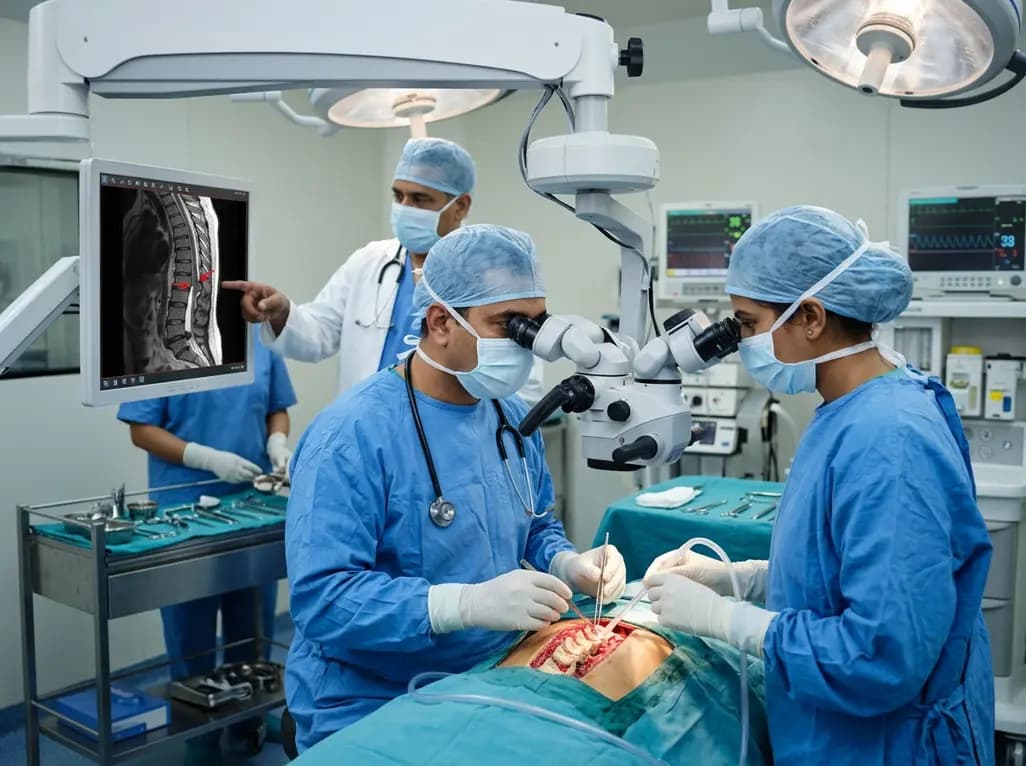
Idiopathic spinal cord herniation is a rare pathology presenting with progressive thoracic myelopathy. Early MRI identification and meticulous microsurgical reduction with dual bolstered dural defect repair prevent irreversible neurological deterioration.
Today

A novel smartphone-assisted biosensor utilizing molecularly imprinted polymers and catalytic nanozymes offers antibody-free, enzyme-free urinary microalbumin testing, enabling rapid, low-cost point-of-care screening for early chronic kidney disease.
Today
