.webp&w=384&q=75)

Loading, please wait...
Loading, please wait...
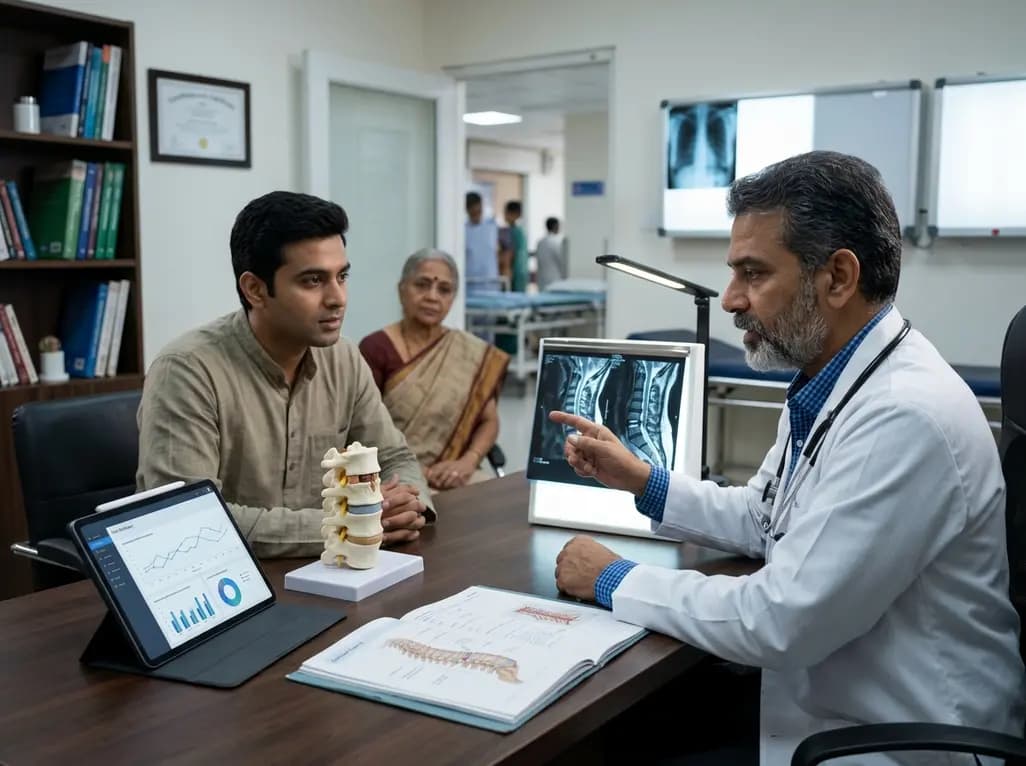
Cervical disk arthroplasty has emerged as a premier motion-preserving alternative to anterior cervical discectomy and fusion for cervical degenerative disc disease. Over the past two decades, spinal surgeons have increasingly embraced this technique to maintain segmental mobility and mitigate adjacent segment degeneration. However, much of the foundational evidence supporting arthroplasty originates from highly structured randomized controlled trials. These trials apply rigorous inclusion criteria and intensive surveillance protocols. In contrast, standard clinical practice frequently involves patients with broader clinical presentations, varied anatomies, and different surgical expectations. A landmark investigation by Foley and colleagues evaluates whether recruitment pathways influence postoperative results. By comparing trial cohorts with standard clinical practice cohorts, the authors provide essential clarity regarding the real-world performance of cervical prostheses. Understanding these distinctions is critical for spine specialists who aim to translate trial benchmarks into daily clinical decision-making. Consequently, evaluating patient selection differences helps bridge the gap between idealized trial results and routine outpatient spine surgery.
The retrospective cohort investigation evaluated 168 patients who received cervical disk arthroplasty across 193 cervical levels between C3 and T1. Researchers grouped participants into two distinct cohorts based on recruitment pathways. The randomized controlled trial cohort enrolled 104 patients beginning in 2002. Meanwhile, the standard clinical practice cohort included 64 patients treated starting in 2018. Investigators followed all participants for a minimum of one year, achieving a mean follow-up of 6.1 years across the entire cohort. Notably, follow-up durations extended up to 20.4 years in some cases. The investigators excluded hybrid surgical constructs and individuals with previous cervical spine surgical interventions to maintain baseline comparability. Across the entire cohort, surgeons utilized eight unique disk prosthesis designs. Clinical evaluations captured reoperation history alongside validated patient-reported outcome measures. These measures included the Visual Analog Scale for neck pain, Visual Analog Scale for arm pain, and the Neck Disability Index. Surgeons collected patient data at structured preoperative, early postoperative, one-year, two-year, three-year, five-year, and ten-year intervals.
The analysis revealed significant baseline differences between trial participants and routine practice cohorts. Trial patients had a significantly higher proportion of female individuals and substantially longer follow-up times. Furthermore, trial participants presented with significantly worse baseline preoperative functional scores across all primary metrics. Despite entering surgery with greater pain and functional impairment, trial patients achieved larger and more consistent clinical gains. They demonstrated superior improvements in Visual Analog Scale neck and arm scores at each subsequent follow-up interval. Similarly, Neck Disability Index scores showed greater total point reduction in the trial cohort compared to standard practice patients. Standard clinical practice patients experienced meaningful symptom relief, yet their magnitude of improvement remained lower across extended follow-up windows. Consequently, these findings indicate that strict trial inclusion criteria identify patients who derive the maximal proportional benefit from motion-preserving intervention. The structured monitoring inherent to trial protocols may also foster superior rehabilitation compliance and positive subjective reporting among study participants.
Surgical durability and revision risks represent vital safety benchmarks in spine surgery. The study highlighted significant divergence in long-term index-level reoperation rates between the two cohorts. Patients treated within standard clinical practice had significantly higher rates of secondary index-level surgery at the five-year mark. In contrast, trial patients maintained durable construct stability and required fewer surgical revisions over time. Several surgical and physiological factors likely explain this observation. First, clinical trials enforce stringent radiological parameters, excluding patients with subtle facet arthrosis, severe loss of disc height, or multi-plane instability. In standard practice, surgeons occasionally extend indications to borderline candidates who may experience accelerated biomechanical wear. Additionally, implant positioning accuracy and strict adherence to precise disc sizing during trial operations minimize abnormal shear stress. When surgeons operate outside controlled trials, slight deviations in patient anatomy or device selection can increase wear debris, heterotopic ossification, or persistent micro-instability, ultimately necessitating revision procedures.
These findings offer crucial insights for orthopedic surgeons and neurosurgeons managing cervical spondylosis. While cervical disk arthroplasty remains an excellent procedure, clinicians cannot assume that real-world outcomes will automatically mirror trial success rates without identical patient selection. Surgeons must maintain disciplined preoperative screening protocols in routine outpatient settings. Specifically, practitioners should evaluate bone mineral density, facet joint integrity, and sagittal alignment before recommending motion preservation. Furthermore, surgeons should thoroughly counsel patients regarding realistic recovery trajectories and long-term reoperation risks. Standard clinical practice often encounters patients with complex comorbidities, such as metabolic dysfunction or occupational physical stress, which can affect long-term implant performance. Therefore, surgical teams should establish standardized postoperative surveillance pathways, similar to trial protocols, to detect early construct failure or progressive adjacent segment disease. By upholding rigorous patient selection, spine specialists can effectively reduce revision rates and replicate the superior outcomes documented in prospective clinical trials.
Although the investigation provides invaluable comparative data, surgeons should interpret the results within the context of specific methodological limitations. The standard clinical practice cohort began recruitment in 2018, resulting in shorter overall follow-up durations compared to the historical trial cohort from 2002. Additionally, longitudinal response rates declined over time in the standard practice group, reflecting common real-world follow-up challenges. Advances in prosthetic disc design and surgical instrumentation over the past two decades may also introduce subtle secular trends. Nonetheless, this study underscores the pressing need for larger multi-center registries that capture non-trial outcomes. Future research should prioritize prospective pragmatic trials that evaluate contemporary prostheses across diverse community and academic health centers. Moreover, investigating biological markers of disc degeneration and biomechanical wear patterns will help refine patient selection algorithms. Ultimately, expanding real-world evidence will enable spine surgeons to optimize patient selection, improve prosthetic longevity, and enhance overall quality of life for individuals undergoing cervical reconstruction.
Patient recruitment significantly impacts surgical outcomes because clinical trials use strict inclusion criteria, excluding complex anatomical deformities and advanced facet degeneration. Consequently, trial cohorts demonstrate greater postoperative functional improvements, superior pain relief, and lower five-year index-level reoperation rates compared to patients treated in standard clinical practice settings.
Standard clinical practice patients often present with broader anatomical variations, subtle spinal instability, or pre-existing facet arthrosis that clinical trials exclude. These subtle baseline differences can increase biomechanical shear stress on the prosthesis over time, leading to device wear, persistent pain, and a higher likelihood of secondary surgical revision.
Optimal outcomes require careful patient selection, including confirmed single-level or two-level radiculopathy or myelopathy without significant facet joint osteoarthritis, cervical instability, or severe osteoporosis. Preserving adequate disc space height, verifying normal sagittal alignment, and ensuring strict adherence to surgical indications maximize implant longevity and functional recovery.
Disclaimer: This content is for informational and educational purposes only and is not intended as a substitute for professional medical advice, diagnosis, or treatment. Always seek the advice of your physician or other qualified health provider with any questions you may have regarding a medical condition. Refer to the latest local and national guidelines for clinical practice.
References
Foley DP et al. Comparison of Recruitment Method on Clinical Outcomes Following Cervical Disk Arthroplasty. Spine (Phila Pa 1976). 2025 Oct 15. doi: 10.1097/BRS.0000000000005253. PMID: 39807612.
Wahbeh JM, Bogosian CJ, Kistler NM, Park SH, Ebramzadeh E, Sangiorgio SN. Combining All Available Clinical Outcomes on Cervical Disc Arthroplasty: A Systematic Review and Meta-Analysis. Global Spine J. 2022.
Shillingford JN, Laratta JL, Hardy NE, et al. National outcomes following single-level cervical disc arthroplasty versus anterior cervical discectomy and fusion. J Spine Surg. 2018;4(4):697-705.

Read summarized clinical updates, watch expert medical content, and earn CME certifications right from your smartphone.
Open your smartphone camera to scan and install.





A retrospective cohort study reveals that clinical trial patients undergoing cervical disk arthroplasty achieve greater functional recovery and lower 5-year reoperation rates than standard practice patients, highlighting the critical role of strict preoperative selection criteria in surgical success.
last month

Ceftriaxone therapy can lead to biliary sludge and gallstone formation due to calcium-ceftriaxone precipitation. A recent cohort study shows that the noninvasive Fibrosis-4 (FIB-4) index, alongside treatment duration, independently predicts lithogenesis, enabling proactive risk stratification.
Today

A multiparametric MRI approach combining quantitative T2 shading, apparent diffusion coefficient (ADC) measurements, and morphological signs provides superior diagnostic accuracy over subjective evaluation to differentiate ovarian endometriomas from benign hemorrhagic cysts.
Today
A landmark case report reveals a donor heart beating for a century in a 63-year-old recipient, challenging conventional age limits in cardiac transplantation and offering critical lessons on organ longevity, donor selection, and long-term graft survival.
Today
CT-guided pulsed radiofrequency ablation of the obturator nerve delivers durable pain relief up to 12 months in mild-to-moderate hip osteoarthritis, while offering a safe short-term palliative bridge for severe grade 4 disease without procedural complications.
Today
New research reveals that M1 macrophage-derived exosomes aggravate diabetic nephropathy by transferring WTAP to stabilize S1PR2 mRNA. Silencing WTAP in these vesicles attenuates endothelial injury and renal fibrosis, pointing toward innovative nanomedicine therapies.
Yesterday
