.webp&w=384&q=75)

Loading, please wait...
Loading, please wait...

Cervical cancer remains a major public health challenge for women living with HIV, particularly in low-resource regions. These women face a significantly higher risk of developing persistent HPV infections and rapid disease progression. Consequently, maintaining high cervical cancer screening accuracy is vital for early intervention. While high-tech solutions like HPV DNA testing are emerging, many clinicians still rely on Visual Inspection with Acetic Acid (VIA) and the Papanicolaou (Pap) smear.
A recent study in rural Nigeria evaluated 136 HIV-positive women to compare these two traditional methods. Researchers employed a comparative cross-sectional design to measure how well each test identified premalignant lesions. The results highlighted a significant trade-off between sensitivity and specificity. Specifically, VIA demonstrated a much higher sensitivity at 94.1% compared to 73.5% for the Pap smear. However, VIA showed a lower specificity of only 25%, while the Pap smear reached 79.5%.
The study found that using either test alone presented clinical limitations. For instance, the high sensitivity of VIA ensures fewer missed cases but leads to many false positives. Conversely, the Pap smear provides more reliable negative results but might overlook nearly a quarter of existing lesions in this high-risk population. Therefore, the researchers investigated the impact of combining both screening methods.
Notably, the dual-testing approach significantly improved overall cervical cancer screening accuracy. The combination yielded a sensitivity of 92.3% and a specificity of 87.5%. Moreover, both the positive and negative predictive values reached 92.3% and 87.5%, respectively. These figures surpass the performance of either test used in isolation. In resource-constrained settings like India, where cytopathology services may be limited, VIA serves as an excellent complementary tool to the Pap smear. This integrated strategy allows healthcare providers to detect pre-cancerous lesions early while minimizing unnecessary biopsies caused by VIA’s low specificity.
Women living with HIV are six times more likely to develop cervical cancer. Their immune status often leads to faster progression from pre-cancer to invasive disease, making highly sensitive screening tools essential for survival.
While VIA is highly sensitive and easy to perform, its low specificity can lead to high false-positive rates. Ideally, clinicians should use it as a complementary tool alongside the Pap smear to optimize diagnostic accuracy and patient outcomes.
Disclaimer: This content is for informational and educational purposes only. It does not constitute medical advice or establish a doctor-patient relationship. Refer to the latest local and national guidelines for clinical practice.
References
Oshodin AE et al. Diagnostic accuracy of visual inspection with acetic acid versus Papanicolaou smear in cervical cancer screening among HIV-positive women in rural Nigeria. Afr J Reprod Health. 2026 Jun 11. doi: undefined. PMID: 42273874.
World Health Organization. WHO guideline for screening and treatment of cervical pre-cancer lesions for cervical cancer prevention. Geneva: WHO; 2021.
National Health Mission. Protocol for screening of Cervical Cancer. Himachal Pradesh; 2025.

Read summarized clinical updates, watch expert medical content, and earn CME certifications right from your smartphone.
Open your smartphone camera to scan and install.





A comparative study in Nigeria reveals that combining VIA and Pap smear significantly improves diagnostic accuracy for cervical cancer screening among HIV-positive women, offering a high-sensitivity and high-specificity approach for resource-limited healthcare environments.
4 months ago

An ICMR study reveals that nearly 25% of tribal adults in Odisha suffer from renal decline. Driven by untreated hypertension, diabetes, and lifestyle risks, this hidden burden highlights the critical need for point-of-care diagnostics, proactive screening, and targeted non-communicable disease interventions.
Today

A study in Ultrasound in Obstetrics & Gynecology shows that quantitative vascularization of the anterior fornix/cervix with transvaginal ultrasound reliably identifies placenta accreta spectrum and predicts severe intraoperative hemorrhage, offering vital objective risk stratification.
Today
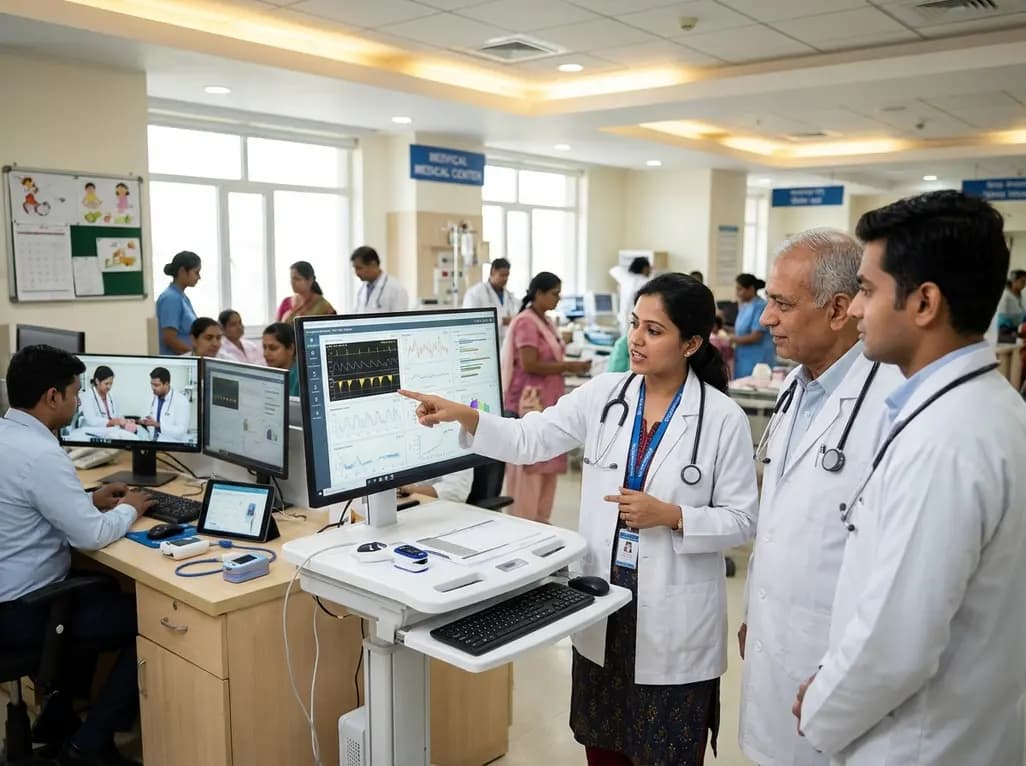
A landmark study details how an enterprise pediatric remote patient management model expanded from a single cardiology pilot to 16 diverse specialty programs by combining centralized digital operations with specialty clinical leadership.
Yesterday

Peripheral nerve injuries present clinical challenges due to regenerative mismatches between sensory and motor neurons. This review explores cutting-edge tissue-engineered nerve grafts designed as central-peripheral signal relays to overcome denervation atrophy and restore functional motor-sensory recovery.
Today
Protein O-GlcNAcylation couples cellular nutrient status to vital neuronal functions. This review explores how disrupted O-GlcNAc cycling drives both neurodevelopmental delays and neurodegenerative cascades, positioning metabolic post-translational modifications as therapeutic targets in clinical neurology.
Today
