.webp&w=384&q=75)

Loading, please wait...
Loading, please wait...
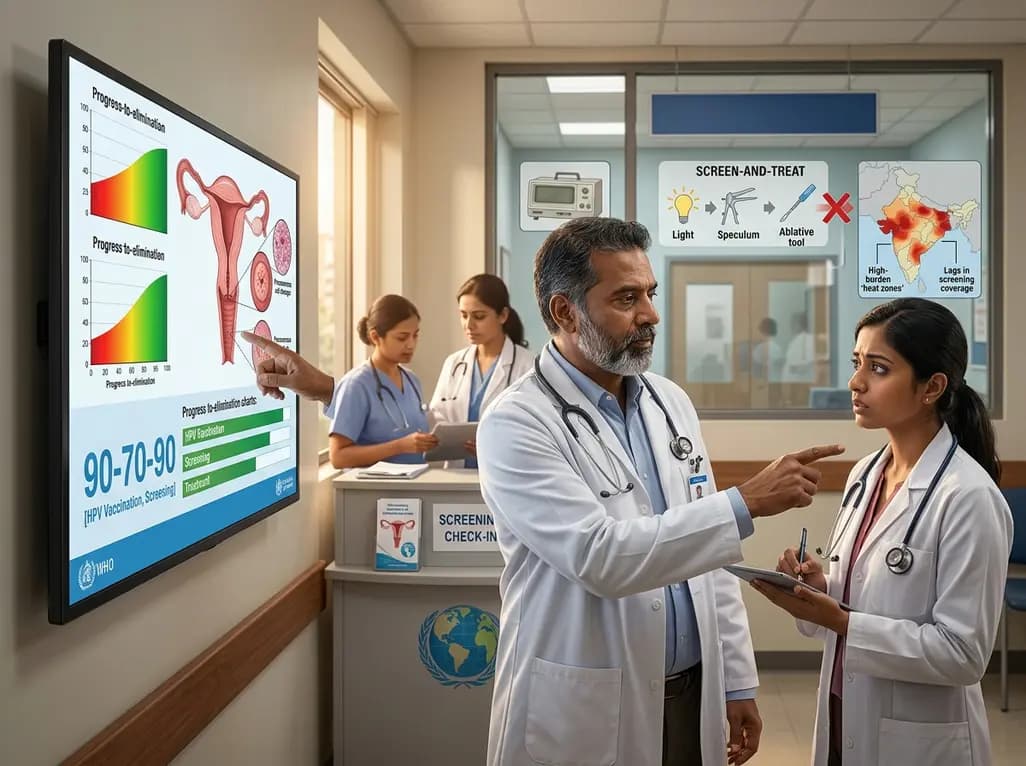
Cervical cancer remains a significant public health challenge globally, particularly in resource-limited regions where health infrastructure is often fragmented. To address this, the World Health Organization has outlined ambitious cervical cancer elimination strategies known as the 90-70-90 targets. These goals aim for 90% HPV vaccination coverage, 70% screening with high-performance tests, and 90% access to treatment by 2030. In the US-Affiliated Pacific Islands (USAPI), achieving these milestones requires a nuanced understanding of local disease burden and existing health system capacities. Recent reviews indicate that the region faces a disproportionately high incidence of cervical cancer compared to the mainland United States. Consequently, healthcare providers and policymakers must prioritize scalable interventions tailored to these unique island contexts. Strengthening primary prevention through vaccination and secondary prevention through robust screening is essential. However, the geographic isolation and limited resources of these jurisdictions present formidable hurdles. By synthesizing recent data on incidence and healthcare access, we can better align regional efforts with global elimination standards. This approach ensures that even the most remote populations receive equitable care. Furthermore, implementing evidence-based strategies will reduce the mortality associated with this preventable disease.
The epidemiological landscape of cervical cancer in the USAPI reveals stark disparities when compared to national averages. Between 2007 and 2022, the age-standardized incidence rate in the USAPI reached 17.2 per 100,000 women. This figure significantly exceeds the US rate of 10.8 per 100,000, illustrating a critical health inequity. Within the region, variation is immense, with the Republic of the Marshall Islands reporting rates as high as 68.9 per 100,000. Such statistics underscore the urgent need for focused cervical cancer elimination strategies. Perhaps more concerning is the clinical presentation at diagnosis. Approximately 75% of patients in these jurisdictions are diagnosed at Stage III or higher. Late-stage diagnosis drastically complicates treatment options and reduces survival rates. This trend suggests that current screening programs are failing to identify precancerous lesions or early-stage malignancies in a timely manner. Factors such as limited health literacy, logistical barriers to care, and cultural taboos regarding pelvic examinations likely contribute to these delays. Addressing these underlying issues is paramount for improving oncological outcomes. Moreover, consistent data collection across all jurisdictions is necessary to monitor progress effectively. Without accurate surveillance, the true magnitude of the burden may remain hidden, hindering effective resource allocation.
Effective secondary prevention is the cornerstone of reducing cervical cancer mortality. In the USAPI, screening methodologies vary widely across different jurisdictions, reflecting diverse resource levels. Four jurisdictions currently utilize cytology-based screening, which requires specialized laboratory infrastructure and trained cytotechnicians. Conversely, regions like the Republic of the Marshall Islands and the Federated States of Micronesia rely primarily on visual inspection with acetic acid (VIA). While VIA is a low-cost alternative suitable for low-resource settings, it lacks the sensitivity of high-performance HPV testing recommended by the latest cervical cancer elimination strategies. Screening coverage also remains inconsistent, ranging from a low of 14.2% in the Commonwealth of the Northern Mariana Islands to 67.8% in Guam. None of the jurisdictions have yet achieved the WHO target of 70% coverage. These gaps are often exacerbated by follow-up failures, where women with abnormal results do not receive necessary diagnostic or therapeutic interventions. To overcome these challenges, health systems should consider transitioning to primary HPV testing, which offers higher accuracy and the potential for self-sampling. Self-collection can mitigate cultural barriers and logistical difficulties associated with traditional pelvic exams. Thus, modernizing screening protocols is vital for catching disease early and saving lives.
Primary prevention through Human Papillomavirus (HPV) vaccination offers the most effective long-term solution for eliminating cervical cancer. Most USAPI jurisdictions introduced the HPV vaccine between 2007 and 2016, aligning their efforts with global cervical cancer elimination strategies. However, the success of these programs has been highly variable. For instance, the Commonwealth of the Northern Mariana Islands has achieved a commendable coverage rate of 92.7%, surpassing international targets. In contrast, the Federated States of Micronesia reports coverage as low as 44.2%. These discrepancies often stem from differences in school-based immunization programs, vaccine supply chain stability, and public perceptions of vaccine safety. High coverage in certain areas proves that elimination is achievable when public health efforts are well-coordinated and adequately funded. To bridge the gap in lower-performing jurisdictions, targeted educational campaigns and simplified dosing schedules may be beneficial. Furthermore, integrating HPV vaccination into routine adolescent health services can improve uptake. As the first pillar of the WHO strategy, vaccination must be prioritized to protect future generations from the burden of HPV-related malignancies. Continuous monitoring of vaccination records is also necessary to identify and address emerging pockets of low coverage.
While prevention and screening are critical, the 90-70-90 targets also mandate that 90% of women with diagnosed cervical disease receive appropriate management. In the USAPI, cancer treatment capacity is severely limited by a lack of specialized infrastructure. Most jurisdictions do not have local radiotherapy facilities, which is a fundamental component of treating advanced cervical cancer. Consequently, patients often require off-island referrals to Hawaii, the Philippines, or the mainland United States. These referrals are prohibitively expensive and logistically complex, leading to significant delays in care. For many women, the financial and emotional burden of traveling for treatment results in incomplete therapy or total loss to follow-up. Strengthening local surgical and palliative care services could alleviate some of this burden. However, establishing comprehensive oncology centers in small island nations remains a massive economic challenge. Collaborative regional networks and telemedicine may offer some solutions for managing complex cases. Ultimately, without improving access to high-quality treatment, even the best screening programs will fail to reduce mortality significantly. Effective cervical cancer elimination strategies must therefore include a robust plan for health system strengthening and sustainable funding for tertiary care.
The challenges faced by the USAPI are mirrored in many other high-burden, resource-limited settings, including parts of India. These shared experiences highlight the necessity of implementing scalable and resource-appropriate interventions. One key lesson is the importance of political will and sustained investment in women’s health. Without dedicated funding, screening and vaccination programs often become sporadic and ineffective. Additionally, the transition toward high-performance molecular testing should be prioritized over older, less reliable methods whenever possible. Empowering local health workers and utilizing mobile health technologies can also extend the reach of services to remote populations. Community engagement is another vital component, as cultural sensitivity significantly impacts the success of screening and vaccination efforts. By learning from the successes and failures of different jurisdictions, health leaders can refine their cervical cancer elimination strategies to maximize impact. The goal of elimination is no longer just a theoretical possibility; it is a measurable objective that requires collective action. Strengthening health systems today will ensure that cervical cancer becomes a rare disease in the near future. Through global solidarity and local innovation, we can ensure that no woman dies from this preventable condition.
The primary barriers include geographic isolation, limited laboratory infrastructure, and a shortage of trained healthcare professionals. Many islands rely on visual inspection because they lack the facilities for cytology or molecular testing. Additionally, cultural taboos and logistical challenges, such as the cost of traveling to clinics, prevent many women from seeking regular screenings. Improving access requires implementing more flexible screening options like HPV self-sampling and expanding community-based outreach.
Late-stage diagnosis is prevalent due to a combination of low screening coverage and inadequate follow-up systems. When screening is not performed regularly, precancerous changes go undetected until symptoms appear, usually at an advanced stage. Furthermore, even when screening occurs, the lack of local diagnostic tools like colposcopy and biopsy leads to delays. Strengthening the entire care continuum, from initial detection to definitive diagnosis, is critical to catching cancer earlier.
The lack of local radiotherapy means that patients with advanced disease must travel great distances for standard-of-care treatment. This often leads to significant treatment delays, financial hardship, and emotional distress for patients and their families. In many cases, patients may choose to forgo treatment or cannot complete the full course of therapy due to the logistical burden. Consequently, mortality rates remain high because the health system cannot provide necessary tertiary care locally.
Disclaimer: This content is for informational and educational purposes only and does not constitute medical advice, diagnosis, or treatment. Always seek the advice of your physician or other qualified health provider with any questions you may have regarding a medical condition. Refer to the latest local and national guidelines for clinical practice.
References
Nguyen DTN et al. Cervical cancer burden and elimination readiness in the US-affiliated Pacific Islands: A structured narrative review. Cancer Epidemiol. 2026 Jun 29. doi: undefined. PMID: 42372369.
World Health Organization. Global strategy to accelerate the elimination of cervical cancer as a public health problem. Geneva: World Health Organization; 2020.
Sung H, Ferlay J, Siegel RL, et al. Global Cancer Statistics 2020: GLOBOCAN Estimates of Incidence and Mortality Worldwide for 36 Cancers in 185 Countries. CA Cancer J Clin. 2021;71(3):209-249.

Read summarized clinical updates, watch expert medical content, and earn CME certifications right from your smartphone.
Open your smartphone camera to scan and install.





A comprehensive narrative review highlights the disproportionate burden of cervical cancer in the US-Affiliated Pacific Islands. The study identifies critical gaps in screening coverage and treatment capacity, emphasizing the need for resource-appropriate cervical cancer elimination strategies to reach WHO targets.
3 months ago

Review how tailored exercise programs benefit frail older patients with heart failure. Explore pathophysiological mechanisms, individualized training prescriptions, and strategies to overcome adherence barriers in clinical practice.
Today

Leucine Rich Bio has introduced South Asia's first comprehensive vaginal microbiome test, BugSpeaks. By profiling microbial dysbiosis, pathogens, and antimicrobial resistance, this next-generation diagnostic platform provides clinicians with deeper insights into recurrent infections, fertility, and reproductive health.
Today

In high-risk pulmonary embolism complicated by severe anemia and active uterine bleeding, systemic thrombolysis is contraindicated. Large-bore aspiration thrombectomy provides rapid hemodynamic rescue without fibrinolysis, supported by inferior vena cava filter placement and multidisciplinary critical care.
Today

This comparative study evaluates posterior labral tears with and without glenohumeral instability, highlighting distinct demographic patterns, MRI underestimation in stable shoulders, and successful arthroscopic repair outcomes.
Today

A clinical study demonstrates that early intervention with tocilizumab, either as monotherapy or bridged with corticosteroids, achieves significant proptosis reduction and resolves active inflammation in treatment-naive thyroid eye disease.
Today
