

Loading, please wait...
Loading, please wait...

Aneurysmal subarachnoid hemorrhage represents one of the most critical neurosurgical emergencies encountered in acute clinical practice. Despite prompt surgical clipping or endovascular coiling of ruptured intracranial aneurysms, secondary neurologic deterioration remains a frequent and life-threatening danger. Delayed cerebral ischemia, which stems largely from luminal arterial narrowing, drives long-term disability and inpatient mortality. Consequently, establishing robust cerebral vasospasm predictors early during neurocritical care admission is vital for optimizing patient recovery. Clinicians often face substantial hurdles when identifying impending arterial narrowing before irreversible cerebral infarction manifests. Furthermore, complex neuroinflammatory cascades and hemodynamic instability complicate bedside diagnostic assessment. Therefore, objective stratification tools assist neurointensivists in prioritizing high-risk individuals for intensive surveillance. In addition, recognizing early clinical markers allows medical teams to implement aggressive neuroprotective strategies before ischemic symptoms progress. Ultimately, proactive hemodynamic optimization and prompt endovascular interventions rely heavily on early clinical detection.
In routine neurological practice, arterial narrowing induces microcirculatory failure, cortical spreading depolarizations, and widespread neurovascular uncoupling. Consequently, patients who develop severe arterial spasms suffer prolonged hospitalizations and severe functional impairment. By recognizing high-risk baseline parameters immediately upon admission, multidisciplinary teams can deploy tailored neurocritical protocols. Thus, early predictive insight provides an invaluable window for preventing secondary neurological decline.
A large observational study evaluated clinical variables across 506 adult patients admitted with aneurysmal subarachnoid hemorrhage. Among this cohort, 90 patients, representing approximately 17.7 percent, developed angiographic or clinically confirmed arterial spasm. Notably, univariable analyses demonstrated that affected individuals were significantly younger than their unaffected counterparts, averaging roughly 50 years compared to 55 years. In addition, severe subarachnoid blood volume, reflected by modified Fisher grade 4, occurred far more frequently among patients experiencing arterial narrowing. Multivariable logistic regression revealed distinct sets of independent cerebral vasospasm predictors that dictate patient trajectory.
Specifically, the multivariable model demonstrated that age under 52 years, acute hydrocephalus, and the requirement for decompressive hemicraniectomy independently predicted overall arterial narrowing. Meanwhile, a prior history of ischemic stroke and modified Fisher grades 3 and 4 demonstrated powerful associations with clinically significant, symptomatic vasospasm. Furthermore, decompressive craniectomy often indicates extensive initial mass effect, cerebral edema, or concurrent hematoma formation. Therefore, clinicians must recognize that structural brain shifts and severe cisternal bleeding combine to trigger prolonged vascular constriction. These multivariable insights emphasize the necessity of looking beyond simple radiographic findings to encompass systemic and surgical factors.
The observation that younger individuals exhibit higher susceptibility to severe vascular constriction initially appears counterintuitive. However, physiological differences in cerebral vascular biology provide a compelling explanation for this clinical phenomenon. Younger patients possess robust arterial smooth muscle architecture and superior muscular elasticity compared to elderly individuals. In contrast, older adults frequently display chronic arteriosclerosis, vessel wall calcification, and medial fibrosis. Consequently, sclerotic vessels in older patients cannot physically constrict to the same extreme degree when exposed to spasmogenic blood breakdown products. Younger cerebral vessels, therefore, mount an exaggerated contractile response to oxyhemoglobin, endothelin-1, and reactive oxygen species.
Furthermore, heightened neuroinflammatory reactivity in younger patients intensifies endothelial dysfunction and cytokine release within the subarachnoid space. Because youthful vascular beds generate higher basal myogenic tone, spasmogenic agents induce profound luminal compromise. Thus, clinicians should avoid assuming that youth confers resilience against secondary ischemic complications. On the contrary, neurocritical teams must maintain heightened surveillance when managing younger individuals following aneurysmal rupture. Tailoring hemodynamic management and escalating transcranial Doppler monitoring in this demographic ensures prompt identification of early luminal decline.
The extent and spatial distribution of extravasated blood on initial computed tomography remain foundational elements in subarachnoid hemorrhage risk prediction. Specifically, the modified Fisher scale refines risk categorization by evaluating both cisternal clot thickness and bilateral intraventricular hemorrhage. In the cohort analysis, modified Fisher grades 3 and 4 emerged as definitive independent predictors of clinically symptomatic narrowing. As erythrocytes hemolyze within the basal cisterns, they release massive quantities of free oxyhemoglobin directly into the adventitia of major conducting arteries. Subsequently, oxyhemoglobin scavenges endogenous nitric oxide, stimulates excessive endothelin-1 production, and generates potent lipid peroxides.
Moreover, the presence of intraventricular blood frequently provokes acute obstructive hydrocephalus and mechanical obstruction of arachnoid granulations. As a result, intracranial pressure elevates, while cerebral perfusion pressure falls precipitously. This mechanical insult exacerbates microvascular stasis, amplifying tissue ischemia throughout vulnerable arterial territories. Consequently, patients with dense cisternal deposits and ventriculomegaly face compounded ischemic hazards. Routine monitoring of ventricular drainage outputs and early cerebrospinal fluid clearance may help diminish the inflammatory burden surrounding vessel walls.
The independent association between decompressive hemicraniectomy and vascular narrowing highlights the severity of primary brain injury in affected patients. When catastrophic aneurysmal rupture causes refractory intracranial hypertension, large intraparenchymal hematomas, or malignant brain edema, surgical decompression becomes imperative. However, extensive surgical intervention reflects an already compromised neurovascular environment characterized by severe blood-brain barrier breakdown. Furthermore, sudden shifts in intracranial hemodynamics and perfusion following bone flap removal can provoke localized arterial spasms. Critical care teams must therefore monitor these postoperative patients with extraordinary diligence.
Similarly, patients with a documented history of prior ischemic stroke exhibit reduced cerebrovascular reserve and impaired collateral pathways. When subsequent spasm strikes major cerebral arteries, these individuals cannot tolerate mild reductions in cerebral blood flow. Consequently, symptomatic neurological deficits appear rapidly and cause extensive secondary tissue infarction. Neurointensivists should maintain targeted mean arterial pressures, preserve strict euvolemia, and avoid empirical hypervolemia, which carries cardiopulmonary hazards. In addition, continuous arterial blood pressure monitoring guarantees that cerebral perfusion pressure remains within therapeutic ranges throughout the vulnerable period.
Managing aneurysmal subarachnoid hemorrhage in Indian healthcare settings requires pragmatic, resource-conscious clinical pathways. Because specialized neurocritical care units vary in resource availability across regions, utilizing validated risk predictors streamlines patient stratification. First, every admitted patient should receive oral nimodipine at standard dosages for 21 days, unless severe hemodynamic instability precludes administration. Second, daily transcranial Doppler examinations serve as a noninvasive, cost-effective screening modality for early detection of accelerated flow velocities. In addition, maintaining normothermia, correcting serum electrolyte abnormalities like hyponatremia, and providing adequate isotonic fluid resuscitation prevent secondary cerebral injury.
However, when patients exhibit refractory neurological deficits or dramatic Doppler velocity elevations, prompt diagnostic confirmation via computed tomography angiography or digital subtraction angiography is mandatory. Furthermore, advanced neuroendovascular centers can perform targeted intra-arterial vasodilator infusions or balloon angioplasty for refractory luminal narrowing. By integrating clinical predictors such as younger age, high Fisher grade, and hydrocephalus into standard nursing triage, tertiary centers can detect deterioration before irreversible infarction develops. Ultimately, standardized multi-disciplinary protocols improve long-term functional recovery and reduce catastrophic disability across diverse clinical facilities.
Radiographic vasospasm refers specifically to visible arterial narrowing observed on digital subtraction angiography, computed tomography angiography, or elevated velocities on transcranial Doppler. In contrast, delayed cerebral ischemia represents clinical neurological deterioration, including new focal deficits or decreased consciousness, that persists after excluding systemic causes and surgical complications.
Younger patients possess resilient, highly muscular cerebral arteries with intact smooth muscle reactivity. Consequently, these elastic vessels react more vigorously to inflammatory cytokines and spasmogenic blood breakdown products like oxyhemoglobin. Conversely, elderly individuals often display medial fibrosis and arteriosclerosis, which physically limit intense, sustained vessel contraction after subarachnoid hemorrhage.
Medical prevention centers on administering enteral nimodipine for 21 consecutive days and maintaining strict euvolemia using isotonic crystalloids. Clinicians must actively avoid prophylactic hypervolemia due to increased pulmonary and cardiac risks. Furthermore, managing fevers, preventing seizures, and correcting hyponatremia optimize cerebral metabolic balance and protect vulnerable brain parenchyma.
Disclaimer: This content is for informational and educational purposes only. It is not intended to be a substitute for professional medical advice, diagnosis, or treatment. Always seek the advice of your physician or other qualified health provider with any questions you may have regarding a medical condition. Refer to the latest local and national guidelines for clinical practice.
References

Read summarized clinical updates, watch expert medical content, and earn CME certifications right from your smartphone.
Open your smartphone camera to scan and install.





A study of 506 subarachnoid hemorrhage patients identifies key cerebral vasospasm predictors, highlighting younger age, decompressive hemicraniectomy, and hydrocephalus for all vasospasm, plus prior stroke and high modified Fisher grade for symptomatic ischemia.
Today

A validation study evaluates the consumer-grade InBody Dial H30 bioelectrical impedance device against a 3-compartment criterion in recreationally active adults, revealing a slight overestimation in body fat percentage and underestimation in fat-free mass alongside notable individual limits of agreement.
Today

A nationwide survey reveals substantial knowledge gaps among general practitioners regarding fetal pathology and autopsy. Enhanced training and interdisciplinary communication are vital to guide stillbirth evaluation, clarify autopsy consent, and improve preconception counseling for bereaved parents.
Today
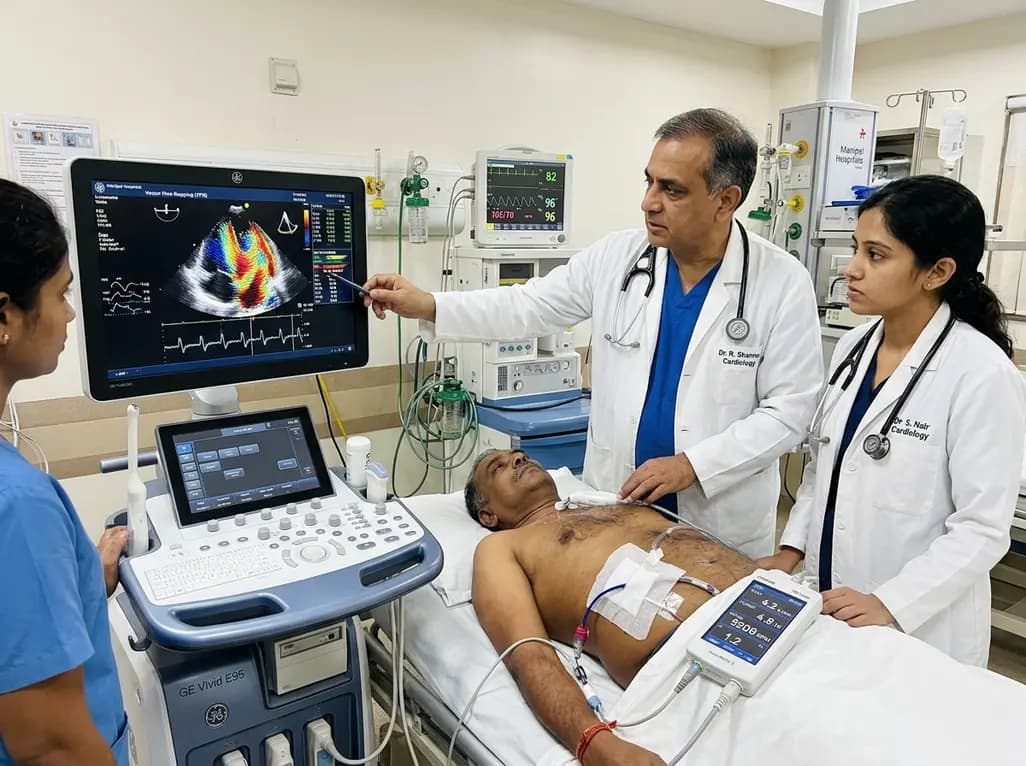
A pilot study shows that transesophageal echocardiography with vector flow mapping measures intraventricular energy loss in HeartMate 3 LVAD recipients. Energy loss significantly correlates with controller-displayed pump flow, offering clinicians deeper insights into ventricular unloading and intracardiac fluid mechanics.
Today

A comparative study demonstrates that simple and complex labral tears achieve comparable functional outcomes and low recurrence rates following arthroscopic stabilization for anterior shoulder instability, despite differing clinical presentations and dislocation histories.
Today

A nationwide analysis shows that inpatient lifestyle counseling for type 2 diabetes remains remarkably underutilized despite modest gains. Clinicians must bridge persistent demographic disparities and integrate structured dietary and exercise counseling into routine hospital discharge workflows.
Today
