.webp&w=384&q=75)

Loading, please wait...
Loading, please wait...
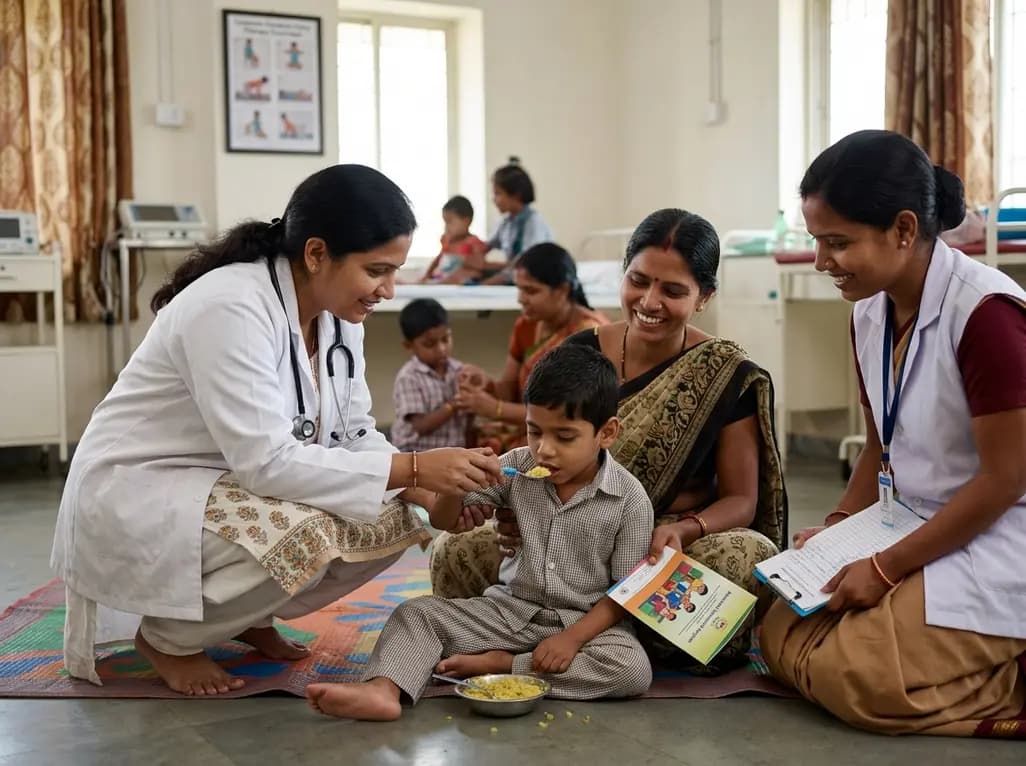
Cerebral palsy remains the most common physical disability of childhood across the globe, presenting extensive challenges in resource-constrained regions. In many low- and middle-income countries, children with neurodevelopmental disabilities face substantial barriers to basic rehabilitative services and community inclusion. A recently published landmark study evaluated a transformative community-based cerebral palsy intervention in rural Uganda. This cluster-randomized trial demonstrated that structured, family-centered programs markedly boost attendance and active involvement in activities of daily living. By training primary caregivers and addressing environmental barriers, clinicians can bridge massive healthcare gaps. Consequently, these findings offer vital guidance for pediatricians, neurologists, and primary care physicians seeking scalable rehabilitation models.
Children living with cerebral palsy in low-income settings frequently experience profound social isolation, secondary musculoskeletal contractures, and malnutrition. Traditional rehabilitation models often rely heavily on hospital-based therapies and specialized infrastructure, which remain inaccessible to rural families due to geographic and financial barriers. Therefore, community-oriented approaches must deliver evidence-based interventions directly into family routines. In rural Africa and South Asia, caregivers often lack formal education regarding positional handling, feeding techniques, and adaptive equipment. As a result, children may spend extensive hours immobilized, leading to severe participation restrictions. The Akwenda Intervention Program emerged to address these systemic inequities by offering a holistic, culturally adapted, and low-cost solution. By empowering local community workers and families, this model shifts rehabilitation from centralized medical centers to home settings. Consequently, pediatric healthcare providers can leverage these insights to establish sustainable community partnerships that improve long-term disability outcomes.
The structured cerebral palsy intervention integrates targeted goal-directed training, caregiver education, and local community sensitization. Rather than focusing solely on isolated impairment remediation, the program emphasizes functional independence and environmental modification. Community workers collaborate closely with families to establish realistic, family-centered goals, such as independent eating, supported standing, or peer socialization. Additionally, the intervention provides locally manufactured, low-cost assistive devices made from sustainable materials like wood and foam. Caregivers participate in supportive peer group sessions where they learn practical techniques for safe transfers, daily hygiene, and communication. Furthermore, the initiative actively confronts local disability stigma by educating neighbors, community leaders, and school teachers. Therefore, the program tackles both physical barriers and entrenched social attitudes simultaneously. This multi-pronged framework enables children to practice functional skills within their natural environments, fostering sustainable neuroplastic adaptation and functional autonomy.
To rigorously evaluate the efficacy of this approach, researchers conducted a single-blind, cluster-randomized controlled trial across rural eastern Uganda. The trial enrolled 100 children and young individuals with cerebral palsy aged between 2 and 23 years, alongside their primary caregivers. Investigators allocated participant clusters into either the immediate intervention arm or a waitlist control group. The primary outcome framework utilized the Picture My Participation assessment tool, which comprehensively evaluates both attendance frequency and level of involvement across 20 distinct home and community activities. Furthermore, independent evaluators measured functional changes using validated instruments, including the Gross Motor Function Measure and the Pediatric Evaluation of Disability Inventory. Because participation represents a vital component of the International Classification of Functioning, Disability and Health, tracking both attendance and subjective involvement provided deep clinical insights into meaningful everyday improvements.
The trial results demonstrated compelling, statistically significant improvements across primary and secondary functional outcomes. Participants in the intervention cohort showed a substantial rise in participation attendance compared to waitlist controls, achieving a notable statistical superiority. Moreover, these gains extended across diverse age groups and varying baseline motor severity levels. Children not only attended home and community activities more frequently, but their active involvement and social engagement also increased markedly. Importantly, secondary analyses revealed that enhanced participation closely correlated with improved child motor function, self-care ability, and caregiver-assisted independence. In addition, caregivers reported a dramatic reduction in perceived burden and stress, alongside improved psychosocial family functioning. Thus, the data clearly illustrate that empowering caregivers with targeted practical skills directly translates into superior functional autonomy and improved quality of life for young patients.
These compelling findings hold profound clinical implications for healthcare practitioners managing pediatric neurodisabilities across diverse global settings, including rural India. Clinicians often face severe shortages of pediatric physiotherapists and occupational therapists in resource-constrained public health systems. Therefore, implementing task-sharing strategies where allied health professionals train community healthcare workers and family members represents an effective, evidence-driven solution. Pediatricians and neurologists can actively incorporate goal-directed training, home-based positioning protocols, and affordable adaptive furniture into routine developmental follow-ups. Furthermore, clinicians should recognize that measuring social participation and daily life engagement is just as critical as assessing raw motor scores. By championing family-centered, community-integrated care models, medical professionals can foster durable functional recovery, mitigate caregiver burnout, and dismantle social exclusion for vulnerable children living with cerebral palsy.
The program enhances daily functioning by combining goal-directed training, caregiver education, and affordable assistive devices. By teaching caregivers practical handling and positioning techniques within home routines, children practice real-world tasks regularly. This approach fosters motor development, self-care skills, and greater functional autonomy in everyday community life.
Measuring participation attendance captures how often children engage in essential domestic, educational, and social activities. While motor impairment tests measure physical capacity, participation metrics reflect real-world inclusion and practical capability. Evaluating attendance ensures that clinical interventions successfully translate into meaningful daily life improvements and reduced social isolation.
Yes, community-based models can be easily adapted to diverse low-resource settings, including rural Asian and African communities. By utilizing task-shifting, training local healthcare workers, and fabricating low-cost adaptive equipment locally, healthcare systems can deliver evidence-based pediatric neurorehabilitation without requiring sophisticated hospital infrastructure or expensive specialized centers.
Disclaimer: This content is for informational and educational purposes only and should not be considered medical advice or relied upon as a substitute for professional healthcare consultations, diagnosis, or treatment. Qualified healthcare professionals should exercise their independent clinical judgment when interpreting and applying this information. While every effort is made to provide accurate and up-to-date material, the authors and publishers accept no liability for any errors, omissions, or outcomes arising from the use of this information. Clinical management must always be individualized according to the patient’s specific circumstances, needs, and condition. Refer to the latest local and national guidelines for clinical practice.
References

Read summarized clinical updates, watch expert medical content, and earn CME certifications right from your smartphone.
Open your smartphone camera to scan and install.





A cluster-randomized trial in rural Uganda reveals that the family-centered Akwenda Intervention Program significantly increases participation in activities of daily living and functional independence for children with cerebral palsy while substantially reducing caregiver burden and stress.
4 weeks back

Recent research defines ferro-aging as a conserved iron-lipid axis driving organ decline across primates. Age-related iron dyshomeostasis stimulates ACSL4-mediated lipid peroxidation, promoting cellular senescence. Notably, vitamin C directly inhibits ACSL4, suppressing phospholipid oxidation and multi-organ decay.
Today
A retrospective cohort study evaluated 1,000 low-risk singleton births to assess maternal and neonatal outcomes during office-hours versus off-hours. Off-hours deliveries were significantly associated with higher odds of intrapartum cesarean sections and episiotomies, highlighting critical obstetric staffing considerations.
Today
New clinical evidence demonstrates a shift away from strict exercise restrictions in genetic heart disease. While patients with channelopathies engage in more vigorous activity than those with cardiomyopathies, shared decision-making and individualized risk assessments ensure safe, beneficial exercise participation.
Today
Sarcopenia significantly impairs functional independence and amplifies fracture risks in patients with osteoarthritis and osteoporosis. Learn about modern diagnostic strategies, GLP-1 therapy considerations, and evidence-based non-pharmacological management across multidisciplinary clinical settings.
Today
Discover how to identify superimposed entrapment neuropathy in diabetic patients. This review details clinical evaluation, surgical decompression evidence, and a structured algorithm for primary care referrals to prevent ulcers and preserve limb function.
Today
