.webp&w=384&q=75)

Loading, please wait...
Loading, please wait...

Managing patients with vascular lesions requires a deep understanding of their natural history. A recent prospective study by Flemming et al. sheds light on the long-term Cerebral Cavernous Malformation morbidity in untreated individuals. Consequently, clinicians can now better predict which patients face the highest risk of functional impairment over time. The study followed 332 patients for a mean of 6.6 years, providing a robust dataset for analysis.
Moreover, the researchers focused on functional outcomes using the modified Rankin Scale (mRS). They defined disability as an mRS score of 3 or higher. Interestingly, many patients who presented with symptomatic hemorrhage (SH) showed significant improvement over time. While 27.1% of these patients had initial disability, this figure dropped to just 4.7% after five years of follow-up. However, the risk of developing new disability remained a concern for specific subgroups.
The study identified two primary factors that significantly increase the risk of long-term disability. Specifically, brainstem location and a history of symptomatic hemorrhage were the strongest predictors of poor outcomes. Furthermore, the 10-year risk of disability for brainstem lesions reached 35.4%, compared to only 7.5% for non-brainstem locations. This disparity highlights the aggressive nature of brainstem cavernomas.
In addition to location, the frequency of hemorrhage played a vital role. About 31% of the cohort experienced at least one prospective symptomatic hemorrhage during the follow-up period. Therefore, identifying high-risk patients early is crucial for determining if and when surgical intervention becomes necessary. The study also validated a previously published nomogram, which accurately predicted morbidity in this untreated population.
The data suggest that most non-brainstem lesions have a relatively benign course if left untreated. Conversely, the high disability rates in brainstem cases demand vigilant monitoring and potentially earlier intervention. Additionally, the study emphasizes that initial disability after a bleed often improves, suggesting that immediate surgical intervention may not always be required for functional recovery. Consequently, doctors should weigh these long-term risks against the immediate dangers of neurosurgical procedures.
Brainstem location is the most significant risk factor. Patients with brainstem cavernomas face a 35.4% risk of disability over ten years, which is significantly higher than those with lesions in other brain areas.
Yes, the study found that functional disability often improves. Among those with initial disability after a symptomatic bleed, the rate of mRS ≥ 3 decreased from 27.1% at diagnosis to under 5% at five years.
In this cohort, approximately 31% of patients experienced one prospective symptomatic hemorrhage during a mean follow-up of 6.6 years, while 14.5% experienced multiple bleeds.
Disclaimer: This content is for informational and educational purposes only. It does not constitute professional medical advice, diagnosis, or treatment. Always seek the advice of your physician or other qualified healthcare provider with any questions you may have regarding a medical condition. Refer to the latest local and national guidelines for clinical practice.
References
Flemming KD et al. Prospective untreated outcomes in patients with cerebral cavernous malformation. J Neurosurg. 2026 Mar 27. doi: 10.3171/2025.11.JNS251526. PMID: 41894809.
Li D et al. Neurological outcomes of untreated brainstem cavernous malformations in a prospective observational cohort and literature review. Stroke Vasc Neurol. 2021 Jun;6(2):200-209. doi: 10.1136/svn-2020-000608.
Al-Shahi Salman R et al. Untreated clinical course of cerebral cavernous malformations: a prospective, population-based cohort study. Lancet Neurol. 2012 Mar;11(3):217-24. doi: 10.1016/S1474-4422(12)70004-2.
"
Read summarized clinical updates, watch expert medical content, and earn CME certifications right from your smartphone.
Open your smartphone camera to scan and install.





A prospective study of 332 patients reveals that brainstem location and prior hemorrhage are primary drivers of disability in untreated CCM cases....
6 months ago
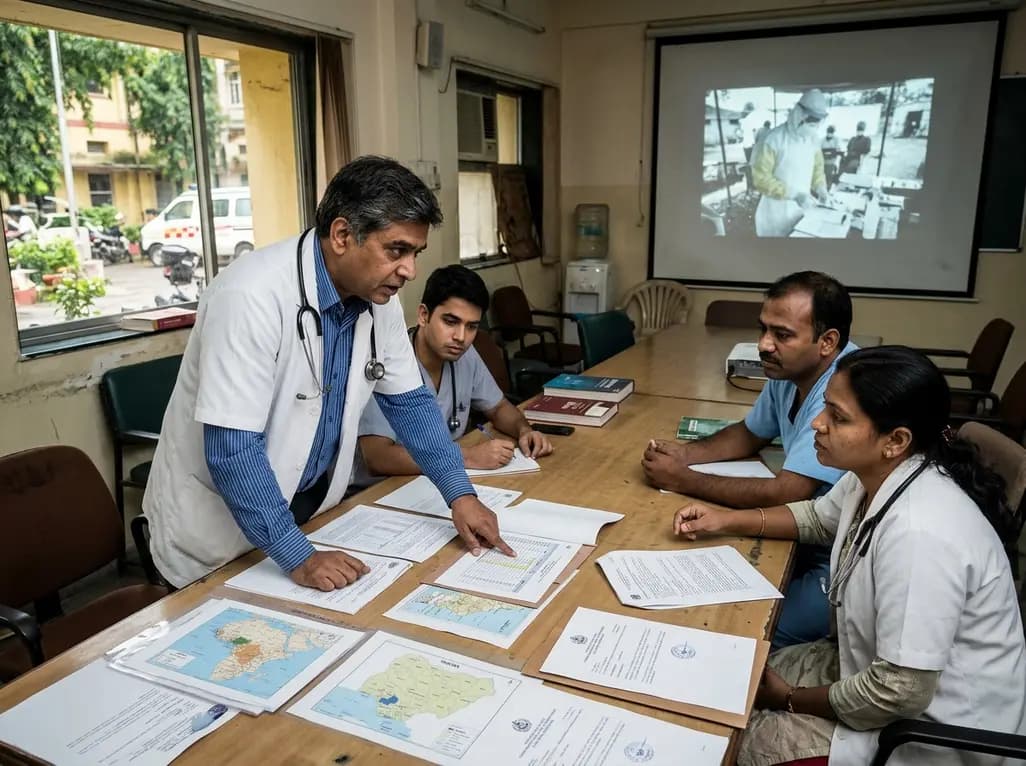
Following Nigeria's first recorded Ebola case linked to regional travel, the Africa CDC has convened an emergency ministerial summit. This alert underscores critical clinical priorities for healthcare professionals, including differentiating early viral infection from malaria, implementing barrier nursing, and triage.
Today

Leucine Rich Bio has introduced South Asia's first comprehensive vaginal microbiome test, BugSpeaks. By profiling microbial dysbiosis, pathogens, and antimicrobial resistance, this next-generation diagnostic platform provides clinicians with deeper insights into recurrent infections, fertility, and reproductive health.
Today

Review how tailored exercise programs benefit frail older patients with heart failure. Explore pathophysiological mechanisms, individualized training prescriptions, and strategies to overcome adherence barriers in clinical practice.
Today

This comparative study evaluates posterior labral tears with and without glenohumeral instability, highlighting distinct demographic patterns, MRI underestimation in stable shoulders, and successful arthroscopic repair outcomes.
Today

A clinical study demonstrates that early intervention with tocilizumab, either as monotherapy or bridged with corticosteroids, achieves significant proptosis reduction and resolves active inflammation in treatment-naive thyroid eye disease.
Today
