.webp&w=384&q=75)

Loading, please wait...
Loading, please wait...

The clinical application of cell-free DNA in women's health has grown significantly over the last decade. This biomarker, found in blood and other bodily fluids, provides a unique window into tissue-specific genetic alterations without requiring invasive biopsies. Because it possesses a short half-life, it reflects the immediate physiological state of the patient. Consequently, clinicians increasingly rely on these molecular signals to improve diagnosis, prognosis, and personalized care across various medical domains.
In the field of prenatal medicine, fetal cell-free DNA (cffDNA) has fundamentally changed screening protocols. Maternal plasma now offers a highly accurate method to detect chromosomal abnormalities like trisomy 21. Furthermore, researchers are using these markers to identify risks for preeclampsia and intrauterine growth restriction early in pregnancy. This shift toward noninvasive screening reduces the need for riskier procedures such as amniocentesis. Similarly, in gynecological oncology, circulating tumor DNA (ctDNA) helps doctors monitor cancer progression. Specifically, it allows for real-time mutation analysis and early detection of malignancies, which often leads to more effective treatment strategies.
Reproductive medicine also sees emerging benefits from cfDNA technology. In assisted reproductive technologies (ART), DNA derived from embryo culture media serves as a novel biomarker for assessing embryo quality. This noninvasive approach helps clinicians select the most viable embryos, potentially increasing successful implantation rates. Moreover, technological innovations like fragmentomics and artificial intelligence are enhancing the analytical power of these tests. While technical standardization remains a challenge, the integration of multi-omics will likely solidify the role of cfDNA in precision medicine. Future studies across diverse populations will be essential to support its routine adoption in clinical practice.
Fetal cfDNA screening is highly accurate for common chromosomal abnormalities like Down syndrome, often exceeding 99% sensitivity. However, it remains a screening tool rather than a definitive diagnostic test.
Yes, circulating tumor DNA (ctDNA) shows great promise in detecting early-stage cancers and monitoring minimal residual disease by identifying specific genetic mutations in the bloodstream.
In IVF, cfDNA found in embryo culture media or follicular fluid acts as a noninvasive marker to evaluate oocyte and embryo health, assisting in the selection process without the need for a biopsy.
Disclaimer: This content is for informational and educational purposes only. It does not constitute professional medical advice, diagnosis, or treatment. Always seek the advice of your physician or other qualified healthcare provider with any questions you may have regarding a medical condition. Refer to the latest local and national guidelines for clinical practice.
References

Read summarized clinical updates, watch expert medical content, and earn CME certifications right from your smartphone.
Open your smartphone camera to scan and install.





A comprehensive review of how cell-free DNA (cfDNA) transforms diagnostics in prenatal care, gynecological oncology, and assisted reproductive technologies....
7 months ago

Following regulatory scrutiny from FSSAI regarding promotional representations and lean muscle preservation claims, Dr. Reddy's Laboratories and Nestlé Health Science are currently reviewing the branding and marketing strategy for their joint nutritional supplement Celevida GLP+.
Today
A comprehensive scoping review synthesises evidence linking prenatal maternal mental health to long-term offspring neurodevelopment, evaluating neuroendocrine, inflammatory, and epigenetic pathways while highlighting clinical screening and future research priorities.
Today

The Directorate General of Health Services directs Indian states to halt the hazardous reuse and reprocessing of single-use medical devices. Discover regulatory implications under the Drugs and Cosmetics Act, critical infection risks, legal liabilities, and operational changes required across clinical specialties.
Today
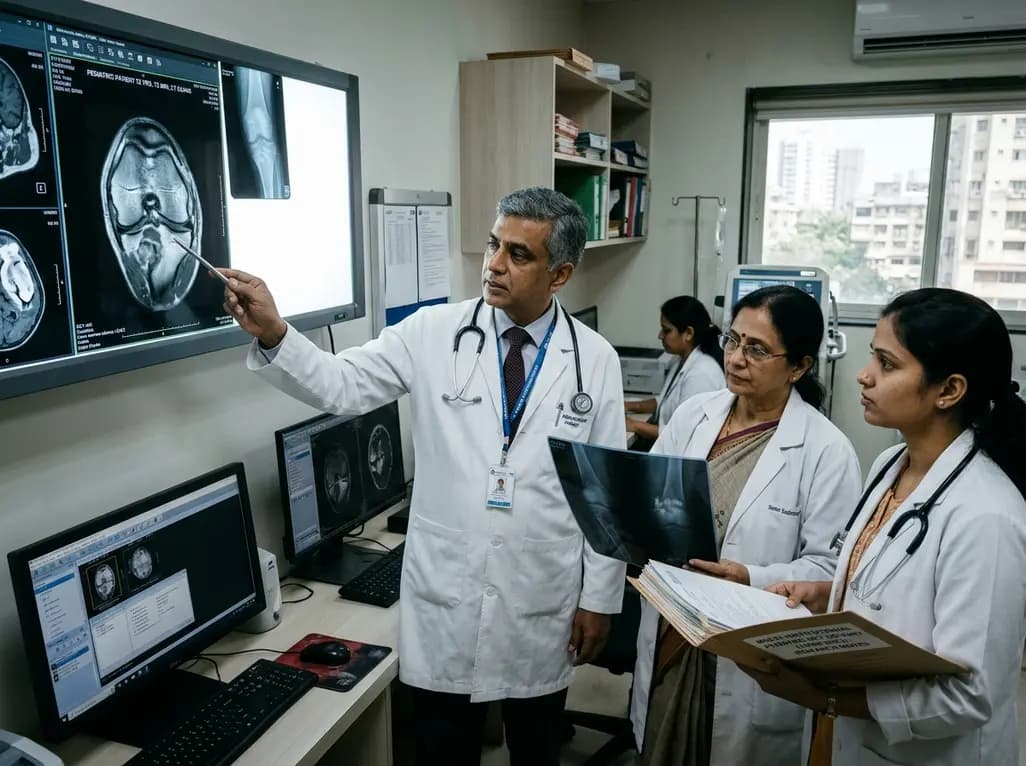
A 25-year multi-institutional cohort reveals high recurrence rates in pediatric giant cell tumor of bone, particularly in patients with open physes and bone marrow edema on preoperative MRI. Early surveillance and careful balance between growth plate preservation and tumor clearance are essential.
Today

India is advancing preventive healthcare by integrating genomics, artificial intelligence, and quantum technologies. With the SANGAM programme sequencing one million Indian genomes, clinicians can unlock personalized therapies, detect cardiometabolic risks early, and curb the burden of diabetes and heart disease.
Today
