.webp&w=384&q=75)

Loading, please wait...
Loading, please wait...

A cauda equina neuroendocrine tumor (CENET) is an exceedingly rare spinal neoplasm. While these tumors are typically small and located below the L2 level, a recent illustrative case describes a giant multisegmental tumor (T12-L3). Notably, this specific case was associated with superficial siderosis (SS), a rare condition resulting from chronic subarachnoid hemorrhage. Understanding this unique presentation is vital for clinicians navigating complex spinal oncology. Furthermore, the presence of these features often indicates a chronic hemorrhagic phenotype that complicates surgical intervention.
Magnetic resonance imaging (MRI) is the primary tool for identifying these lesions. In the documented case, the patient presented with progressive paraparesis and bladder dysfunction. Imaging revealed a hypervascular intradural extramedullary mass. Additionally, the MRI showed an intratumoral fluid-fluid level (FFL) and significant neuraxial hemosiderin deposition. These findings suggested recurrent hemorrhage within the tumor. Consequently, the coexistence of SS and FFL complicates preoperative differentiation from other common spinal tumors like myxopapillary ependymomas or schwannomas.
The management of a giant cauda equina neuroendocrine tumor requires a meticulous surgical strategy. Because the patient had dense adhesions to the cauda equina, the surgical team opted for a function-preserving subtotal resection. They performed the procedure under intraoperative neurophysiological monitoring (IONM) to safeguard neurological function. Moreover, preoperative vascular assessment is essential in such hypervascular cases to mitigate bleeding risks. This approach successfully balanced tumor control with the preservation of critical neurological pathways, leading to marked improvement in the patient’s condition.
Clinicians must recognize that marked hypervascularity and superficial siderosis indicate severe adhesions. Therefore, a nerve-sparing subtotal resection may be the most appropriate strategy when safe dissection planes are limited. Specifically, surgeons should prioritize neurological preservation over aggressive total resection in large, multisegmental tumors. This case emphasizes the importance of multidisciplinary planning and advanced monitoring in achieving favorable outcomes for rare spinal neuroendocrine tumors.
It is a rare, usually benign (WHO Grade 1) tumor that arises in the cauda equina or filum terminale. These were previously often classified as spinal paragangliomas.
Superficial siderosis occurs due to chronic, recurrent low-grade bleeding from the tumor into the subarachnoid space, leading to iron (hemosiderin) deposition on the surface of the CNS.
Management often involves subtotal or total resection under neurophysiological monitoring. In cases with dense adhesions, a function-preserving subtotal resection is often preferred to avoid permanent nerve damage.
Disclaimer: This content is for informational and educational purposes only and does not constitute medical advice or a professional relationship. Refer to the latest local and national guidelines for clinical practice.
References
Lin Y et al. Giant cauda equina neuroendocrine tumor with superficial siderosis: illustrative case. J Neurosurg Case Lessons. 2026 Apr 13. doi: undefined. PMID: 41974061.
Shtaya A et al. Radiologically atypical paraganglioma of the filum terminale as a rare cause of superficial siderosis of the central nervous system. Acta Neurol Belg. 2020;120(6):1471-1474.
National Center for Biotechnology Information. Superficial Siderosis - StatPearls. [Updated 2024 Apr 30]. Available from: https://www.ncbi.nlm.nih.gov/books/NBK537130/

Read summarized clinical updates, watch expert medical content, and earn CME certifications right from your smartphone.
Open your smartphone camera to scan and install.





A rare case of a giant cauda equina neuroendocrine tumor presenting with superficial siderosis highlights surgical challenges and diagnostic imaging finding...
6 months ago

Researchers at IIT Bombay have engineered an automated, cost-effective point-of-care device that diagnoses anaemia and sickle cell disease from a single drop of blood. By measuring blood smear spreading length, this portable tool assesses blood viscosity to offer rapid screening in resource-limited healthcare centers.
Today

A multicenter study evaluates whether standardized simulation training reduces cup detachment during vacuum-assisted vaginal birth. Evidence-based simulation equips obstetricians to improve cup placement, reduce maternal-fetal trauma, and optimize clinical decision-making during operative deliveries.
Today

A breakthrough ultrathin multimodal sensor decouples physical hemodynamic monitoring from disposable electrochemical calibration, achieving long-term wearable glucose prediction with 81.36% accuracy and a 9.12% MARD. This offers a robust, drift-free solution for outpatient metabolic surveillance.
Today
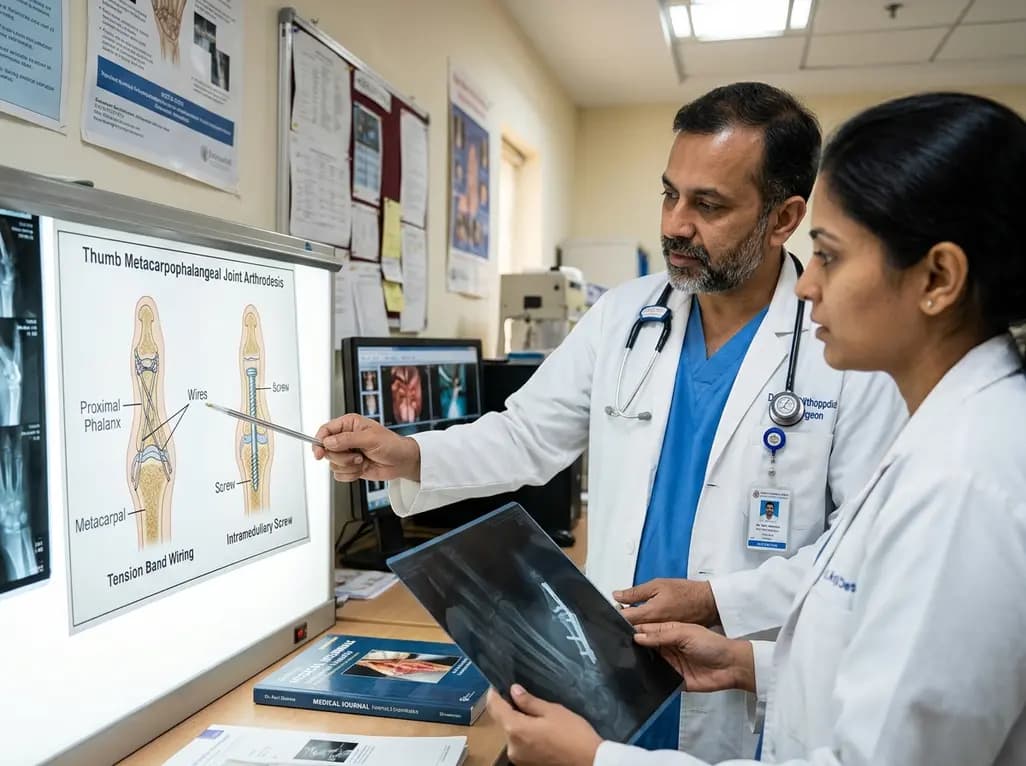
A comparative review of tension band wiring and intramedullary screw fixation in thumb metacarpophalangeal arthrodesis, evaluating union rates, hardware complications, and clinical outcomes.
Today

Following regulatory scrutiny from FSSAI regarding promotional representations and lean muscle preservation claims, Dr. Reddy's Laboratories and Nestlé Health Science are currently reviewing the branding and marketing strategy for their joint nutritional supplement Celevida GLP+.
Today
