.webp&w=384&q=75)

Loading, please wait...
Loading, please wait...

Accurate catheter contact force estimation is paramount for radiofrequency catheter ablation (RFCA) success. Specifically, poor contact leads to ineffective lesions, while excessive force risks cardiac perforation. Consequently, real-time force monitoring is now standard in robot-assisted procedures.
Traditional models often treat the intracardiac environment as a steady-flow system. However, the heart operates with pulsatile blood flow and velocity variations. As a result, these disturbances cause significant errors in force calculations. To address this, a new study introduces a framework using cubic Bezier splines and a sinusoidal velocity model. This model realistically represents how hydrodynamic loads affect catheter morphology.
Moreover, researchers used a quasi-static Euler-Bernoulli beam equilibrium to refine the estimation. The study demonstrated improved accuracy under dynamic conditions by using least-squares. For Indian clinicians, these robotic advancements offer more predictable outcomes and enhanced patient safety. In addition, transitioning to dynamic modeling represents a major leap in intraoperative feedback. Results show that accounting for blood flow provides a robust estimate of contact.
Therefore, integrating these models helps electrophysiologists maintain stable contact in challenging areas. Furthermore, this technology reduces reliance on expensive physical force sensors. Consequently, advanced mathematical modeling allows healthcare facilities to access high-precision tools affordably. Finally, this shift aligns with the need for cost-effective medical innovations in India.
Blood flow creates hydrodynamic drag on the catheter body. If a model ignores these forces, it miscalculates the actual pressure at the tip, potentially leading to unsafe ablation levels.
Clinical studies show that a force below 10g is often insufficient for durable lesions. Conversely, maintaining a force above 20g significantly reduces the risk of arrhythmia recurrence after isolation procedures.
Disclaimer: This content is for informational and educational purposes only. It does not constitute medical advice or establish a doctor-patient relationship. While we strive for accuracy, healthcare professionals should verify all information. Refer to the latest local and national guidelines for clinical practice.
References
1. Liang Y et al. Modeling and estimation of ablation catheter contact force under blood flow disturbance. Comput Methods Biomech Biomed Engin. 2026 Mar 26. doi: 10.1080/10255842.2026.2642808. PMID: 41888046.
2. Sohns C et al. Catheter Contact Force: A Review of Emerging Techniques and Technologies in AF Ablation. Innovations in Cardiac Rhythm Management. 2014;5:1613–1622.
3. Kuck KH et al. A novel radiofrequency ablation catheter using contact force sensing: TOCCATA study. Heart Rhythm. 2012;9(1):18-23.

Read summarized clinical updates, watch expert medical content, and earn CME certifications right from your smartphone.
Open your smartphone camera to scan and install.





A new framework improves catheter contact force estimation by accounting for pulsatile blood flow disturbances during robot-assisted cardiac ablation....
6 months ago
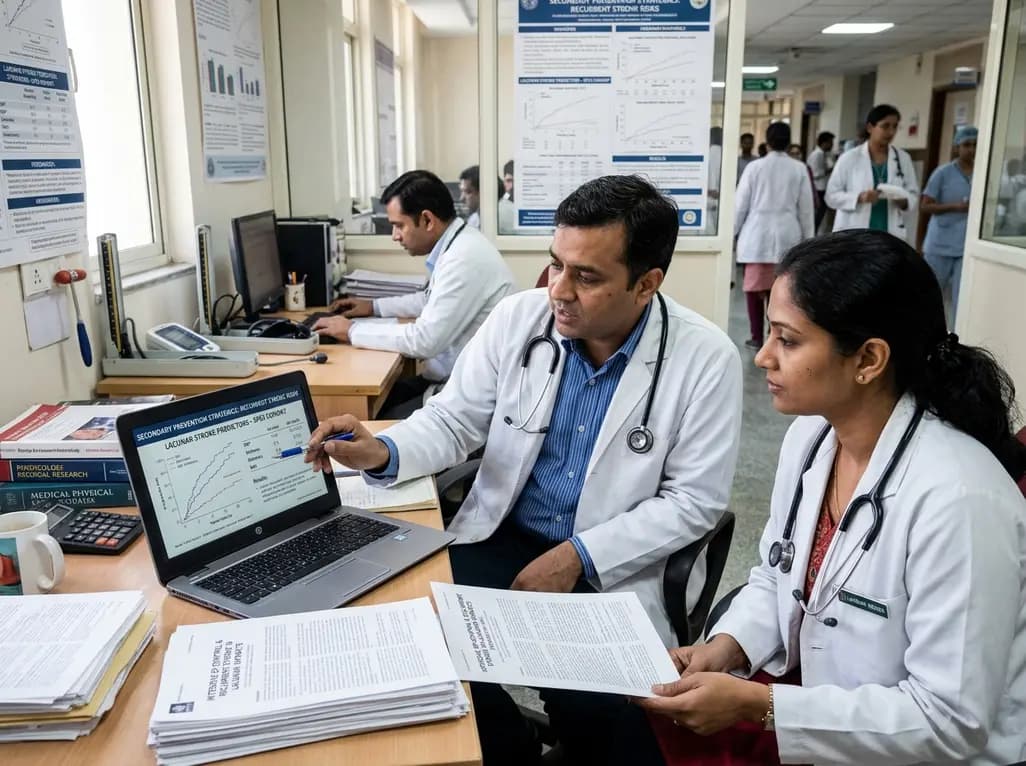
Explore vital recurrent stroke predictors in lacunar stroke patients managed with intensive blood pressure lowering. This analysis examines trial findings from SPS3 to uncover residual vascular risks, metabolic factors, and targeted secondary prevention strategies for high-risk neurological patients.
Today

A comprehensive scoping review synthesises evidence linking prenatal maternal mental health to long-term offspring neurodevelopment, evaluating neuroendocrine, inflammatory, and epigenetic pathways while highlighting clinical screening and future research priorities.
Today

The Directorate General of Health Services directs Indian states to halt the hazardous reuse and reprocessing of single-use medical devices. Discover regulatory implications under the Drugs and Cosmetics Act, critical infection risks, legal liabilities, and operational changes required across clinical specialties.
Today
Mitochondria-targeted nanoparticles self-assembled from EGCG and L-glutamic acid effectively restore mitochondrial homeostasis, suppress synovial inflammation, and attenuate chondrocyte senescence in osteoarthritis, offering a promising disease-modifying nanotherapy.
Today

India is advancing preventive healthcare by integrating genomics, artificial intelligence, and quantum technologies. With the SANGAM programme sequencing one million Indian genomes, clinicians can unlock personalized therapies, detect cardiometabolic risks early, and curb the burden of diabetes and heart disease.
Today
