

Loading, please wait...
Loading, please wait...

Long-term healthcare institutions operate under severe emotional strain and chronic staffing shortages. Healthcare leaders recognize that caregiver well-being directly underpins high clinical quality and compassionate patient care. However, institutional caregivers routinely face physical exhaustion, rapid pacing, and acute emotional distress while caring for fragile older adults. Consequently, prolonged exposure to severe patient decline and vulnerability can rapidly deplete emotional resilience and daily energy. As a result, healthcare administrators actively seek effective workplace interventions to minimize burnout and maintain workforce stability across specialized facilities.
Furthermore, frontline providers must balance demanding clinical regimens with genuine empathetic communication. When residential homes suffer from chronic staff shortages, direct care teams shoulder substantial clinical responsibilities. Therefore, clinical researchers emphasize the critical importance of daily interpersonal connections within institutional residential care settings. Instead of viewing caregiving solely through task completion, leadership must support the human relationships that sustain provider morale. Ultimately, understanding the psychosocial determinants of caregiver health provides meaningful pathways to guide structural reform in long-term eldercare.
To evaluate occupational health, researchers utilize two foundational frameworks: the Job Demands-Resources model and the Conservation of Resources theory. Specifically, the Job Demands-Resources framework asserts that excessive job demands, such as heavy physical workloads and time pressure, systematically deplete worker vitality. In contrast, essential job resources, including workplace autonomy and supportive leadership, enhance motivation and buffer psychological fatigue. Consequently, organizations that provide robust resources effectively protect staff against progressive emotional burnout and depersonalization.
Additionally, the Conservation of Resources theory posits that individuals constantly strive to acquire and preserve valued personal resources. When healthcare workers encounter persistent occupational stress without adequate renewal, they suffer severe psychological strain. In residential facilities, professional autonomy empowers caregivers to tailor schedules to resident needs effectively. Similarly, strong organizational support assures frontline personnel that institutional leadership values their clinical dedication. Therefore, applying these complementary theories enables healthcare managers to evaluate how workplace structures influence emotional resilience across diverse clinical teams.
Recent empirical findings from large-scale residential cohorts indicate that relationships between staff and residents serve as a powerful mediator. In a robust study of 1,316 caregivers across 13 long-term facilities in northern Italy, investigators demonstrated that high-quality interpersonal bonds mediate the link between job conditions and employee well-being. Specifically, rewarding connections with residents provide caregivers with emotional fulfillment and purpose. When staff establish mutual trust with residents, challenging duties become deeply meaningful human interactions rather than mechanical chores.
Furthermore, structural equation modelling confirms that supportive workplace environments significantly foster higher relationship quality. When organizations provide clinical autonomy and supervisory backing, caregivers exhibit greater patience and empathetic engagement toward vulnerable residents. Consequently, these constructive interactions generate vital emotional resources that shield workers from burnout. Conversely, conflicted interactions exacerbate depersonalization and moral injury. Therefore, healthcare leadership must recognize relational quality as an indispensable clinical asset that directly preserves staff health within eldercare environments.
Interestingly, statistical analyses revealed a critical boundary regarding the relationship between workload and institutional resources. While autonomy and organizational support consistently promoted positive relationships, these resources did not moderate the negative impact of extreme workloads on relationship quality. In other words, when patient-to-staff ratios become excessively skewed, managerial encouragement and individual flexibility cannot counteract severe operational strain. Heavy physical demands directly hinder caregivers from maintaining attentive, unhurried interactions with vulnerable residential patients.
Moreover, this finding provides an essential lesson for healthcare administrators who rely primarily on psychological coping programs. While institutional encouragement remains valuable, it cannot compensate for severe understaffing and unrealistic patient quotas. Consequently, health systems must avoid expecting healthcare workers to overcome structural deficits through sheer emotional stamina. When daily shift pressures escalate excessively, staff must prioritize urgent clinical tasks over relational companionship. Thus, protecting resident connections requires organizations to enforce strict workload ceilings and adequate staffing levels.
Given the worsening global shortage of qualified eldercare workers, these findings offer vital strategies for institutional healthcare leadership. First, facilities must implement relationship-centered care structures within everyday operational routines. For example, maintaining consistent staff-resident pairings enables caregivers to build reciprocal trust and emotional familiarity over time. Additionally, this relational stability reassures residents with cognitive impairment and significantly lowers caregiver stress during daily personal care interactions.
Second, executive management must cultivate an organizational climate that grants frontline caregivers meaningful decision-making autonomy. By enabling staff to adjust care routines based on resident preferences, organizations validate professional judgment and boost job engagement. Furthermore, clinical supervisors should establish structured peer debriefing sessions and grief support initiatives. Because long-term healthcare entails constant exposure to frailty and loss, systematic emotional support protects teams from compassion fatigue. Ultimately, building resilient eldercare environments requires simultaneous investments in humane staffing ratios and relational care models across all departments.
Positive relationships with residents provide caregivers with profound emotional validation and purpose, which directly transforms arduous clinical routines into rewarding personal interactions. Specifically, high-quality relational bonds help replenish depleted psychological energy reserves, reducing feelings of depersonalization and chronic burnout. Consequently, these meaningful human connections act as an essential psychological bridge, translating supportive organizational resources into sustained employee well-being and greater clinical satisfaction across demanding long-term healthcare settings.
Although organizational support enhances staff motivation, it cannot physically eliminate the overwhelming fatigue produced by severe understaffing. When patient loads exceed manageable thresholds, frontline caregivers must prioritize urgent medical tasks and basic safety duties over relational engagement. Therefore, while psychological encouragement fosters morale, it cannot substitute for adequate staffing ratios. Institutional leaders must understand that structural workload relief remains indispensable for protecting staff health and preserving high-quality relational care.
Healthcare facilities should implement consistent caregiver assignments, which enable staff to establish meaningful, long-term bonds with residents and their families. Furthermore, leadership must grant caregivers sufficient operational autonomy to personalize daily schedules according to individual patient needs. Additionally, institutions should maintain safe staffing ratios and provide dedicated peer support debriefings. These strategic measures alleviate physical exhaustion, nurture emotional resilience, and create a sustainable, compassionate work environment for healthcare teams.
Disclaimer: This content is for informational and educational purposes only. It does not constitute medical advice, diagnosis, or clinical recommendations. Refer to the latest local and national guidelines for clinical practice.
References

Read summarized clinical updates, watch expert medical content, and earn CME certifications right from your smartphone.
Open your smartphone camera to scan and install.





A multicenter study evaluates how resident-caregiver relationships mediate the effects of job demands and resources on caregiver well-being in long-term healthcare, highlighting the crucial need for structural staffing support alongside relational care.
Today
Phase 3 clinical trial data demonstrate that plozasiran significantly reduces plasma triglycerides and sharply lowers acute pancreatitis incidence in patients with severe hypertriglyceridemia, offering a promising targeted siRNA therapy for high-risk lipid management.
Today

Delhi is undergoing a major healthcare overhaul with enhanced Ayushman Bharat insurance up to ₹10 lakh, increased MBBS and PG medical training seats, expanded primary network mandirs, new tertiary neuro-ICUs, and public-private reproductive technology initiatives to build a resilient, preventative healthcare model.
Today
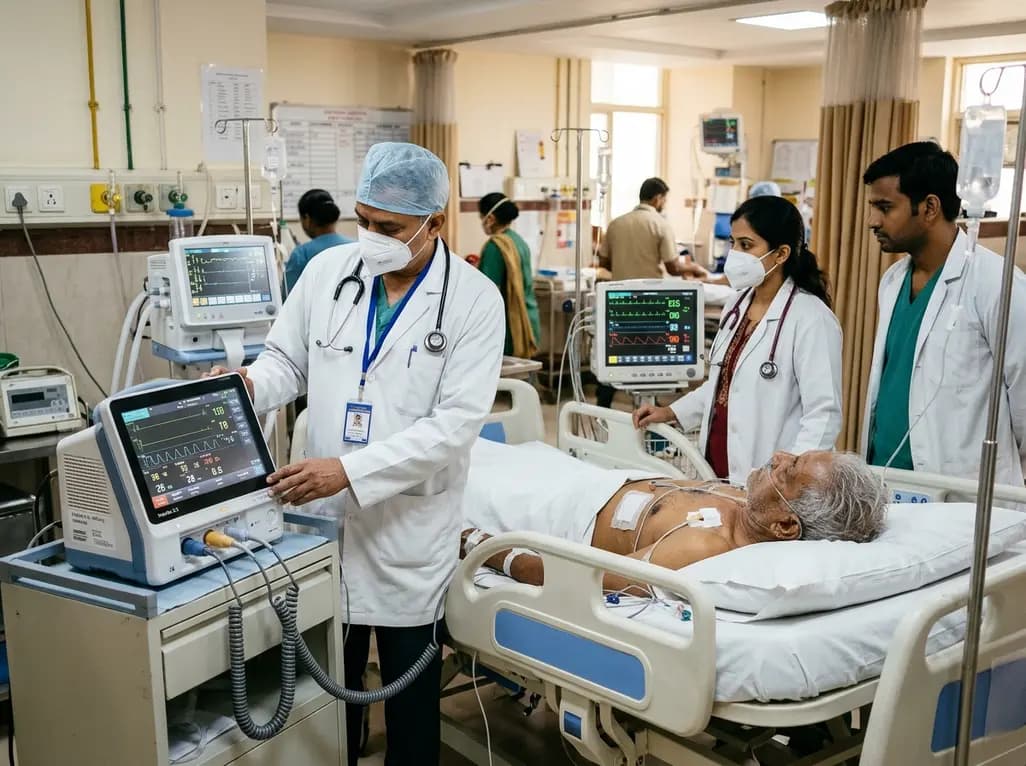
A 78-year-old patient with high-grade aneurysmal subarachnoid hemorrhage complicated by refractory Takotsubo cardiogenic shock achieved full recovery following microaxial flow pump (Impella 5.5) rescue, demonstrating the safety and feasibility of advanced mechanical circulatory support during dual antiplatelet therapy.
Today

Non-union fractures occur in 2-5% of cases, causing significant disability and cost. Conservative modalities such as LIPUS, PEMF, and focused ESWT offer non-surgical healing options for defects up to 5-10 mm when adequate mechanical stability exists without infection.
Yesterday
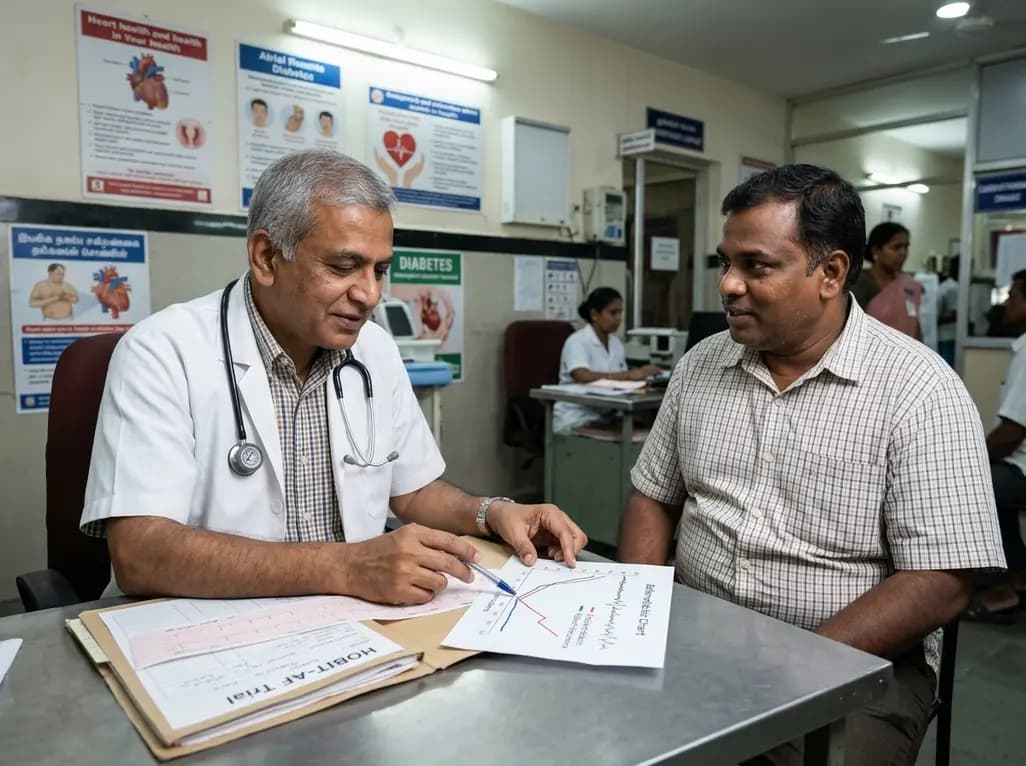
The randomized HOBIT-AF trial reveals that while structured weight loss after catheter ablation significantly improves cardiometabolic health in obese patients with paroxysmal atrial fibrillation, it does not reduce arrhythmia recurrence compared to standard care.
Today
